Higher education institutions operate amid complex, multistream revenue models, growing student expectations, intensifying competition for enrollment, constrained public funding, and increasing regulatory and accreditation demands. Alongside their core educational mission, institutions must sustain active research programs, engage alumni and private partners through advancement activities, and translate research outcomes into commercial value.
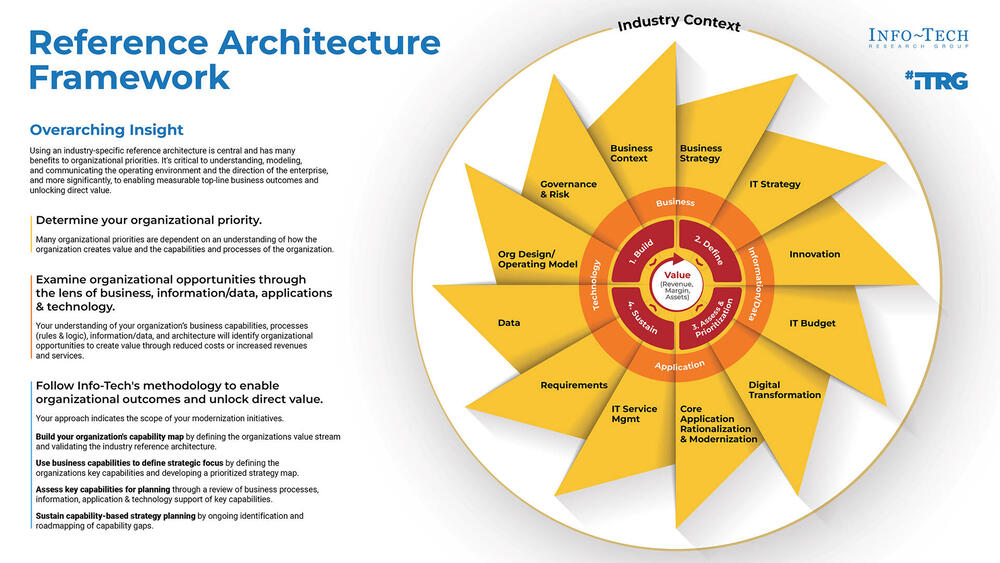
Business architecture connects institutional strategy to execution by clarifying what the organization does, why it does it, and how capabilities align to deliver better outcomes for students, researchers, and the broader community.
The Higher Education Industry Business Reference Architecture provides a unified, end-to-end view of how universities, colleges, and vocational institutions create and deliver value across seven core value streams: Recruitment & Admission, Student Lifecycle Management, Student Support Services, Advancement, Teaching & Learning, Academic Research, and Commercialization.
It establishes a common language across academic leadership, administrative teams, and IT, helping higher education leaders identify capability gaps, reduce duplication, prioritize technology investments, and connect digital decisions directly to institutional strategy and student success.