
Digital Disruption
with Geoff Nielson


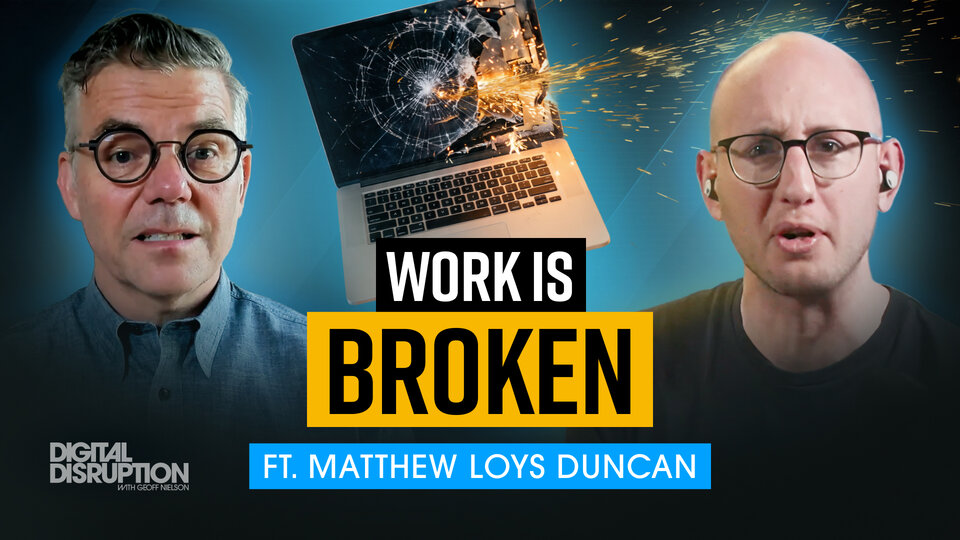
Our Guest Matthew Loys Duncan Discusses
AI vs. The Invasion of Work: Could We Take Back Our Lives?
Modern work is broken.
Endless meetings. Constant notifications. Work invading every corner of life.
So, what does the future of work actually look like in the age of AI agents, generative AI, and organizational transformation?
Microsoft’s Head of Future of Work & AI, Matthew Loys Duncan, says we’ve reached “human capacity” and that AI may not replace knowledge workers, but instead replace the worst parts of work itself.
In this episode, Matthew joins Geoff Nielson to unpack how AI agents, generative AI, and organizational redesign are reshaping white-collar work. He explains why most companies are approaching AI the wrong way, why culture matters more than technology, and how the future of work will be “human-led, agent-operated.”
From Microsoft’s Work Trend Index research and AI-native organizations to tacit knowledge, burnout, productivity, and leadership transformation, this conversation explores what happens when businesses stop optimizing old workflows and start redesigning work from the ground up.
If you’re trying to understand the real impact AI will have on work, leadership, and business strategy over the next decade, this episode is for you.
Like and subscribe for weekly conversations on AI, business, leadership, and the future of work.
00;00;01;14 - 00;00;30;26
Matthew Loys Duncan
The digital debt of it all is just incredible. Where do we even find information? Literally, which channel do I go to? Email. Chat? Text? The invasion of of work is never been higher or greater. This is when we have the opportunity to say, look, if we design it the way we want to design it, leveraging this new sort of valued intelligence, it definitely fills the gap of where just human capacity is at.
00;00;30;28 - 00;00;54;10
Geoff Nielson
This is a show about the future of tech and the future of work. I'm Geoff Nielsen and today my guest is Matthew Duncan. He's Microsoft's resident expert on the future of work and AI. As a longtime thought leader, he leads the annual Work Trend Index and partners with Harvard and Fortune 100 leaders on the future of work. Matthew thinks that today, too much white collar work sucks and is getting worse.
00;00;54;12 - 00;01;15;03
Geoff Nielson
He doesn't think I will kill these jobs. He thinks it will save them. I really want to know how we can make our jobs less crappy. What he thinks the real future of work is, and what we can do as professionals and as leaders, to completely rethink the way that we get things done. Let's find out.
00;01;15;06 - 00;01;32;19
Geoff Nielson
Hey, Matthew, super excited to have you here. Thanks so much for joining today. I'm really excited to jump into it. And I want to talk today about, you know, your take on the future of work. And maybe just to kick things off, you know, there's so many competing narratives out there about the future of especially white collar work.
00;01;32;22 - 00;01;57;26
Geoff Nielson
And, you know, everything from writing the obituary of white collar work and like, you know, 90 or 100% of these jobs are going to be wiped out to status quo to on the other end, actually, there's going to be more demand than ever for these jobs. So I'm curious from your perspective and what you're seeing, where do you see the next handful of years playing out for, you know, the type of kind of office jobs that we talk so much about?
00;01;57;29 - 00;02;29;26
Matthew Loys Duncan
Yeah, I mean, we we definitely think about it, and study it from a historical standpoint. Look, been through a couple technology revolutions and absolutely each time there have been jobs, loss and jobs gained. How that evens out and in which areas, you know, a little bit to be determined. But there's there's no doubt that there's going to be some, entry level type work that's going to be sort of displaced.
00;02;29;28 - 00;02;53;03
Matthew Loys Duncan
But with that, we think there's going to be an onslaught of new opportunities and new roles and jobs. And it's just going to be a shift, and we'll have to see how that plays out. But, yeah, I'm not I'm not thinking this is a doom and gloom. I'm thinking this as an opportunity for sort of a reimagination of what information work could be going forward.
00;02;53;03 - 00;03;08;06
Matthew Loys Duncan
And yeah, we kind of firmly see this is human led agent operated. So there's going to be humans leading this. It's it's not going to be an all a generic army, of workforce.
00;03;08;08 - 00;03;14;01
Geoff Nielson
Right. So it's more I guess in your view, it's more augment then completely automate and replace AI.
00;03;14;05 - 00;03;15;23
Matthew Loys Duncan
Yes, absolutely.
00;03;15;26 - 00;03;37;17
Geoff Nielson
Yeah. No, it makes sense. One of the pieces that I found very interesting, I was looking at the, you know, the work trend, report that, you know, you and Microsoft put out each year. And, you know, one of the things that caught my attention, there's this theme right now. There's a lot of, you know, I hate to say fear, I guess, about the future of work and, as you said, sort of doom and gloom.
00;03;37;19 - 00;04;03;07
Geoff Nielson
And one of the things that caught my attention is that we talk about, I guess, the future of work as, oh, it's going to destroy the present of work. And we talk about it almost as though, like the presence of work is sacred and every job is amazing and perfect and should be protected at all costs. And what caught my attention specifically, is some of your stats about the reality of white collar work right now.
00;04;03;09 - 00;04;27;17
Geoff Nielson
And some of the stats you've got here is that, you know, the average person, you know, in an office has 275 interruptions a day. You know, 60% unscheduled meetings. You know, a 15% increase in meetings and chats happening outside of core hours. So you know that the picture that paints to me and and by the way, it resonates very, very concretely with me in my life is it's kind of grim.
00;04;27;25 - 00;04;35;28
Geoff Nielson
It's not like, oh, everything is perfect. We have these utopian jobs. Nothing could possibly get better. And I'm curious if you had the same reaction.
00;04;36;00 - 00;05;02;10
Matthew Loys Duncan
Oh, absolutely. I mean, I don't know if there's a moment in my career that I feel just like. So, you know, overwhelmed by the digital death of it all is just incredible, right? Where do we even find information? Where do I literally which channel do I go to? Email? Chat? Text? I mean, the invasion of of work is is never been higher or greater.
00;05;02;12 - 00;05;25;07
Matthew Loys Duncan
And so yeah, you ask a really great question like is it really spectacular? No. Am I getting paid a lot just to do email I like, are you really actually leveraging my God given talents or the fact that I studied and and really have honed expertise that just isn't getting applied because I'm just trying to make it through the minutia.
00;05;25;09 - 00;05;50;06
Matthew Loys Duncan
And I think this is a great opportunity. I mean, this is the half glass full version of an optimist who's saying, look, we could actually change work, which, by the way, has been around for decades in almost the same form or fashion. And we could actually rethink how it could be done. You know, in fact, our report this year really talks about human agency.
00;05;50;08 - 00;06;16;11
Matthew Loys Duncan
And I've never felt more sort of like, poignant on this moment that this is when we have the opportunity to say, look, if we design it the way we want to design it, leveraging this new sort of valued intelligence, it definitely fills the gap of where just human capacity is at. And, yeah, I think it's a great opportunity.
00;06;16;13 - 00;06;28;16
Geoff Nielson
You use the phrase, you know, human agency, which to me is very deliberately kind of juxtaposed against like, you know, the notion of AI agents. What do you mean by human agency? Like, what's the piece there that you see as being so important going.
00;06;28;17 - 00;06;52;16
Matthew Loys Duncan
Yeah, I mean, our research absolutely shows that we're at a capacity of human, you know, human productivity, right? I mean, we've been throwing technology at it, but we just have reached a point in which we can't do anymore. So when I think agency, I think, well, great, take the work that's, you know, less valuable that is a bit more mundane.
00;06;52;19 - 00;07;33;23
Matthew Loys Duncan
I mean, we could talk about what type that work is and give me the agency to do two things to actually leverage what I think is more valued output. And let me redesign. Right. So I think this concept of an individual, I mean, we've seen this massive shift in the recent just co-work era of the last three months of like, how can you as a human now take, a horizontal look of all the activities that need to get done and you can actually, you know, through a very quick turn using these genetic tools, create all the pieces of getting something done from left to right.
00;07;33;29 - 00;08;01;29
Matthew Loys Duncan
And that just hasn't been the case, right? We've been sort of reliance on other people and processes, but it also means like AI, which I always love to ask people like, what about your job? Do you just not like that you're frustrated with the operations of it? Now you have the chance to actually change that. You could redesign it because you have these capabilities with a genetic, you know, sort of, tools to make that happen.
00;08;02;01 - 00;08;17;12
Matthew Loys Duncan
So I do think that there's an agent as opposed to like fear and sort of, frustration and doom, like, let's flip that on. Its side and say, hey, this is an opportunity to work the way you want to work.
00;08;17;14 - 00;08;37;28
Geoff Nielson
So so let's talk about that opportunity for a minute. And, you know, one of the questions that I'm interested in is just, I guess, what the what the people who are doing this bastion of figured it out. What are they truly doing differently. And I think, you know, you use the phrase kind of frontier, workers, frontier professionals that, that, that fractional group of people.
00;08;38;04 - 00;08;40;15
Geoff Nielson
What what makes them different?
00;08;40;18 - 00;09;02;23
Matthew Loys Duncan
Yeah. Yeah. I think there is this new category we're calling Frontier professionals. And when we went out to, like 20,000 individuals and did our survey and really started to stratify who they were like, we came up with about 16% of that AI workers in our research. And so what do they do? First of all, they don't outsource judgment.
00;09;02;26 - 00;09;20;29
Matthew Loys Duncan
So this concept of like use it as a tool and an enabler. But don't just say, great, do my work and I'm going to let you do whatever you need to do. Judgment is still paramount and centered at the where the way work needs to get done. But a couple things we found in this group is we sort of analyze them.
00;09;21;02 - 00;09;49;00
Matthew Loys Duncan
80% said I, let them produce more work than they did last year. So they're starting to see a throughput, that they hadn't seen before. And that's exciting. 53% deliberately pause before they think about the work to get done and say, what can the agent do? And what should I do as a human? So I think there's a new responsibility of understanding how that works.
00;09;49;01 - 00;10;10;29
Matthew Loys Duncan
This concept of delegation. We could talk a little bit about what are those characteristics, and then 43% intentionally do some of the work without AI and to keep their own skills sharp. So yes, is there, opportunity for sort of lazy and, or just people who just want to not work and push it all off to agents? Sure.
00;10;10;29 - 00;10;28;22
Matthew Loys Duncan
There's got to be that class. But what we're seeing is those that are actually very intentional keyword. They're intentional about how they're doing it, you know, are going to succeed, and they're going to be the ones that are going to rise up. You know, in the career setting, they're the ones that are actually going to break through.
00;10;28;24 - 00;10;54;24
Geoff Nielson
If you work in it. Infotech research Group is a name you need to know no matter what your needs are. Infotech has you covered. AI strategy covered. Disaster recovery covered. Vendor negotiation covered. Infotech supports you with the best practice, research and a team of analysts standing by ready to help you tackle your toughest challenges. Check it out at the link below and don't forget to like and subscribe!
00;10;54;27 - 00;11;18;00
Geoff Nielson
Some of the words you describe there around delegation and getting more work done. You know, what's interesting to me is we're talking about that in the context of AI, but you could just as easily be talking about it in the context of like, you have an intern, you have a research assistant, you have a team. Is is that a useful framing that you just have more resources at your disposal to get your work done?
00;11;18;03 - 00;11;27;22
Geoff Nielson
Or is there something fundamentally different, like how would you approach? I guess, you know, as a professional your relationship with these tools?
00;11;27;24 - 00;11;50;28
Matthew Loys Duncan
Yeah, I mean, I think I think that's I think that's a great question because it really is a similar context. I remember when we first started this journey, three, three plus years ago when ChatGPT came on the market. And we're really looking at this and saying, okay, what is different about this generative AI? I mean, it's it's no doubt that, like, we all started utilizing it just as another sort of search engine.
00;11;51;00 - 00;12;09;07
Matthew Loys Duncan
Right? And there is value in asking it information. We call that sort of this asking, you know, you look up a fact, give me some feedback, tell me where to get the best. You know, Mexican food said place. And you can do it in this great sort of natural language, which is better than search in that, in that regard.
00;12;09;13 - 00;12;31;00
Matthew Loys Duncan
But yeah, that was very tactical. And then we really switched into this mode of like, I'm just going to, you know, utilize it to do all the administrative things that I don't want to do. But the fact is, at this moment in time, we see these four categories, right? One is delegation. And guess what? Not every person is really good at that.
00;12;31;00 - 00;12;52;21
Matthew Loys Duncan
That is not a muscle they've created. But to actually delegate, as you pointed out, to like an intern or a lower, you know, sort of an entry level worker, you have to give context. You have to give sort of like specify specificity of sort of how it plays out. And so that's a muscle that if you don't have, you need to learn.
00;12;52;25 - 00;13;28;05
Matthew Loys Duncan
And that's why we saw early on that those had actually managed. Humans were actually better at figuring out how this AI works. But if you have delegation you have asking of simple questions. You ask to have collaboration. So this switch that we see turning on right now is that these individuals, in fact, 49% of the people we surveyed are utilizing agents now to do sort of collaborative work, analyzing really good Hetty information worker type of, sort of factors in their daily job.
00;13;28;12 - 00;13;50;01
Matthew Loys Duncan
And so the collaboration using it as a thought partner is really great. And then I think there's going to be this new element of just exploration, like I need to get this work done. What if I could get this agent to start to do these tasks and then rewrite this and then send this here? And so we see the sort of process of it all happening.
00;13;50;03 - 00;14;10;03
Matthew Loys Duncan
But they are unique. And to your point very specifically. Yeah. You you have to think about it as another team, right. I mean, respect that it's technology and not a human, but you do need to think about giving it. The more you actually create the context, the more value you get.
00;14;10;05 - 00;14;31;07
Geoff Nielson
I'm glad you brought up the notion of agents of AI agents. Because, you know, you could you could listen to some of this and say, oh, it's just generative AI. It's just like, you know, it's writing an email for me. But but it sounds like it's more than that. And that, that these frontier workers are actually finding ways to, I guess, sort of build their own agents to automate their work.
00;14;31;14 - 00;14;35;07
Geoff Nielson
What what is that looking like? And what is the real frontier there?
00;14;35;09 - 00;15;04;19
Matthew Loys Duncan
Yeah, I think there's valuable for Jess. Generative AI, your copilot helping you, you know, organize your calendar and get sort of you in a better position to get the work done. There's definitely an emergence of you being able to use edges to start to do the work on your behalf, right, with your guidance and oversight. But do the work that means yes, take this transcript of information.
00;15;04;20 - 00;15;35;04
Matthew Loys Duncan
These reports start to put it into a report, but then actually update every other place in my sort of ecosystem of work where this needs to be changed by this, this data point or this factor, reconfigure that into becoming a new presentation that we can take out to market or what have you. And you can start to see, like, if I was to accomplish that and and current state, I would have to connect with a bunch of people, have many steps, make that happen.
00;15;35;11 - 00;15;59;04
Matthew Loys Duncan
But if I can build an agent that actually gets that work done for me, and I'm checking in here before it gets, like pushed out to this, you know, audience or I'm getting response back and then I can improve it. Yeah. It starts to like, change the way I get stuff done. And that's huge value that starts to change work.
00;15;59;06 - 00;16;16;24
Matthew Loys Duncan
And more importantly, as I talk to leaders every day, it starts to prove out the impact. Like, this isn't just, you know, Bob or Mary having 20% more time to to do work. This is about changing the way you work that creates better outcomes.
00;16;16;26 - 00;16;42;05
Geoff Nielson
I want to talk about that impact in those outcomes for a minute, because so far, the lens we've been taking here is all through the lens of the individual worker and professional and how they can automate more, how they get more done. And, you know, you know, it seems to me that when we talk about this impact right now in terms of the stage we're at with this technology, it feels like a lot of that value is still at that individual level.
00;16;42;05 - 00;17;03;04
Geoff Nielson
It's grassroots. There's, you know, there's a lot of people talking a big game about, you know, whole organizations transforming themselves and becoming AI first. But it feels like there's still when I actually look at what's going on out there in practice, so much of the value that's being captured is at that individual level. And so I'm curious what you make of that.
00;17;03;04 - 00;17;10;25
Geoff Nielson
Are you seeing the same thing? And I guess what is the landscape and where do we go from here.
00;17;10;27 - 00;17;38;09
Matthew Loys Duncan
Yeah I mean that's that's the, that's the, the meaty question that we get asked all the time, like where's the ROI? And they think that I think leaders have contemplated it as like just another technology component. And you know, we basically are very clear, like if you just think about it just as a next gen technology and you send it over to your CIO and you ask for a bunch of pilots to be done and approved out, and it's it's not going to work.
00;17;38;09 - 00;18;02;27
Matthew Loys Duncan
You're not going to wake up in a better place. And two, three, five years down the line, down the line, what you need to do is do two parts. Two parts of the coin. One is you need to build awareness and understanding across your entire organization. And I think that's starting to be the case where organizations started in a pilot mode and said, look, we just need to give everyone the access to this.
00;18;02;27 - 00;18;52;24
Matthew Loys Duncan
So there's finding value on an individual basis, and they're actually assimilating to it so that they can actually understand what is the greater value that you can get from it. On the flip side, yes, those organizations, those frontier firms that are actually finding 1 or 2 core processes, building teams to reimagine that outcome they're trying to achieve and work back from that and say, look, this process might have had 17 steps, you know, through six different organizations to get from point A to point B, where it's whether that's financially closing your books, doing a different sort of sales engineering process, marketing, you know, campaign process, whatever that is, breaking that down and reimagining how
00;18;52;24 - 00;19;26;26
Matthew Loys Duncan
that work gets done to that outcome. Yeah, that's starting to really have meaningful impact. Is starting to show that, we can leverage a Gen2 capabilities to drive to market faster, to actually get, you know, revenue growth. And I always love to ask this one question, like, what can you do that you couldn't do during I mean, everyone wanted revenue growth five years ago or, you know, or sort of acceleration in their go to market.
00;19;26;29 - 00;19;49;03
Matthew Loys Duncan
But what is it about now? And this new technology that gives you a whole new way of doing that. And I think that's something I basically see it I need is all the time startups have a blank slate so they can go and run. I just got back from Europe where we had a CEO summit, mid-cap companies that are working with PE, firms that are getting really precise.
00;19;49;03 - 00;20;10;01
Matthew Loys Duncan
Unlike if we just could fix this one part of our business, let's just apply and focus with the technologies they're starting to see meaningful impact. And then larger organizations. Yeah, those that have the discipline to say, like, we're going to be in this one function or one process to work through it, it's starting to work. It's starting to show pay off.
00;20;10;06 - 00;20;13;23
Matthew Loys Duncan
But you know, we have we have a ways to go.
00;20;13;26 - 00;20;39;12
Geoff Nielson
And just to make sure I'm understanding that correctly, it sounds like it sounds like the key piece in that second, you know, scenario is starting by asking what function is kind of mission critical or what what will give us the most leverage, like if we can actually turbocharge one piece of the business, what's going to have the biggest impact on, you know, on revenue, what's going to have the biggest return and then figure out how we can apply the technology there?
00;20;39;12 - 00;20;40;29
Geoff Nielson
Is that is that what you're getting at?
00;20;41;06 - 00;21;06;25
Matthew Loys Duncan
I am, I am, and precisely like, here's what I would say. You know, a thousand flowers, blue grass. I walk into a conference room and one of the leaders is like, hey, you know what? We're ahead. We are using agenda capabilities. In fact, we have 14,000 agents built with proud, with pride and and sort of their their chest puffed out and I'm like, wow, that's amazing and crazy.
00;21;06;25 - 00;21;33;05
Matthew Loys Duncan
Like, what are you doing with all those agents. Right. So if you're using it to give people agency to go and start to experiment, great. But on the, on the other side is no, no, no, no, you're trying to run a business. Let's get really pragmatic. You know, your business. Let's find the 1 or 2 processes. If we could alter them, then that is going to have a meaningful input pack to your to your business.
00;21;33;05 - 00;21;39;07
Matthew Loys Duncan
So let's use agenda capabilities to make that happen. And that that gets that gets exciting.
00;21;39;09 - 00;22;07;08
Geoff Nielson
It does I want to I want to follow a little trail there around. You mentioned a case of 14,000 agents and like said as a point of pride. And maybe it's just the fact that I've, you know, spent my career working with an awful lot of CIOs. But I hear that number and a part of me panics about, like, what does it mean to manage an organization that has 14,000 agents, like, how do you how do you govern that?
00;22;07;08 - 00;22;33;19
Geoff Nielson
How do you make sure that it's, you know, the processes are right, that you're not just like having 14,000 new cowboys that are going to, you know, break everything traditional working in the organization. So, I mean, I wanted to ask you, I guess first off, do you see 14,000 agents as a good thing? And if an organization is just letting you know a thousand agents bloom, what do we need to do to make sure that it actually, you know, creates benefit?
00;22;33;21 - 00;22;59;04
Matthew Loys Duncan
Yeah. I mean, I think there's there's two parts I would go with, with sort of look at one is what is the role of the leader in this new agent or AI age. Right. We think it's re-architecting work like when you sit down with a C-suite, with this really great program that we do with Harvard Business Schools, AI Institute, we bring the C-suite.
00;22;59;05 - 00;23;27;14
Matthew Loys Duncan
And one extended to a two day workshop of just, you know, understanding the impact and what is AI and get putting hands on keyboard to build stuff. What I see is a light bulb coming on like, wow, you know, what we need to do is we need to actually re-architect the way we work organizationally, systems wide and actually like really a process how the work actually gets done.
00;23;27;16 - 00;23;50;24
Matthew Loys Duncan
And, that's, that's really important. And, and guess what? There's a lot of leaders that wake up every morning. Little do they think that they should be actually using an agent. And they should because to to use it is to understand it and to wow, I'm not really doing the work. I'm just like setting the culture and guiding the organization and making the hard decisions.
00;23;50;27 - 00;24;23;29
Matthew Loys Duncan
But no, you actually need to say like, how are we actually moving, you know, denim Levi jeans from the design of it, the production through it, the manufacturing and how it ends up in the retail. Like if, if that's our core tenant of actually growing our business, we need to focus and so, yes, I will say I think there's there's little downside in giving people the agency to use these tools.
00;24;23;29 - 00;24;52;29
Matthew Loys Duncan
And really understand them because they will innovate in their own way. I think, though, there has to be some structure. So we we create like a 365 is a 365 that helps people manage and monitor governance understanding. So you're absolutely right. There needs to be some governance to this. We're actually doing some really interesting research to understand, you know, are people more effective building their own agents?
00;24;53;02 - 00;25;20;23
Matthew Loys Duncan
Are people more effective using a centralized system of agents that are built for them? You know, how do you think about this type of, you know, sort of structure? And sometimes it's just as we talked about the capability of the individuals and selves. But, I do think we're starting to come to an era like, great, you have a lot of innovation, and you've got culturally this experimentation mode starting to happen.
00;25;21;00 - 00;25;27;27
Matthew Loys Duncan
But you do need to put guidance in it so it gets structured and applicable to the business goals.
00;25;27;29 - 00;25;42;13
Geoff Nielson
I'm curious if you have any kind of initial findings from that research on the spectrum from let everybody build it themselves to have some sort of like central office or central, you know, program that builds it for them, or whether the answer is just it depends.
00;25;42;15 - 00;26;12;17
Matthew Loys Duncan
Yeah. I think, I think we're learning, our research isn't totally, completed. I think what we're finding is there are capabilities of the people who are good at building agents, right? So they have to have some kind of understanding of how the actual tool works and its capabilities, even though it's brilliant because it can make even someone like myself, who's not a coder by nature, be able to like, do pretty incredible things.
00;26;12;17 - 00;26;37;19
Matthew Loys Duncan
But the website make these things happen. I think it's also understanding the work. So there's definitely an importance of understanding and having expertise in the work to be done. How do we want to bring the product to market, etc.. So the combination of those two, I think is effective. I mean, one example, we're always testing inside of Microsoft and how do we do that?
00;26;37;22 - 00;27;01;28
Matthew Loys Duncan
We have a really cool group called IR camp that goes in and does like a three week sort of re-imagination of how the work could be done with a said team to really start to get them to the other side, to make that happen. That seems to be good when we're thinking about process redesign. I think there's this concept of I like to cleverly call it the book club.
00;27;01;28 - 00;27;24;23
Matthew Loys Duncan
How do you take like, people with similar roles, but maybe even in different groups, and talk about what's the commonality of things that are happening at work or in the work that we do, what what is important? And then what do we want to make sure humans so keep their hands on and work? Can we use agents to make that happen?
00;27;24;25 - 00;28;07;08
Matthew Loys Duncan
Because I will tell you, I think one of the most complicated things about this moment and information work is we actually don't know the work that we're doing. Like, what did you do yesterday? Are the things that you're doing in information work actually moving the ball forward to the goals that you're trying to achieve. And so we have structured in meetings we get, you know, barrage of emails where we think we're productively moving forward, that what is the work we're actually doing and taking time to pause and understand that work, not to automate it, but to reimagine what are the what are the pieces that we really need to do to actually get to the
00;28;07;08 - 00;28;09;21
Matthew Loys Duncan
goal?
00;28;09;23 - 00;28;39;25
Geoff Nielson
I, I completely buy that. And it comes back again to what you were saying about our, our jobs, especially as leaders being re-architecting and being able to to see the big picture. I'm curious, you know, whether it's the re-architecting side coming from leaders, whether it's, you know, professionals using kind of invented tools, if you have any, I guess, kind of war stories or specific cases, you know, you've seen in the last handful of months that have really impressed you?
00;28;39;28 - 00;29;07;10
Matthew Loys Duncan
Yeah, I think that well, in our latest research, interestingly enough, I'll start there. You know, when we actually look at this sort of two by two, you know, spectrum of like, is our individuals actually taking sort of initiative and writing on that, that can be a cultural thing. And then on the other side is the organization set up to really actually make that sort of initiative happen.
00;29;07;13 - 00;29;38;24
Matthew Loys Duncan
And only 19% of all those that we surveyed and studied really have what we're calling both this frontier mentality, have both individual capabilities and organizational readiness to absorb it. Right. And I just want to pause there for a second because that's a much we're on a journey. I feel like we're doing a little bit of a disservice to always look at organizations on adoption.
00;29;38;27 - 00;30;05;20
Matthew Loys Duncan
That's been a metric. So how we set the metrics to measure, I think, is a bit of a challenge. And so it is not about adoption, right. This goes back to the point of like is all those are the creation of all those agents really important? Yes. We want people to assimilate and understand what the technology and capability can do and and making it happen in your personal life, in your business, your work life is really important, but it's absorption.
00;30;05;22 - 00;30;34;24
Matthew Loys Duncan
Is it actually getting into the work flow? Is it actually being part of the work? And I think that's what we're calling this transformation paradox, right? When employees sort of see the capabilities that the organization as a system, is it ready to actually absorb it, like to really make it happen? And I think that's one of the challenges we're at, is that organizations are not structured or set up.
00;30;34;26 - 00;31;00;09
Matthew Loys Duncan
There's a lot of hackathons. But there isn't an orchestration of how this work is going to have to change. And that is not on the shoulders of a CIO. So solo. Right. This is it. Like just attack. It needs to be in the C-suite across these lines of business to say, okay, how do we need to get work done?
00;31;00;09 - 00;31;35;05
Matthew Loys Duncan
And frankly, we're we forecast the fact that over the next years, definitely silos of functions will become blurred and that it's going to be not about the org chart or how it's structured. It's going to be about the work chart and how the work is getting done. Very cross-functional. And so, if you can see that playing out, it really then becomes, okay, if we need to have this cross functional process, what are the skills required to actually get that done?
00;31;35;05 - 00;31;58;20
Matthew Loys Duncan
And the skills lie in humans and the skills lie in agents. And I think that that's hard to imagine. I see it all the time in AI native startups that are orchestrating what they do by the work to get done without all the layers and just, you know, this agility. I mean, we've we've used these terms in the in the past years and decades.
00;31;58;22 - 00;32;31;08
Matthew Loys Duncan
But I do think this configuration around, is this what we called a Hollywood model, where you take sort of the best skills and apply it to get this work done? You have a project and an end? They it's very easy to imagine that way, but I think that's where it starts to get interesting. And what I'll tell you is if you have the willingness and the intention to actually do that, what becomes interesting is the surprises.
00;32;31;10 - 00;32;59;25
Matthew Loys Duncan
So if you take, sort of an accounting process in your finance organization and there's many steps that happen to close the books or whatever that might be, what we start to see is bubbling up individuals along that process that say, wow, you know, now that I see this and I'm more participatory in the design of it, yeah, we're actually noting that risk, and risk tolerance is off.
00;33;00;04 - 00;33;27;01
Matthew Loys Duncan
Right. And so now that group is starting to become a risk management group because they see different things happening in, in the way that sort of accounting is, is being processed through. And so this is going to be what the light bulb comes on where we actually re-architect to find the new value, the new way. And, and yeah, I think that's where the opportunity is.
00;33;27;04 - 00;33;48;16
Geoff Nielson
There's I'm going to ask you a difficult question. Just a heads up on that. So, so, you know, the way you've kind of framed that out, Matthew, is there is out there these AI native organizations that have what I'll call, I guess, the org design, the operating model, the culture to absorb this and to be architected specifically for these tools available.
00;33;48;19 - 00;34;11;00
Geoff Nielson
And then there's an awful lot of of other firms. And, you know, if I'm feeling not generous, I can call them legacy firms where there are more silos and they do things more traditionally. And I guess the question is, how do you bridge that gap if you're not an AI native firm? Because, you know, my my gut tells me that, like the CEO pounding on the table saying, you know, use AI more, get better at adopting AI.
00;34;11;07 - 00;34;36;27
Geoff Nielson
You know, just saying that over and over again is not the answer you need to have this kind of deeper structural reform, as you said, to move away from these silos, to think more about how the work gets done. What is it? What does that look like in practice, and do you have any guidance for, you know, C-suite leaders or boardrooms where they have an appetite to take this on, but they maybe don't know how to go about doing it?
00;34;36;29 - 00;35;06;24
Matthew Loys Duncan
Yeah, I think, I mean, there's a couple great examples. So I had the opportunity and the pleasure to work with a cohort of 15, you know, pretty large fortune 500 branding companies. And we are learning and examining with, with, with our sort of collaboration at Harvard Business Schools, I Institute, we we bring these companies together and start to understand like what's kind of unlock and, and where that sort of opportunity for, for leadership to, to really work.
00;35;06;26 - 00;35;32;02
Matthew Loys Duncan
I, I think first and foremost we have to look at culture. So lumen, which is a telecommunications company that's reinventing themselves in the in the age of AI, to really be the sort of the, the, the wire behind, you know, the AI future. It starts at the top, where Kate Johnson, the CEO, talks about sort of a learn it all mentality.
00;35;32;02 - 00;36;06;05
Matthew Loys Duncan
We will experiment, we will learn. And this is I'm telling you, an old school cable driven type of corporation that's that has a totally breadth of new kind of, culture to say, like, we can change the world and do anything. And when we brought into campus at Harvard, yeah. 42 leaders across the organization in a multitude of different functions came together to try to find alignment and debate about what is fundamental of this culture.
00;36;06;05 - 00;36;33;20
Matthew Loys Duncan
And then how does that change the business? And that's that's where it's got to start. In fact, they're a really interesting example because who's leading, you know, their AI initiative. But you know, Anna White who is the chief HR officer and agent officer of the company. Right. So what better person to think about? What does this mean for humans and agents to come together?
00;36;33;20 - 00;36;54;10
Matthew Loys Duncan
How do we get incentivized by this? What does that mean for reviewing and understanding sort of how this work needs to get done? We need to think about it as that sort of collaboration. So I start to see the culture as a factor. I start to see systems thinking like, how do we actually build a whole new way of working in systems.
00;36;54;13 - 00;37;24;18
Matthew Loys Duncan
So org design and what does that mean to be more fluid in the work to get done? And yeah. And I think, I think there's a imperative for senior leaders to model. Right. Exactly what they're talking about. You. This is a this can't be some random mandate without modeling and showing and being very present about it.
00;37;24;20 - 00;37;47;19
Matthew Loys Duncan
I don't think this can be, you know, something you can't coach through. Like, you have to bring people along. Some middle managers are really needing to be responsible for thinking about how to manage both agents and humans and really model that. And then, you know, we have to give some grace to the people and, and care for them to really bring them along as well.
00;37;47;21 - 00;38;26;24
Matthew Loys Duncan
So, and understand that this is we're asking you to change, right? You don't have to the opportunities are front of you, but it's inevitable. Change is happening. And I think that sort of mentality state really, really matters. I mean, I'll give you another quick example. We work with DuPont, and they went through another sort of interesting leadership, and their CEO had sort of, you know, wanted to figure out how to think through being quote, quote unquote, a frontier type firm.
00;38;26;24 - 00;38;46;26
Matthew Loys Duncan
Like, what does that mean for us to really take what is a very high risk? You know, sort of, business and try to translate that into this idea to bring it forward. And what she realized was, as she had, you know, sort of the AI initiative under the CIO, she actually said, no, no, no, no, you know what?
00;38;46;26 - 00;39;08;23
Matthew Loys Duncan
I'm going to lead this, you know, several days later, calls an entire company meeting and says, we are going to understand how this AI and I'm going to show you, because I built an agent and I'm show the rest of the company I could do this. And that starts to sort of like really set a tone and drive the board, meeting the strategy and make that happen.
00;39;08;23 - 00;39;14;13
Matthew Loys Duncan
So it's got to be top down and bottoms up at the same time.
00;39;14;16 - 00;39;33;26
Geoff Nielson
I, I find that really interesting. And it's different from a lot of the, a lot of the guidance I've heard traditionally around how to do this. And one of the pieces I want to hone in on, Matthew, one of the pieces you didn't say, like deliberately, which is that this is cultural, this is or design. And so it makes sense.
00;39;33;26 - 00;39;55;22
Geoff Nielson
If HR is involved in this, it makes sense if the CEO is involved in this. What you didn't talk about is the technology piece. You didn't say this should be the CIO. This has to be treated like a traditional technology initiative. And I'm curious, you know what what the implication is there? Like what role at all does the technology of this all play?
00;39;55;25 - 00;40;09;10
Geoff Nielson
And I guess, what does it mean for the future of enterprise technology if these are more sort of cultural and, you know, operating model oriented shifts versus just, you know, this is a piece of technology we're bringing in.
00;40;09;13 - 00;40;43;00
Matthew Loys Duncan
Yeah. I mean, let me be clear. I think it's a combination of both. Right. So I so yes, I'm overemphasizing the fact that, where we see it sticking the best is where there's actually a C-suite team that's contemplating sort of how together we need to. I mean, it is like, you know, you know, quote unquote, quote unquote, like, so incredibly important for this team to rethink what is their where they're going to emphasize where their AI strategy is.
00;40;43;02 - 00;41;12;22
Matthew Loys Duncan
I mean, IT and CIO has a really important part, right, to think about the governance. How is this going to map into a new system of of how we're going to operate the business? But, yeah, you know, I find it fascinating when I take 15 corporations and I look around sort of who is then quote unquote, you know, has a little bit of the mantle of who is going to be leading AI.
00;41;12;25 - 00;41;40;08
Matthew Loys Duncan
And individuals in the room are cats are Rose Crow's chief revenue officer. CEOs. I've seen a couple CFOs, even because they're thinking about sort of like new or strategy officers. They're thinking about the new business models this is going to create for us. I mean, it's not good enough just to like, get the growth. We have to think about new business opportunities to make that happen.
00;41;40;10 - 00;42;06;03
Matthew Loys Duncan
Alongside of CIO and, and some of these other functional areas. So yeah, I mean, I, I, I think the task at hand is how are you going to transform, you know, work at your organization. And the outcome better not just be efficiency, although that's valuable and it just can't be just straight up growth. It has to be.
00;42;06;03 - 00;42;35;18
Matthew Loys Duncan
What are the new business models and business opportunities I'm going to get from this? Because, yeah, it's going to get disruptive. There's lots of small AI natives like we saw on the internet. Boom. There's lots of midsize cap companies that are going to try to figure out how to, like, find their creative advantage. And yeah, large organizations are are semi well positioned in their market.
00;42;35;18 - 00;43;03;12
Matthew Loys Duncan
But it's going to be those that try to find new offerings and new ways of doing business. Yeah, it's changing fast. And so back to your point. The speed in which the technology is advancing and moving is imperative for the CIO and the CTO to understand where that's going, both from how it changes our business and what can it mean for our offerings like we've never seen before.
00;43;03;12 - 00;43;10;29
Matthew Loys Duncan
So that is intense. In addition to just, you know, how how do you play that out?
00;43;11;01 - 00;43;31;09
Geoff Nielson
I want to come back for a second to just the the prominence that culture plays here versus the technology or the speed of technology, because it really sounds like and, you know, I've heard this from, you know, a number of experts that, you know, the culture, the mindset is kind of a key ingredient in the stew here that's going to make this successful.
00;43;31;12 - 00;44;00;20
Geoff Nielson
One of the one of the implications there for me is that if it's culture, if it's mindset, if it's, you know, experimenting and transforming, that metrics can sort of be a friend or foe here, I guess, especially in the short to medium term. And if you're like laser focused on just getting value and obsessing over that question that that you might risk not making some of the bigger changes you need to make, you know, to to actually have a long term impact.
00;44;00;20 - 00;44;20;05
Geoff Nielson
So I'm curious, you know, we talked about absorption. We've talked about a few different metrics here. We've talked about long term value. What do you see as the role of metrics here and how important should they be? I guess in that short and medium term versus building kind of the key building blocks?
00;44;20;07 - 00;44;58;03
Matthew Loys Duncan
Yeah, I mean, I think business metrics. Yeah, I think the metrics need to shift a bit, but they're still very important. I, I think to your point from a, from an opportunity culture wise, I think there's, there needs to be some measurement of or some pressure to say, look, I need you to start to rethink the way you run your sort of team, run your organization, run your division in this new age centric world very acutely.
00;44;58;03 - 00;45;17;16
Matthew Loys Duncan
I think more than ever, the outcome we always yeah, this was a classic sort of consultative term, right. Like, oh, we're going to be outcomes based, you know, doing that I don't know, it always felt like, okay, yes, I'm trying to reach this goal and and I'm going to move backwards to try to figure, well, what that is.
00;45;17;18 - 00;45;36;15
Matthew Loys Duncan
But I don't know if we actually reinvented the process to get there or reimagined. Okay. There's probably several or many different ways we could actually get to that outcome. We just try to like, refine the way we were already doing it last year or the year before the year before, to improve it a little bit better. We took the learnings, sure, and we just improved.
00;45;36;17 - 00;45;59;19
Matthew Loys Duncan
And so I think that's the challenge. I think outcomes are really, really important. In fact, I think if you just start with that and say, how do you get to those outcomes? I think that's great. I've seen yeah, I've seen some leadership say, you know, ABC customer service organization, you're going to have to save $250 million. Go figure out how to get there.
00;45;59;26 - 00;46;32;12
Matthew Loys Duncan
Right. They're putting a stake in the ground and then you're going to have to redesign how you're actually going to make that happen. So I think people will, based on the culture, based on the company and what business they're in, the considerations and externalities that they have to deal with. Sure, they're going to make slightly different decisions, but yeah, I know, you know, in my sort of even even at Microsoft, you know, we have a very, very strong culture around model coaching.
00;46;32;12 - 00;47;06;01
Matthew Loys Duncan
Care to really understand sort of like how to lead and be learn it alls. So Satya instills it at every level that we are. We don't we are not know it alls. We're going to figure things out. And and it's very much a product to be on the journey of, you know, learning and mistakes and understanding. Absolutely. And sharing that back through I think on the on the flip side of that, yeah, we're feeling lots of, you know, opportunity to say, look, here are your outcomes.
00;47;06;01 - 00;47;25;09
Matthew Loys Duncan
Go figure that out. What does your team of humans and agents look like? How will you reimagine your process? From a startup guy, this is exciting because I think, like, we could do so much better if we had the opportunity to, like, reimagine what that is. I'll leave you with, I will I will mention this one thing.
00;47;25;12 - 00;47;49;04
Matthew Loys Duncan
So with all that said, it's easier said than done it. Absolutely. I get that there's just this ingrained ways to do it. And it's it's got a feel, sometimes a little radical. But I do think we need to start to move to those examples and start to challenge people to like, move that way. I will, I will share that there.
00;47;49;05 - 00;48;25;08
Matthew Loys Duncan
I think there's this concept of a learning system that's important. So this is what we're not accustomed to culturally. That if you push out this opportunity and agency to all the players on the team who would have you, how do you bring that learning in this democratized world as a part of a system, not just a one off hackathon or what have you, but how do you become part of a system and bubble up learning that is going to be able to help the strategy and, and sort of how the organization moves forward?
00;48;25;11 - 00;48;49;12
Matthew Loys Duncan
I think that's I mean, I don't know if necessarily know if I have that exact answer, but, we really see this kind of learning system as incredibly, you know, entrepreneurial and sort of innovative. Experimental mindset is really important. But also the learning sort of like process of it all is going to be critical.
00;48;49;15 - 00;49;08;29
Geoff Nielson
And that, you know, that that makes a lot of sense to me based on the conversation we were having earlier about the the individual level here and people, you know, kind of doing that bottom up re-architecting. And I mean, for me, and I've done some work in like product development teams and innovation and it feels like I don't know if this will resonate with you or if you've seen it play out.
00;49;08;29 - 00;49;30;24
Geoff Nielson
But like almost the idea of like a survival of the fittest of ideas that if you're actually listening to, you know, what people on the front lines are doing and they're all experimenting, that hopefully the best experiment wins and you say, yes, that's great, and you can take that to the book clubs or the, you know, the road shows and actually, you know, improve some of the processes that way.
00;49;30;27 - 00;50;00;23
Matthew Loys Duncan
Absolutely. Yeah. I hear this all the time, like, well, but is this really applicable to like frontline workers, what have you. And I think this here's what I know, that this democratization of it is going to be a value and that if we could bubble up the thinking that is found in the most, you know, unique places, not necessarily stratified by like it coming down this hierarchy of leadership, but it could be anywhere.
00;50;00;26 - 00;50;38;28
Matthew Loys Duncan
How do you like capture that, use that and improve in a more sort of iterative and fast space? I mean, this this is what this is what changes, and maybe even as the technology which gives us natural language and reasoning allows, you know, Carol on the front line to imagine something and go actually build it out, you know, in 20 minutes at a lunch break show, the idea that she's thinking about, because of this technology advancement and how sort of, enabling it is and then.
00;50;38;28 - 00;50;45;12
Matthew Loys Duncan
Great, that idea like, surfaces better, faster in a new way versus just a suggestion box.
00;50;45;14 - 00;51;04;29
Geoff Nielson
Right? Yeah. No, I really like that use case for it as well. And you used the word earlier Matthew, surprises that there's like just going to be surprises along the way when you do this. I'm curious whether, you know, working with, fortune one hundreds through Harvard or. I mean, you, you live this stuff day in and day out.
00;51;05;03 - 00;51;23;14
Geoff Nielson
And I'm curious if you've had any times, you know, recently where you've talked to, you know, either a business leader or, you know, someone who's been playing with these tools and, and and just had a moment of genuine surprise or around like, oh, I didn't think about that approach, or I didn't think that you would actually be able to do this.
00;51;23;16 - 00;52;11;26
Matthew Loys Duncan
Oh, yeah. I mean, I think I've, I think, I think the ability to go build a website in like ten minutes, like something that seems like so foreign, I think just starts to create light bulbs and individuals themselves. I think I'll share one sort of. Yeah. I think there's surprises in a ha I my, I get excited when, you know, some systems thinking is changed in that we, this group used to do these sort of tasks and now they see an opportunity to like I think I missed this before manage risk or they see an opportunity that they could sell a different product because, you know, they didn't realize that they had,
00;52;11;29 - 00;52;53;05
Matthew Loys Duncan
sort of this go to market component to it. I yeah, I think that's where it's going to start to unlock value that we didn't expect to create. Right. What could you do that's different? Because this again, Tic TAC capability is is so powerful. And making that happen. The reasoning behind it, the deep research getting the the deep research or understanding in the hands of people that you know, didn't that don't just need to parrot that out, but actually could contemplate it and come up with a better idea in the moment because they actually have that at their fingertips.
00;52;53;08 - 00;53;23;26
Matthew Loys Duncan
And it's not some dashboard. I mean, the paradigm is definitely natural language. Me being able to ask questions and go back and forth and be iterative in it, and that is going to actually unlock other things that we didn't even suspect. Right? So, yeah, I think that's I think that's there's some really interesting things there. I will tell you one, one project that we're working on, from a research standpoint that I think is fascinating is tacit knowledge.
00;53;23;29 - 00;53;50;27
Matthew Loys Duncan
Right. So this is classic I have this role as a sales engineer, and I get trained as a sales engineer. And over time my expertise and experience grows. Right. So how do you how that happens and where that goes? Yeah. Interestingly enough, you need to think about sort of, you know, well, what what's unique about the job and why am I good at this.
00;53;51;00 - 00;54;20;10
Matthew Loys Duncan
Right. Is it because I was trained and learned the steps, or was it the sort of ad hoc nature of the things that I came about? And so there's an organization and we're working with them and say, like, look, it takes us because we're very technical. It's very detailed and deep learning takes like 18 months to get to get these sales engineers up to speed and really productive in being bringing value to the process, like, can't we change that?
00;54;20;16 - 00;54;45;17
Matthew Loys Duncan
So we sat down and the researchers have been understanding sort of like, okay, what do you do every day? And, and and really understanding sort of what is that tacit knowledge. Ironically, what we found was that when you ask someone what you're good at, oh, I'm just good at this because I really understand the science behind it or what have you not is not necessarily shown in the way that they actually get work done.
00;54;45;20 - 00;55;17;10
Matthew Loys Duncan
Right. The tacit knowledge might be something special about what they're doing. They don't realize they're even doing it. So as researchers, they pulled and extracted what that was and started to build that out. And so the question becomes is, can we take tacit knowledge that's sort of gained over all these years and then pull that together collectively and then actually utilize that for new people coming on board to ramp them up faster and be more proficient faster.
00;55;17;12 - 00;55;43;25
Matthew Loys Duncan
And that's that's kind of interesting. That's that becomes really valuable. And you could sort of start to extrapolate that across a lot of different organizations, a lot of different businesses. How do we help bring that sort of inherent understanding to people faster? And you're still going to have your own lived experiences, your own expertise in that way as humans.
00;55;43;28 - 00;55;52;13
Matthew Loys Duncan
But we could pull that sort of really great knowledge, and that's just going to make us all better.
00;55;52;16 - 00;56;17;04
Geoff Nielson
It's I really like that. I really like that use case for it. And when I think about tacit knowledge, I guess I think about it in a couple of different flavors that I wanted to talk more about. Yeah. One of the flavors is, I guess, just like information retrieval. I guess, if I can call it that abstractly, of like, well, I've been here for ten years and I know how our systems work, and I know who does what.
00;56;17;10 - 00;56;52;05
Geoff Nielson
And I've found ways to, like, navigate the maze organizationally, if I can call it that. Right. Like, I, I know you know where to find things. I know, I know all the little gotchas about the fields and the systems and you know, where just like all these, these tricks, which is a little bit different, I guess, in my mind from, like, I'm a sales engineer and I know all this undocumented stuff about our customers or our prospects and what they're looking for and about the nature of their work that just nobody's ever taken the time to kind of, you know, document or systematize.
00;56;52;05 - 00;57;09;06
Geoff Nielson
And I'm curious when you think about, you know, tacit knowledge and the role that some of these, you know, AI tools can play. Is it more on the information retrieval? Is it more on the being able to document, you know, some of the softer undocumented stuff or is it a combination of both?
00;57;09;08 - 00;57;35;02
Matthew Loys Duncan
It's both. It's both. Yeah. No, it gets really exciting because, you know, the duck. So let's start with part one. You think about the documentation of that. And and yeah, it's like okay what, what? And who and how can this sort of agent really help me get better at that? Well, yeah, they can. I mean, we we pride in a big organization knowing like who to call on you couple.
00;57;35;03 - 00;58;03;17
Matthew Loys Duncan
We call it like this concept of a potato network. How do you actually know the people to get stuff done. And you need to rely on that. And you build and spend time to build those connections, and that's a value. But the fact of the matter is it's like, yeah, like if you had an agent that could actually tell you, like, tell me everyone in the organization who has expertise in A, B and C and you could call on them, it just gets you to point F that much faster and say, hey, I really have a question for you, X and Y.
00;58;03;22 - 00;58;28;14
Matthew Loys Duncan
Can I get this done? That's that's very valuable. And I think the capabilities are going to be immense in helping people just get to the right information at the right time, faster. That's a huge, exponential value. On the other side, it goes back to. Yeah, like I just have expertise. I've learned this. I've never documented it.
00;58;28;14 - 00;58;59;02
Matthew Loys Duncan
I've never really, like, took the time. But if we could figure out how that could be captured and create value back for others, I think, I think that's super powerful. Right. How do how do we actually take that sort of unique way of thinking about it? Those like, learned practical sort of angles of like getting the job done and pull that together.
00;58;59;04 - 00;59;23;03
Matthew Loys Duncan
You know, one might say, well, wow, that sounds like you're taking all the goodness of what I do out of this. Or it could be flipped on the other side. Like if there is a collective pull of that, that might make me that much better to, like, actually get to point my outcome faster or better. And so, yeah, I find that to be pretty fascinating.
00;59;23;03 - 00;59;37;18
Matthew Loys Duncan
If we can unlock a methodology on how to get that tacit knowledge and then start to show how it gets applied inside of agents, I think that can be, I think is pretty powerful for business.
00;59;37;21 - 01;00;03;11
Geoff Nielson
Absolutely. Well, and I feel like I feel like in some ways we've kind of come full circle on this conversation because we started talking about, you know, the the toil involved and all this kind of, you know, fractured, fragmented work. And you know, how it's not ideal. And now we're talking about, well, this is maybe some of the use cases, if we can use agents to do that for us and paint that more kind of compelling, valuable picture of the future.
01;00;03;13 - 01;00;28;17
Geoff Nielson
So, so I guess, I mean, on that note, Matthew, parting thoughts for business leaders, for technology leaders who are interested in building that future, who are interested in in AI, in the future of work, in, in kind of I don't know whether it's restructuring the culture of the organization or bringing in the tools of the future. What's what's kind of your best advice for what's going to be most impactful?
01;00;28;19 - 01;00;57;11
Matthew Loys Duncan
Yeah, I mean, I would probably say, you know, stay optimistic and get your hands on keyboards, like learn what it truly could be, right. So to understand it and its implications, if you're sitting in a board meeting and really wanting to, you know, explain like how this could change our way of working, like really start to understand the technology, at least in your own context, in your own, in your own way.
01;00;57;13 - 01;01;28;21
Matthew Loys Duncan
I think that's that's part one. And part two is, it's it's takes a new operating system. Like let's not underestimate that. So being eyes wide open by the fact that it needs to be part of our culture, it needs to be part of our organizational design and it needs to we need an operating system that actually gets us, to bring all this and more systematic way together.
01;01;28;23 - 01;02;00;13
Matthew Loys Duncan
And, I think approaching it that way is, is, is going to be critical for organizations to really, created manage. And then I would just say like, and push the limits of what you think is going to change in your business. Don't be satisfied with X percentage of efficiencies, or don't be satisfied with just saying, like, yeah, we could increase growth in this product line by X or Y, be satisfied.
01;02;00;13 - 01;02;16;03
Matthew Loys Duncan
Like we're going to create a whole new business opportunity or business like be so curious of like where do we get advantage in this? If we could actually, you know, be, you know, on this frontier.
01;02;16;06 - 01;02;27;29
Geoff Nielson
I love that I find it, you know, super interesting and, you know, actionable guidance. So, Matthew, just before we kind of wrap things up here, anything else we didn't discuss any other projects you're working on that have you super excited right now?
01;02;28;02 - 01;02;48;09
Matthew Loys Duncan
Yeah, I think, I think there's an opportunity as we, make our way through this is to hear from those that, you know, are sort of carrying the AI mantle in their back and really trying to understand sort of how did the trials and tribulations of the opportunities ahead. So I'm working on a project that I'm pretty excited about.
01;02;48;09 - 01;03;17;00
Matthew Loys Duncan
It's called On the Frontier. It's going to be a social show where I'm interviewing leaders, these individuals across the organization who have been sort of anointed to be sort of leading the AI initiative and getting a perspective of what does that mean? And what are you learning? And how does actually, you know, your approach, your mindset needs to be aligned to the opportunity.
01;03;17;05 - 01;03;44;08
Matthew Loys Duncan
So that's that's that's coming out here, this spring and pretty excited about that project. And just learning. Yeah, pretty excited about learning. As you know, no one really I always I love to share this. No one has a playbook. This is not a moment of like, just follow this playbook. You'll get there. It's a moment of you need to have a certain attitude, an approach and a mindset to get there.
01;03;44;11 - 01;03;53;09
Matthew Loys Duncan
But, I, I see a, I see a positive and upbeat, opportunistic, and optimistic horizon ahead.
01;03;53;12 - 01;04;16;05
Geoff Nielson
Now, I love that, I think the show project sounds really exciting and it makes complete sense in the absence of a playbook, just actually hearing from the people doing this and what they're doing, you know, to your point about the book club is, is very exciting and it seems really valuable. And, you know, I think we talked a little bit about it today, but yeah, I, I look forward to checking that out myself.
01;04;16;08 - 01;04;26;25
Matthew Loys Duncan
Yeah. And I appreciate the opportunity to have this conversation with you today. You're doing great work just bringing different perspectives to the market. And so, keep it going.
01;04;26;27 - 01;04;35;13
Geoff Nielson
Awesome. Well, Matthew, I want to say a big thank you for joining today, for sharing all your insights. It's been super interesting. And, yeah. Looking forward to connecting again.
01;04;35;16 - 01;04;38;08
Matthew Loys Duncan
Yes, absolutely. See you next time.
01;04;38;10 - 01;05;03;24
Geoff Nielson
If you work in it. Infotech research Group is a name you need to know no matter what your needs are. Infotech has you covered. AI strategy covered. Disaster recovery covered. Vendor negotiation covered. Infotech supports you with the best practice research and a team of analysts standing by ready to help you tackle your toughest challenges. Check it out at the link below and don't forget to like and subscribe!



The Next Industrial Revolution Is Already Here
Digital Disruption is where leaders and experts share their insights on using technology to build the organizations of the future. As intelligent technologies reshape our lives and our livelihoods, we speak with the thinkers and the doers who will help us predict and harness this disruption.
Listen


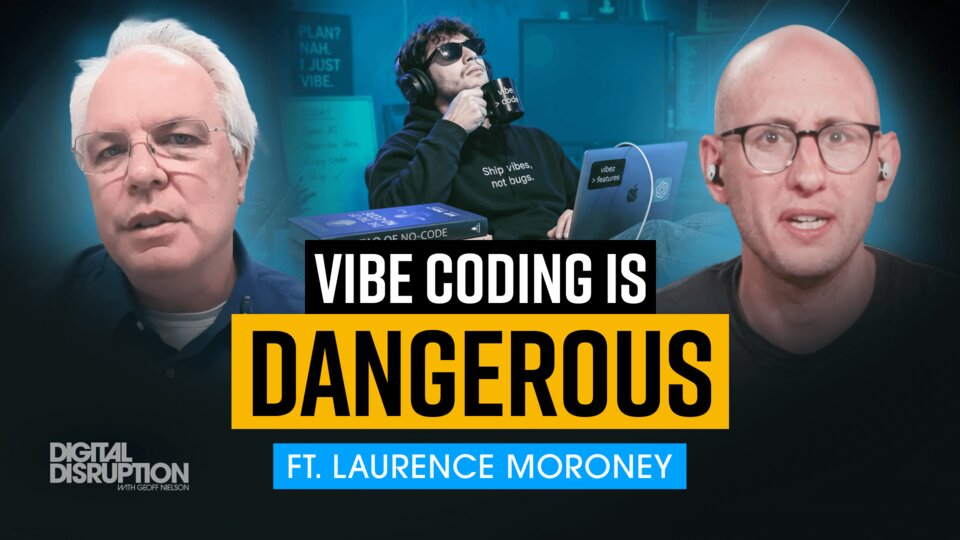
Our Guest Laurence Moroney Discusses
Ex-Google AI Lead: Vibe Coding Doesn't Belong at Work
In this episode, Geoff Nielson sits down with Laurence Moroney, former Head of AI Advocacy at Google and now Director of AI at Arm, to separate AI hype from reality and discuss what software development actually looks like in the age of generative AI.
Listen
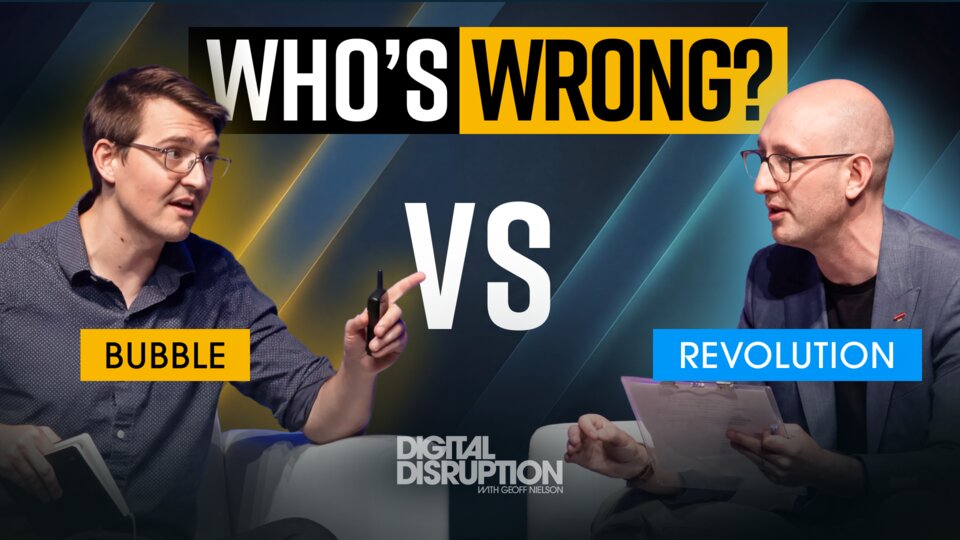
Our Guest Jeremy Roberts Discusses
One of Us Thinks AI Is Overhyped. The Other Doesn't | Live Debate
In this episode of Digital Disruption, Info-Tech's Geoff Nielson and Jeremy Roberts go head-to-head over one of the biggest technology questions of our time: Is AI overhyped?
Listen
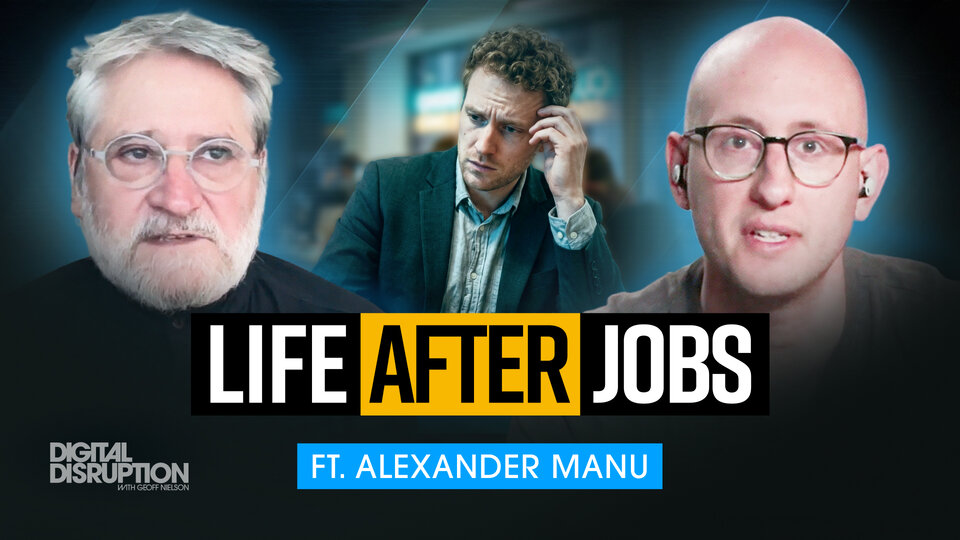
Our Guest Alexander Manu Discusses
Everything You Believe About Work Is About to be Broken by AI | Alexander Manu
Stop fearing the future of work. Learn why our current infrastructure is failing and how to adapt your mindset for the age of artificial intelligence and technology.
Listen
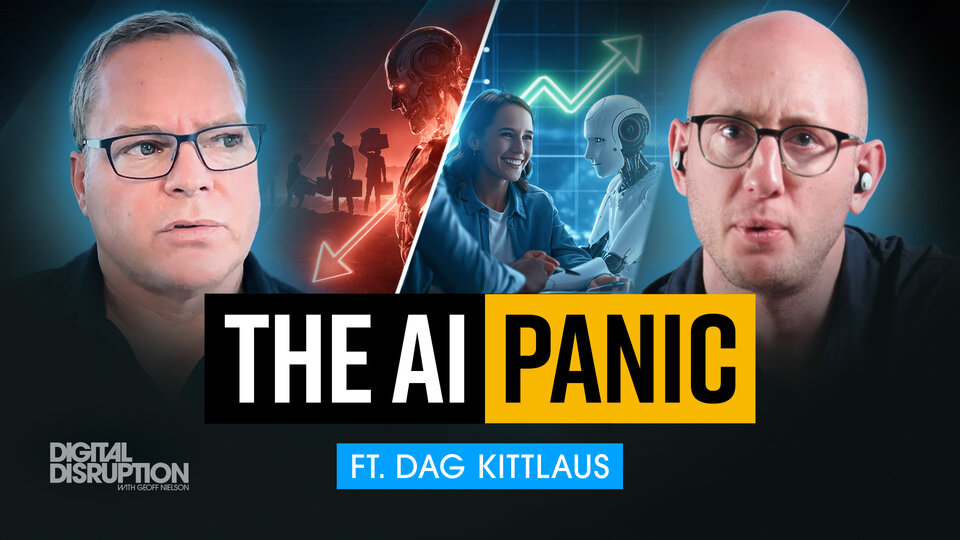
Our Guest Dag Kittlaus Discusses
Will AI Take Your Job? Dag Kittlaus Separates Hype From Reality
In this episode, Dag shares his insights on how artificial intelligence will reshape your career, your business, and the future of work.