
Digital Disruption
with Geoff Nielson


Our Guest Peggy Johnson Discusses
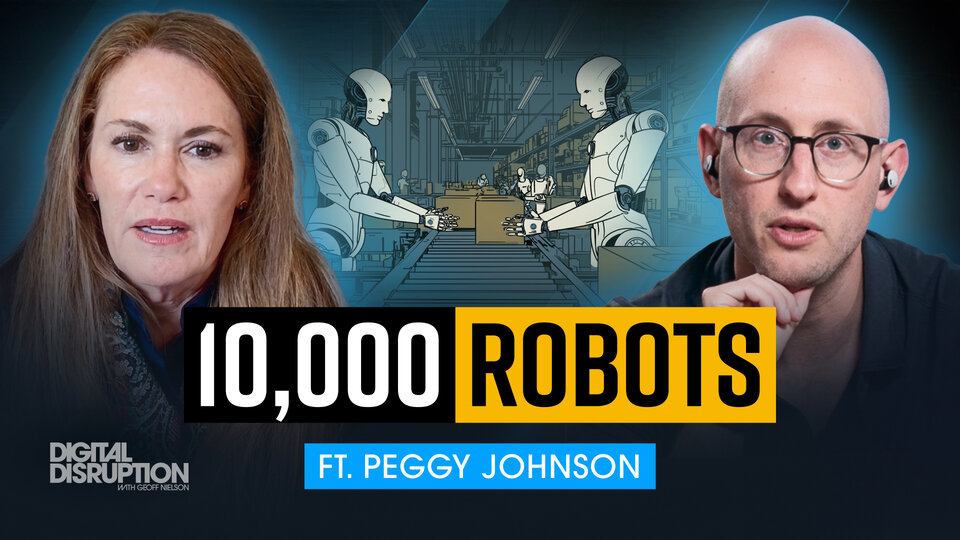
AI Humanoid Robots Have Already Entered the Workforce. Should You Care?
The robot workforce is already here. AI-powered humanoid robots are entering factories and warehouses to address a growing labor gap, but are they filling jobs or replacing the people who do them?
Peggy Johnson, CEO of Agility Robotics, joins us to talk about how Digit is moving from robotics demonstrations into real workplaces. She explains why humanoid robots could become essential to manufacturing and logistics, how AI is accelerating their capabilities, and why safety remains the biggest barrier to widespread adoption.
From physical AI and labor shortages to robot fleet managers and the future of work, this episode looks beyond the fear of robot overlords to ask: How will humans and robots work together in the years ahead?
00;00;01;16 - 00;00;27;18
Peggy Johnson
We have an administration who's reshoring a lot of manufacturing here back to the U.S. so putting additional pressure on the very limited human labor force, I don't think it can be done without robots, to tell you the truth, if you look at all the jobs that do, you know, manual material movement by 2032, the need for that kind of work will be about $1 trillion.
00;00;27;19 - 00;00;46;29
Peggy Johnson
As we start to reassure more and more, that is going to have to be fulfilled with something. And right now, today, we don't have the humans to do that right now. We can do this, you know, repetitive manual work that that no one wants to do. But where can it go?
00;00;47;02 - 00;01;09;15
Geoff Nielson
This is a show about the future of tech and the future of work. I'm Jeff Nielsen, and today we're diving into humanoid robotics. My guest is Peggy Johnson, CEO of Agility Robotics, one of the largest and most advanced players in humanoid robots. She's working with companies like Amazon and Toyota to scale up, to build and deploy over 10,000 of these robots every year.
00;01;09;17 - 00;01;34;04
Geoff Nielson
Okay, pause. I'm talking about building an army of robots. Like it's not kind of crazy, and we need to talk about that. And Peggy is exactly who we need to talk to. Is this really bad for jobs and for people? Do we need to be worried about robot overlords in our lives, or is this a technology that will be so useful that a decade from now, it will be so present in our lives that it'll just be boring?
00;01;34;05 - 00;01;40;20
Geoff Nielson
I have to ask, and I'm dying to know. Let's find out.
00;01;40;22 - 00;02;02;14
Geoff Nielson
Well, Peggy, thanks so much for being here. Really excited to be talking with you today. You know, maybe first and foremost, look, you're a robotics CEO in 2026. And, you know, I've read YouTube comments and social media comments and there's some like really scared people out there accusing you of some pretty crazy stuff. And so I wanted to kind of address that right off the bat, I guess.
00;02;02;14 - 00;02;17;13
Geoff Nielson
How do you respond when people are, you know, telling you that they think that you're enabling some sort of dystopia or you're creating some sort of existential risk to humanity through the robotics work that you're doing?
00;02;17;15 - 00;02;53;00
Peggy Johnson
Yeah. You know, it's interesting because unfortunately, so many people have been raised on robot movies where the, you know, the humans don't come out so well in the end. So that's the going in position from a lot of people. But there are good robot movies out there like Wally and others. But really, I think the better question is, you know, are the tasks that these robots taking on truly sustainable for human workers because they are doing tasks that are very hard to fill?
00;02;53;02 - 00;03;21;11
Peggy Johnson
The attrition rate is high. They're dirty, repetitive, sometimes dangerous, very injury prone. So when you think about it, it these can augment humans in their roles so that parts of their job that involve that kind of work can be pushed to the robot, and it frees the humans up for higher level, more complex activity and even becoming, you know, a fleet manager of these robots.
00;03;21;12 - 00;03;43;06
Peggy Johnson
But they that perception does quickly get changed when we deploy in facilities because people realize this is a tool, you know, much like a hand screwdriver is hard and a power screwdriver makes the job easier. Very, very similar with robots.
00;03;43;08 - 00;04;11;23
Geoff Nielson
So the that's a really interesting point that once people kind of see what you're doing and see it in action, their perception quickly changes, right? It's less imagination of, these are the movies I've seen to oh, it's just this. So so I'm curious. You know, having seen some of these deployments, what are some of the most common reactions and what is it, I guess, about the way that you've built these robots or deploy them that sort of gets people's guard down.
00;04;11;25 - 00;04;39;05
Peggy Johnson
So a couple things. As I said, once people realize that they can offload the parts of their jobs they don't love to the robots, that's a big step for them. And they they see it as helping them get their jobs done without, you know, risking hurting their backs or their knees. The other thing that we did and our founders were very intentional about this is the robot is teal colored.
00;04;39;06 - 00;05;12;29
Peggy Johnson
It's sort of this soft green look that is a little bit more attractive to humans, who are seen it for the first time instead of sort of a steely, dark look. And that's been helpful. We also didn't make the robot a true facsimile of humans because we built it for work. And so when you look at it, you can see it's a device that looks somewhat like a human, but doesn't try to look exactly like a human.
00;05;12;29 - 00;05;42;11
Peggy Johnson
So we avoid some of that uncanny valley that can, that you can fall into when you're trying to make something looked exactly like a human. And the reaction there can be very challenging for humans who see these for the first time. So we've tried to soften that initial exposure, and it's working. We've had very positive reaction from employees of the facilities that we've deployed at.
00;05;42;14 - 00;06;08;20
Geoff Nielson
I'm interested. You know, you talk about that, that form factor and you know, it not being exactly human, but I'm curious from a design perspective that this tends to get described as a humanoid robot. And yeah, I'm curious why like, why humanoid of all the like, shapes or things that could be in the world? What what makes sense about the human form factor for the jobs and tasks that these robots are doing?
00;06;08;22 - 00;06;41;08
Peggy Johnson
Well, the most compelling reason is because the world was built for humans. So if you are looking for a tool that can move around those spaces, a humanoid, a bipedal, turns out, is a great answer for that, because you want the humanoid to be able to walk where humans walk. Sometimes that's narrow hallways. You want them to be able to go up and down curbs, steps outside over uneven terrain.
00;06;41;08 - 00;07;08;28
Peggy Johnson
So all of that has to be taken into account. And when you introduce the humanoid that you don't come into these facilities and say, okay, you have to move all of your capital equipment around, it's meant to be know the humanoid will come in and move into the places that were built for the size and shape of a human, so it'll lift up to, say, six feet tall overhead to put boxes on shelves just as humans can.
00;07;08;29 - 00;07;27;07
Peggy Johnson
It can go down to the floor and lift things up. And so it's very much meant to take the place of a human in those spaces, which means it can't be much bigger, it can't be much smaller or wider. It has to, you know, be there where humans have been walking.
00;07;27;10 - 00;07;49;25
Geoff Nielson
Right. Just to come back to something you were saying earlier. I mean, the language there sort of take the place of humans. That's something that I, I can tell, like sometimes triggers people when they hear about this because there's this, you know, anytime you're talking about automation, there's this worry of, you know, massive layoffs or loss of jobs for a new technology.
00;07;49;25 - 00;08;09;19
Geoff Nielson
And, you know, my sense is that because there's a humanoid form factor, it just sort of extends that worry that much further because there's these things and they kind of look like us, and they're going to take my job. Now, you talked about this earlier. You said that, you know, your your biggest priority for these are jobs that are unsafe or undesirable for people.
00;08;09;20 - 00;08;27;13
Geoff Nielson
Can you maybe just expand on, you know, some of the concerns you've heard? And I guess in some ways, what you see the future of work actually looking at, looking like when we've got, you know, humans, when we've got robots together in this sort of new world.
00;08;27;16 - 00;08;32;22
Peggy Johnson
Yeah, that's a great question. And when I said take the place, I meant physically in that.
00;08;32;28 - 00;08;34;07
Geoff Nielson
Place physically. Yeah. Yeah.
00;08;34;10 - 00;09;13;12
Peggy Johnson
Physically. Yeah. But what again, if you let me just describe one of these jobs to you. So if you go into these facilities, they tend to be, you know, beautiful big pieces of automation. There's conveyor belts, there's put walls, there's autonomous mobile robots which look like flat carts. And things roll up and bring product. The the issue is all of the that that type of automation is generally produced from different companies and they don't necessarily have any connectivity.
00;09;13;12 - 00;09;36;00
Peggy Johnson
So there's still a human that's needed to, at certain times in the day, pick things up off of an automaton mobile robot and set it on to a conveyor belt. And to do that over and over and over again. And now it's generally not their entire job, but it's a part of their job, and that's the part that they can offload.
00;09;36;00 - 00;10;02;01
Peggy Johnson
And they can then in these factories that are already strapped for human labor, they can take higher order and higher level jobs. But something has to move that product around from one piece of automation to another. And still today, surprisingly, a lot of that work is done by humans, and those jobs are even harder to to fill. The attrition rate is quite high.
00;10;02;03 - 00;10;33;08
Peggy Johnson
It's generally about six months turnover. And you know, we have in these factories now a retiring workforce. Young people don't want these jobs generally, particularly ones that are just that repetitive, kind of mind numbing work. And we have an administration who's reshoring a lot of manufacturing here back to the US. So putting additional pressure on the very limited human labor force.
00;10;33;08 - 00;11;05;16
Peggy Johnson
So the jobs are there. There's over a million jobs just in the logistics area alone in the US that are going on filled. And that number is growing. It used to be about 600,000 a few years ago, and it's growing because of those trends that are moving in the industry that are putting pressure on that. So what we see is as we can and take off of the human sort of that very repetitive manual part of their job.
00;11;05;19 - 00;11;45;12
Peggy Johnson
It allows them perhaps to become a digital employee. We've already created a new role in a fleet manager. So a somebody needs to manage the robots and you know, how they interact with other robots and other pieces of equipment. And that's a digital job. So we've already had several employees who part of their job was this kind of manual task, heavy work move into more of a digital role and something they, you know, didn't start as and are excited to learn more about because there's an upward trajectory with a with a job like that.
00;11;45;14 - 00;12;12;15
Geoff Nielson
It's interesting to hear about and to see how it fits, I guess in the broader picture, not just within a facility or a factory, but I guess even within the the broader economy. And as you said, this trend toward trying to reassure and build, I guess, manufacturing capacity and capability in America. So I'm, I'm curious because obviously, you know, that's something that's been in decline for a long time, and we're starting to deliberately try to reverse that trend.
00;12;12;15 - 00;12;31;22
Geoff Nielson
But it's not what we're building now is not just, oh, let's build it how it was, you know, in 1979, it looks different. So how do you how do you see this? Actually, I guess making, you know, America or the Western world more competitive and more viable as, like a manufacturing hub.
00;12;31;24 - 00;12;36;19
Peggy Johnson
So are you speaking in general about manufacturing or robots place in that?
00;12;36;20 - 00;12;45;27
Geoff Nielson
I'm talking about how can the place of robotics in that what what role do robotics have in this kind of competitive landscape?
00;12;46;00 - 00;13;10;23
Peggy Johnson
Another great question. I don't think it can be done without robots, to tell you the truth, because of the pressure on the labor force already, we can't find these jobs. In fact, if you look at all the jobs that do, you know, manual material movement by 2032, the labor market for the need for that kind of work will be about $1 trillion.
00;13;10;23 - 00;13;37;05
Peggy Johnson
So it's a big need that we have that as we start to reassure more and more, that is going to have to be fulfilled with something. And right now, today, we don't have the humans to do that. So automation in general and robotics in particular, are going to be a necessary factor in being successful if the US wants to be successful in that.
00;13;37;05 - 00;14;12;24
Peggy Johnson
And you'll hear the administration talk about that as they talk about reshoring. One of them said the other day, it's not your grandfather's factory. It has to be a factor of the future that is ready to take on a very cutting edge technology technological facility that will be very, very different from what we built in the past. And so they'll have to be reimagined, redefined and deployed with quite a bit of automation from the get go.
00;14;12;26 - 00;14;41;06
Geoff Nielson
If you don't work in enterprise technology, you can skip ahead or take a quick braincase. But if you do, infotech is your secret weapon. Infotech helps IT teams get projects done faster, better, and at a lower cost. Whether you're rolling out new tech, improving processes or just looking for cost savings, Infotech provides unlimited access to practical tools and expert guidance you need to execute at a fraction of the cost of traditional consulting, no matter the project.
00;14;41;06 - 00;15;04;16
Geoff Nielson
From AI strategy to cybersecurity to vendor negotiation, Infotech has you covered. Check it out at the link below, and don't forget to like and subscribe! I'm curious to hear a little bit more about, I guess, your vision for 2032 or, you know, call it 5 or 6 years out from now. And, you know, you mentioned we need to have a lot more robots if, you know, this vision is going to be completed and to stay competitive.
00;15;04;16 - 00;15;28;26
Geoff Nielson
And right now we've got fairly, I guess, fairly limited use cases for these, right. Like we're starting this deployment effort. There's specific industrial spaces where they make sense. We're just starting the process of scaling this up based on where you think the world is going. Like how broadly applicable will this be 5 or 6 years from now and what could that look like?
00;15;28;28 - 00;16;05;27
Peggy Johnson
Right. So what you just described, it's a challenging, very complex problem to build a humanoid. And so you first and foremost need to have the physics. Right. So you might see humanoids doing backflips and making coffee and things, but a lot of them are limited to just that. They can't walk in, do real work, pick up heavy things, move them, you know, in uncertain environments, not, you know, just doing the same thing over and over again, but realizing, oh, there's something in the floor there.
00;16;05;27 - 00;16;38;19
Peggy Johnson
I have to walk around it. So it starts with what sounds like, you know, very simple work, but it's actually highly complex, just moving material around these facilities for a humanoid, highly complex. So over the next several years, I see a number of things that are changing. For instance, the end effectors will be more like tools in rather than seeing hands, you'll see the complete tool that is needed for the job.
00;16;38;25 - 00;17;05;28
Peggy Johnson
There's no reason to have a five finger hand. If that five finger hand is just going to be holding a power screwdriver. So, you know, you can imagine that they'll be fitted more for a very specific role. The humanoid itself is multi-purpose, so you can put on different end effectors for different types of jobs. Dexterity manipulation will get more and more precise.
00;17;06;01 - 00;17;35;00
Peggy Johnson
Right now. You know, we're we're lifting up big, heavy things that require sort of claw hands. But over time, as we introduce more and more dexterity, you can then pick in place and put someone's order into a bin and then send it down to to shipping, that sort of thing. So as as dexterity and features continue to be introduced into the humanoid, markets will open in the industrial space.
00;17;35;00 - 00;17;57;10
Peggy Johnson
But really the biggest obstacle to wide scale deployment is safety. And if you've ever been in these factories, you know, there's a lot of moving automation and there's a big line in the floor and you don't cross the line so that that's how factories are set up today. There's an area for automation. And on the other side there's an area for humans.
00;17;57;10 - 00;18;31;12
Peggy Johnson
And today all humanoids in factories do have to operate inside what's known as a safety cell. So it's sort of a barrier that keeps the robots away from humans, just like any automation in the factory. And so a real unlock for scale will be when that robot can come outside of the factory. And we've been working on solving for that, and we'll have a solution out by the end of this year in the area called cooperative Safety.
00;18;31;12 - 00;18;56;05
Peggy Johnson
And what that means the robot can come out of that work cell and walk in close proximity to humans. Now, it still can't touch the humans and you wouldn't want the robot to. That's a higher level called collaborative safety. So first we'll hit the the bar of cooperative safety, which will allow those humans to walk near the robot.
00;18;56;08 - 00;19;17;21
Peggy Johnson
And as it gets closer and closer to the robot, the robot detects humans and it it will bring itself slowly down to the ground. When the human passes, it stands back up and continues its job so it it protects the human, just as a red line in the floor keeps, you know, the humans on one side or the other.
00;19;17;27 - 00;19;44;10
Peggy Johnson
But to get to the next level, collaborative safety, where we're actually interacting with the robots, that's something that you might see, for instance, in a home I think is many years away. Still, that's a that's quite a bar when a robot can actually come into our homes that are very chaotic and there's babies and dogs and toys and, and and the, the floor changes often.
00;19;44;11 - 00;20;18;13
Peggy Johnson
You know, people might move furniture or, you know, again, a pet might walk by and the robot has to detect all of that, understand what it is and make certain that they're doing a task on the physical thing, that job that needs to be done and they're not doing harm in any way. To the humans. It's quite a valley to cross, and something that probably doesn't get enough attention about robots is there is a there is a high safety bar to be around them.
00;20;18;16 - 00;20;49;05
Geoff Nielson
Well, I'm, I'm glad you called that out because I think it's really important to be stated that, you know, I'm in some ways very happy to hear that your mission is not just rush robots into people's homes and in front of their babies as quickly as possible, but it's let's let's design with safety in mind, and let's take as long as it takes for us to be able to make sure that we have a level of safety where people can be comfortable interacting with them, and that we can believe we can do this in a way that minimizes harm.
00;20;49;08 - 00;21;18;00
Peggy Johnson
Yeah. And really, our safety ethos comes from our our background. Our founders were academics. They they were never interested in, you know, demo for demo sake. But they, they thought about safety from the very beginning and built it into their product. From the very early days, the very first set of legs they built, they were considering that these devices are big and powerful.
00;21;18;02 - 00;21;45;09
Peggy Johnson
I mean, they need to do work, so they will have to be safe from the get go if there ever to be able to be in the proximity of of humans. And so they it was just always part of their development process. And it's something that I think we can be fooled a little bit when we see, you know, YouTube videos of a lot of robots dancing.
00;21;45;12 - 00;22;12;27
Peggy Johnson
That's a very human thing to do. And so it's very kind of comforting to see that you're like, oh, they're just like us. They're actually more powerful than us. And so we really have to infuse that into the industry in order for these devices to safely enter first our work environments, and then eventually when the bar is hit our home environments.
00;22;13;00 - 00;22;27;28
Geoff Nielson
So just so you know, viewers and listeners can kind of get a sense of it. Can you can you give me a sense of like, how big are these things? How much do they weigh? How tall are they generally? Well, relative to a person? And how powerful are they relative to a person?
00;22;28;00 - 00;23;03;08
Peggy Johnson
Our current robot, which is our version four robot, is about five feet, nine inches and about 200 pounds. So you can imagine they're powerful. They can pick up as much as 50 pounds and they can do it over and over again. They carry their, you know, their battery on them. And that makes the robot heavy and solid. And so that is the type of automation really, that we have to ensure never crosses a line with humans.
00;23;03;08 - 00;23;28;03
Peggy Johnson
And for them to be able to do real work, you need that kind of heft. They need to be able to work all day long. We and just in working in these environments, we have requests for the robot to work, to have the ability to work through three shifts. Now, you wouldn't want to put a human on a job where they're lifting 50 pounds over and over again, through three shifts again.
00;23;28;04 - 00;23;51;25
Peggy Johnson
That's the the way that that you should think of it. Humans shouldn't be doing that. That's not good for any human, you know, give that to the robot. And but when you do, that requires a lot of onboard power and that and, you know, the actuators that move all of the limbs and arms and legs make the device heavy.
00;23;51;27 - 00;23;53;26
Peggy Johnson
So that's where we're at.
00;23;53;29 - 00;24;27;22
Geoff Nielson
Well, well, it's interesting because you say heavy and you know, you're talking about something that is, you know, frankly, the size of an adult human or at least within the range of it. Like, we're not talking about a car's worth of weight here or like, you know, something that's massive and completely out of step with humans. This you know, when I think about this, it's not the same, but but, you know, what comes to mind is like autonomous vehicles, for example, like those to me, in some ways are, like exponentially more dangerous than what we're talking about with a humanoid form factor.
00;24;27;22 - 00;24;44;17
Geoff Nielson
And yet, you know, those are substantially farther ahead in terms of adoption. So I don't know. I don't know if it's just like the human piece that's like humanoid piece that's throwing people off, but it feels like there's another barrier to be crossed in people's kind of imaginations and acceptance levels.
00;24;44;19 - 00;25;12;19
Peggy Johnson
Well, you know, humans are pretty good at generally pretty good at not stepping on other people's feet. And so but but a robot, you know, robots do have falls now and then and that's, that's a lot of weight to come down. You know, there can be some miscalculation perhaps. And, and, and there can be a misstep where, you know, that weight might come down on a human.
00;25;12;19 - 00;25;39;27
Peggy Johnson
That's what we want to avoid at all costs. And that's the kind of bar that we have to meet if we want to come out of that work cell that they're in now. And so the, the it might seem like it's not as, you know, powerful or, or dangerous as maybe an autonomous vehicle, but, you know, those went through their own long safety curve.
00;25;39;28 - 00;26;07;29
Peggy Johnson
They didn't start where they're at today. That's that was many, many years of innovation and data gathering and censoring and perception that goes into what we now have that are very safe, autonomous vehicles. But it didn't start that way. They went on a journey. Humanoids will go along on that same journey. It's why they're still in a work cell today and eventually can come out and operating close proximity.
00;26;07;29 - 00;26;21;12
Peggy Johnson
But again, you know, we there won't be interaction between them. And then over time another bar and another bar can be met. That's why we think robots in the home are likely quite a ways off.
00;26;21;15 - 00;26;58;21
Geoff Nielson
No, that's, that's interesting is just like, I guess a reference point. And I'm thinking to I'm curious in your response and this is like, you know, maybe in some ways a difficult or unfair question. But the when I think about safety here, anytime you've got like an industrial technology and I think specifically about, you know, the autonomous vehicles, if you're operating at a certain scale, like just my opinion, I'm curious on yours to it feels like it's virtually impossible that it'll be accident free at a certain scale, because that's just the law of, you know, something could go wrong.
00;26;58;21 - 00;27;22;18
Geoff Nielson
And with autonomous vehicles, I mean, they're they've been proven many times to be, like, exponentially safer than a human driver. But there's still like, you know, the headlines of, oh, my God, an autonomous vehicle crashed and killed someone. And that seems like one of the challenges that, like, is going to have to be surmounted at some point is something if this technology is successful, something will at some point go wrong.
00;27;22;19 - 00;27;27;28
Geoff Nielson
How do you design for that? How do you plan for that? And is that something that weighs on you?
00;27;28;00 - 00;28;04;23
Peggy Johnson
You know, it does. And I think that's why it's the top of our list. I mean, the absolute top of our list. And it puzzles me when I look out at the industry that it's that it's not at the top of everyone's list because they are powerful devices. And I think if it's done in a thoughtful way and like with autonomous vehicles, we understood, you know, as they got better and better at their job, the trust built up, we'll have to do the same thing.
00;28;04;23 - 00;28;28;28
Peggy Johnson
We'll have to earn the trust of the humans around which we are operating. And that's something that we don't take lightly. And and it's why we're starting, where we're starting. We had no intention of going into the home any time in the near future. And, you know, we want to build build it up, much like the trajectory we saw with autonomous vehicles.
00;28;29;00 - 00;28;50;04
Geoff Nielson
Right. So this this segue may be a little bit too on the nose, but I'm curious, Peggy. So, you know, I think it's no secret that, you know, one of your biggest competitors in this space is Elon Musk, who, you know, at the time of this conversation is the richest man in the world. Although his net worth seems to swing by 100 or $200 billion a day sometime.
00;28;50;04 - 00;29;07;10
Geoff Nielson
So, you know, who knows where it's going to be tomorrow. But how do you how do you conceptualize that being in the same space as such, like a juggernaut? Is there is there room for everybody? Do you see agility having a particular edge? What what is that like for you being kind of a leader in this space.
00;29;07;12 - 00;29;29;05
Peggy Johnson
First, definitely room for everybody. I mean, I talked about this market, $1 trillion labor market that we're going to struggle to find people to do this type of work. So definitely it's not one winner take all for sure. I think it'll be a lot like the automotive market. We have different kind of vehicles for different types of jobs and things.
00;29;29;11 - 00;29;55;26
Peggy Johnson
But to have Elon in the space, it's a positive. We were out there alone for a long time. The company is over ten years old. And you know, it's interesting. It's a little bit like AI. It was it was slow. It was around for a long time and then it was fast. And I feel a little bit that way with robotics, because obviously AI helped enable much of what's going on in the robotics world.
00;29;56;01 - 00;30;25;26
Peggy Johnson
But for a long time, agility was one of the few robotics companies out there. They had a, you know, a working robot. They were shipping in small quantities and just looking to commercialize more. They were they were mostly shipping to universities and things. And I think, you know, Ellen, definitely, I don't underestimate his abilities. He's he's he's done so many things in so many different areas.
00;30;25;26 - 00;30;56;27
Peggy Johnson
But it's a it's actually a positive to have him in the same space. It brings more attention to the field. We have more, you know, young university kids going into mechanical engineering doubly. That's my background. So, you know, building the the people that we'll need for this kind of physical AI world, all that's great attention and great positive momentum for the industry, for agility though.
00;30;56;28 - 00;31;16;23
Peggy Johnson
I mean, I think what sets us apart is we're deployed. We that's a that's a big hurdle, by the way. It's one thing to to do a fun lab demo. It's something quite different to go in and satisfy a production manager in one of these facilities who's got a, you know, a throughput rate that you've got to hit.
00;31;16;23 - 00;31;43;13
Peggy Johnson
And if you don't hit it back to the humans, if they can find them. So there's pressures that when you're in the lab, you don't quite understand until you get into these operating environments. And we've had, you know, the ability to to deploy it several different customers and learned quite a bit about what it takes for these devices to be accepted as a solution for them.
00;31;43;13 - 00;32;06;18
Peggy Johnson
So, for instance, we had to lift up to 50 pounds many years back. The robot couldn't lift that much. We realized that in order for it to do real work and actually be valuable to these facilities, it's going to have to lift up to 50 pounds. It's going to have to be able to be accurate in its placement.
00;32;06;18 - 00;32;31;00
Peggy Johnson
It's going to have to have a certain level of uptime. So I would say throughput, uptime and accuracy. Those are the three metrics that automation in general in these facilities is rated on. You have to hit certain numbers. And we had to hit those numbers. When you walk into these facilities you have to meet their safety bars. They generally have a safety team that's, you know, bespoke to that company.
00;32;31;00 - 00;32;54;26
Peggy Johnson
You have to hit that safety bar. You have to hit any regulatory bars that are there. You have to plug into the IT systems and the warehouse management systems. You have to talk to the other robots and the other automation, the conveyor belts or such. All of that was a big lift, and agility has done all of that, and that puts us ahead of others.
00;32;54;26 - 00;33;16;18
Peggy Johnson
We don't see deployments like we've been able to accomplish because we've been able to hit those commercialization bars, I should say, amongst our competition yet. So we have that going for us, and we're pretty proud of it, and we're continuing to run as fast as we can and listen to the customer what they need. They want more dexterity.
00;33;16;18 - 00;33;37;24
Peggy Johnson
They want us to be able to do a broader set of manual work, more manual work. And so we continue to be focused on training digit our robot new skills as quickly as possible. So that's where we're focused. And you know, but overall it's a good thing to have Elon in the mix.
00;33;37;27 - 00;33;55;03
Geoff Nielson
That's that's great. And I want to I want to come back to that word deployment because I'm so curious. Deployment is a word that I think is doing an awful lot of lifting there, because my sense is at least, Peggy, that like, this is not like buying a TV where you just like a TV shows up and you say, here, here's your digit robot, goodbye.
00;33;55;03 - 00;34;12;04
Geoff Nielson
And you know, you don't talk to the factory floor again at all. It my sense is hearing you describe it. It's fairly collaborative and it's a there's kind of a fit process for okay what do you need. How can we make sure it's customized your environment. And how do we work together to make sure you're seeing the results that you want.
00;34;12;05 - 00;34;23;00
Geoff Nielson
What what does that actually look like in practice. How long does it take. How much customization is there? How do you make sure that it's the right tool for the right job in the right space?
00;34;23;02 - 00;34;53;12
Peggy Johnson
So we've really honed that whole end to end process. I would say in the beginning when we were just learning, we tended to get caught up in companies, innovation teams, which are great, but oftentimes not connected to the business unit and the business units needs. They're a little bit forward looking in in what they focus on. So we decided to put a program together and we approached the business units in companies.
00;34;53;13 - 00;35;18;23
Peggy Johnson
Or oftentimes it's them approaching us because they have a labor gap that they have been unable to fill. And we said, okay, within a specific amount of time, we are going to get, you know, a proof of trial and a proof of concept going. And at the end of that time, if we meet these KPIs, these metrics, I spoke about the accuracy, uptime, throughput.
00;35;18;25 - 00;35;47;03
Peggy Johnson
They will move into deployment of their robots. And that has really helped contain the time frame and everybody's focus, both sides. So we have to meet the metrics. And the other side has to be able to be on site and and help us, you know, physically deploy the robots in the facilities and help us plug into their IT systems.
00;35;47;03 - 00;36;19;01
Peggy Johnson
And that has really allowed us to bring more people through the the cycle much more quickly. And frankly, if if they have a certain job that, you know, they've found something very hard to fill. But digit doesn't have that skill just yet. Maybe it's on our roadmap. We won't take on that work. So we're very pragmatic. We we're focused on the work that we can do.
00;36;19;03 - 00;36;43;03
Peggy Johnson
Right now. We're building a business. And as we do that and we learn more what the customer wants in that facility, then we add those skills so we don't try to guess what what will be needed down the road. We work very closely with the customer and bring them along rather than say, okay, we'll get to you in two years.
00;36;43;03 - 00;37;01;07
Peggy Johnson
When that skills, you know, in in the, in the product, we want to make sure that we're in lockstep with the customer. And that's actually worked out very well. We call it our customer acceleration program. And it's really helped contain the time frame to get to deployment for customers.
00;37;01;09 - 00;37;23;10
Geoff Nielson
I'm curious what kind of demand you're seeing for for these robots. Just kind of reading between the lines on a few different comments, you've said, you know, you mentioned that, you know, often it's these teams coming to you. You mentioned that you're turning down work that like, isn't a good fit. What what level of demand are you seeing now and how is it compared to, I guess, historical levels a handful of years ago?
00;37;23;12 - 00;38;05;08
Peggy Johnson
Well, broadly across the board, any companies that move product around have and have a labor gap have reached out. That's crosses areas like automotive, pharma, Pharma tends to have been type totes. They're called that. They're moving product around retail basically. You know, logistics warehouses. Those have a big pressure on them because, you know, through Covid when everybody went to online shopping and then we wanted everything within two hours.
00;38;05;15 - 00;38;41;05
Peggy Johnson
That puts a real pressure on a facility that you don't see. You just are excited to get your product at, you know, your doorstep in two hours, that those facilities have real labor gaps that that they're trying to to fill, and that those areas are generally the first ones that were focused on. We tend to find once we move into a facility, that there's other things that are adjacent to just the simple material handling that we can also do.
00;38;41;07 - 00;38;53;12
Peggy Johnson
And we're also learning the type of dexterity that we'll need for the next level jobs. And, you know, building that into our next version, B5 of digit.
00;38;53;14 - 00;39;24;11
Geoff Nielson
It's it's really exciting. And it's it's cool to hear that there's, I guess, just this huge opportunity in so many different sectors and so many different spaces for us to actually have a solution here that helps all these companies just like, meet that existing need, I guess, better in a way that they can't with with this gap. So, I mean, for you, with this demand, with investing in safety, what are the what are your biggest hurdles or challenges right now?
00;39;24;13 - 00;39;33;23
Geoff Nielson
Like what's what's between, you know, you and agility and being able to kind of achieve your wildest dreams with this technology?
00;39;33;26 - 00;40;01;15
Peggy Johnson
Well, I would like to scale even faster. We have we have quite a list of customers that we're working on right now. The team's small. And so we've you know, we've announced a transaction to go public later this year. And that will help us scale faster and to be able to address the needs of those customers more quickly.
00;40;01;16 - 00;40;29;03
Peggy Johnson
We also have about $300 million of books orders. So I want to be able to get those out the door as well. We do have a factory here in the United States. In Salem, Oregon. We call it Robo Fab. It was the the first humanoid factory I believe built, and we have a capacity there of up to 10,000 robots a year.
00;40;29;03 - 00;40;49;17
Peggy Johnson
So that's where we make all of our product and where we'll make, you know, the orders that we have on the books. And so we I just want to make sure all of that is done in a timely manner. And so I would say scale is, you know, I would quickly scaling is is probably one of my bigger challenges right now.
00;40;49;20 - 00;40;51;11
Peggy Johnson
The demand is there.
00;40;51;14 - 00;41;06;21
Geoff Nielson
Yeah. No it's it's really, really exciting. And it's it's a good problem to have I guess that you're just the demand is there and you're trying to figure out what can we do organizationally to make sure that we're able to keep up with it, and how do we raise money and build the capabilities to do that?
00;41;06;25 - 00;41;08;13
Peggy Johnson
Exactly.
00;41;08;15 - 00;41;28;11
Geoff Nielson
I did want to come back to something we were talking about earlier, and I checked my watch, and we made it almost half an hour before AI came up, which is extremely rare for this podcast. It's usually like it's usually like five seconds, but we made it like almost half an hour before AI came up and you were talking about how AI has kind of turbocharged this technology.
00;41;28;13 - 00;41;42;16
Geoff Nielson
Tell me a little bit about that. What has, you know, the last couple of years of AI been able to unlock with this? And are there capabilities that you see as being on the horizon for these robots that will be unlocked by AI a few years from now?
00;41;42;19 - 00;42;27;04
Peggy Johnson
Yeah. So the company had a physical, dynamically stable humanoid robot before the ChatGPT moment in. What was that like November of 2022? So it had been classically built using classical robotics mechanisms, and that was actually good to have, because there's no amount of AI that that can make the physics of a of the actual robot better if the physics aren't right to begin with.
00;42;27;04 - 00;43;05;16
Peggy Johnson
So they had that to start with. When AI showed up on the scene, the company began using it initially for reinforcement learning. Like with the movements of the arms and the legs of the robot, and that was very helpful to optimize the movements and the steps and things like that. We call that layer the physical layer. That's the you know, how the robot moves through space, you know, to pick up something and how it bends and stays stable at the same time?
00;43;05;22 - 00;43;35;08
Peggy Johnson
The it's it's really an entire system. The robot is dynamically stable, and that is the hardware and the software working together all the time, just like humans do when they're, you know, stabilizing themselves as they walk. You don't think about it, but that's what's happening. Robots have to do the same thing. So the physical AI layer is where we began infusing AI, and that really helped the the movements of the robots.
00;43;35;08 - 00;44;16;27
Peggy Johnson
It taught digit skills how to pick a bin up and how to set it down accurately, that sort of thing. Then there's a layer above that we call the semantic layer. And that's where the LMS play a big role. And so we when digit is, for instance, learning a new workflow, the LM layer can help us. Once we've taught digit how to do something, it can help set up a workflow and have digit execute a certain number of steps to get a job done.
00;44;16;27 - 00;44;47;25
Peggy Johnson
So the semantic layer is sort of the top layer, and we've built digit to be AI agnostic at that layer. So we we generally swap in different AI models and that, you know, all of them are working on a robotics, you know, foundation models. So we're we just want to stay open to all of them. And that's been useful as well.
00;44;47;25 - 00;45;15;29
Peggy Johnson
But the probably the biggest help that we've seen is in the teaching of skills that before had to be done by an engineer, you know, just writing a program. And now with AI, we can teach at new skills much more quickly. We can do a lot. For instance, we can work with some of the things like Isaac SIM from Nvidia.
00;45;16;00 - 00;45;36;14
Peggy Johnson
Those tools are helpful to produce simulation data. When we're first teaching digit some some new pathway or some new task. And that has really sped up our ability in that area. So that's probably had the biggest impact on the development of the robot.
00;45;36;16 - 00;46;02;09
Geoff Nielson
So so now you've piqued my interest and we're pretty deep into the nerdy territory at this point, I think. But, you know, I have to imagine coming with these robots being deployed, there's some sort of kind of digital twin we've got here, and we've got like a mapping of where the robots are and their movements and the factory floor, and there's some sort of, you know, platform and operator view where we can look at how they're being deployed and what they're doing and how they're performing.
00;46;02;09 - 00;46;16;24
Geoff Nielson
What is what is that actually like? What's the experience like? And is there someone, you know, monitoring their performance all the time or how does it actually integrate into. You talked about a fleet manager. What what does that actually look like in practice.
00;46;16;27 - 00;46;44;25
Peggy Johnson
Yeah. So again we're inside of a work cell now. So there is not another human inside that work. So but there's generally a human in the vicinity just like there is with, with all of the automation that's in the facility. And so the, you know, the workflow is set up at the start, you know, pick up, for instance, I'll describe one from one of our customers.
00;46;44;26 - 00;47;25;07
Peggy Johnson
Go, there are logistics provider in Georgia and they pack out for a lot of companies products. So an autonomous mobile robot will roll up into the work cell and it has product on it in bins. Digits job is simply to unpack pick up the the tote that's on the autonomous mobile robot and walk over and put it on a conveyor belt, and then it goes down the line to the next stop where, you know, there's there's another task that goes on, but that's digits whole job right there.
00;47;25;11 - 00;48;10;00
Peggy Johnson
Just to do that over and over again. What's interesting is at times, just like in any facility, if things get backed up or they slow down, the humans obviously know what to do. The robot needs to as well. So if the conveyor, for instance, slows down because there's a problem down the line digit, then will pick up the bin from the autonomous mobile robot and start to stack it next to the conveyor belt, observing when the conveyor starts to move again, and then take those that that digit is stacked on the floor, put them on the conveyor so they can catch up down the line.
00;48;10;01 - 00;48;36;11
Peggy Johnson
It's really interesting because you, you know, that's the sort of decision making that has to happen really on, on the fly almost. So those that's the sorts of things that AI is very powerful and, and can help keep the line moving even when things stop. There's a decision. What do I do? I'm not going to keep putting product on the conveyor belt.
00;48;36;12 - 00;48;40;06
Peggy Johnson
You know, like that Lucille Ball episode.
00;48;40;08 - 00;48;40;29
Geoff Nielson
That was what was coming.
00;48;41;00 - 00;48;41;18
Peggy Johnson
To mind.
00;48;41;20 - 00;48;43;09
Geoff Nielson
Factory. Yeah.
00;48;43;12 - 00;48;52;00
Peggy Johnson
She kept feeding the chocolates when it got stopped up. So that's something we want to avoid. And digit does that very well.
00;48;52;02 - 00;49;17;18
Geoff Nielson
Nice. So I'm curious as well just staying in the more technical side of things. You know you mentioned AI, you mentioned new skills for this. I'm curious, as you look out toward the future, how much of the kind of, I guess, upgrades that these robots will be having are going to be software upgrades versus hardware upgrades? Is this like sort of get a new robot every two years type of thing or more?
00;49;17;22 - 00;49;25;17
Geoff Nielson
You know, there's software that's going to continue to expand their skill set. Do you have a sense of how that will play out over the next handful of years?
00;49;25;20 - 00;49;38;17
Peggy Johnson
Well, it's going to be a little bit of both, because, for instance, if there's some kind of an upgrade, a certain job needs maybe a different.
00;49;38;19 - 00;50;08;10
Peggy Johnson
A different torque in the legs or something, you can actually swap out the legs. Obviously, we can upgrade software over the air and we can do that as often as needed, but maybe a little bit different than an autonomous vehicle. You can fairly quickly swap out parts of the robot. Should there be an upgrade that serves a task better with our next generation robot?
00;50;08;11 - 00;50;32;00
Peggy Johnson
We are actually. We've designed in replaceable hands. They're called end effectors in the robot world. And so there's just an ISO flange at the end of the arm, just a standard one. And if a specific tool is needed, we can attach that to the end of the arm and even change the tools in, in, you know, throughout the day.
00;50;32;00 - 00;50;57;04
Peggy Johnson
So it could be doing one type of job with one set of tools in the morning and something else at noon and something else in the evening. And that's something that we learned from our, our customers would, would help them quite a bit in making the product even more versatile. And so you can see it, you can think of it as both hardware and software upgrades will continue on in the same version of robot.
00;50;57;06 - 00;51;25;12
Geoff Nielson
And then, you know, we've talked a lot about digit being sort of your flagship robot. Do you have plans or do you see a world where there's like a series of these? And again, I keep coming back to the, like, autonomous vehicles where there's like, you know, the whatever, the Cybertruck and all these different form factors. Or do you see that digit has enough kind of market opportunity right now that it's really all about kind of optimizing the digit product?
00;51;25;15 - 00;52;08;29
Peggy Johnson
It's really the latter. Right now, we're focused on continuing to listen to our customers, understanding their environments, delivering the features that they need. But we do think about that world beyond, you know, it's interesting. I always have this analogy back to the mobile phone world, which is the world I grew up in. I was 25 years at Qualcomm, and I got to see the whole trajectory of digital phones and, and, you know, in the beginning when we were first building them and we first put data in, we thought, wow, you know, you can message, we can have a messaging system if we put data in and and we that was as big as we could
00;52;09;00 - 00;52;42;25
Peggy Johnson
think at the time. And now we have PCs in our pocket. So it's it feels somewhat the same like right now we we can we can do this, you know, repetitive manual work that, that no one wants to do. But where can it go? I don't think we we can even guess at the innovations. I think, for instance, health care is going to be greatly impacted in a positive way with not just humanoids, but different types of robotics.
00;52;42;25 - 00;53;11;13
Peggy Johnson
We obviously already see that with knee surgeries and other surgeries. I think there will be more and more of that. We may look back and, you know, think, wow, did we ever, you know, go into surgery without some type of robotic arm in there as well because it's, it's, you know, that much safer perhaps over time. So there's there's there's areas of industry.
00;53;11;13 - 00;53;22;07
Peggy Johnson
I think that they'll be greatly impacted in a positive way that we maybe can't even imagine just yet. And we're just at the start of it. It's very exciting. The road ahead.
00;53;22;12 - 00;53;41;18
Geoff Nielson
No, it is it is really exciting. And it's funny because, you know, I talk to people who have all are doing all sorts of kind of breakthrough technologies. And some of them there's, you know, all admit I have a little bit more skepticism about. But it's hard it's hard for me to imagine, honestly, a world a few years from now where there aren't more robots being deployed doing things like this, like it.
00;53;41;19 - 00;53;55;25
Geoff Nielson
We're kind of at that inflection point where it feels like it's almost undeniable at this point that we're going to be having, you know, a lot more. It's doing a lot more things. But but I'm curious to kind of flip that comment on its head.
00;53;55;27 - 00;54;15;11
Geoff Nielson
Do you think we're heading toward a world where robots can just basically do anything humans can in the physical world, or are there just some things that are so, I don't know, I guess challenging for a robot to replicate, whether they won't be possible or they won't be practical for a robot to do that. You think you'll always want to have humans in the mix doing?
00;54;15;13 - 00;54;45;24
Peggy Johnson
I think there's a lot of areas where you always want to have humans in the mix, because even in the example of, you know, surgery, I think you still want a surgeon and you want someone who's who understands, you know, all of the automation in the room and is using it as a tool to deliver greater impact. But you want that human there next to you, you know, talking you through the operation, the comfort of that, the empathy that humans bring.
00;54;45;24 - 00;55;43;23
Peggy Johnson
I think there's always, always a place for humans. And that's, you know, again, just thinking about where these will help us if you think of them as augmenting humans, you know, humans will be freed up to do different things and create more. And which is a very human element that that that creativity that we all have. And perhaps we'll have much more time to work on that, you know, is at the left side of your brain, I guess, then, you know, then to do a job that is, you know, not super fulfilling, but it's it's what you, you know, you do to bring in, you know, payment, but it's not something that you love.
00;55;43;24 - 00;55;58;16
Peggy Johnson
I think there will be more cycles for humans to focus on, on areas that we've had, perhaps in our lives and careers not as much time to focus on. So there's a real positive to it. I believe.
00;55;58;18 - 00;56;20;27
Geoff Nielson
I'm I'm optimistic about that. And I'm. Yeah, I'm curious. You know, so much of the framing you've been using now is being able to fill a labor gap or being able to, you know, do jobs that people aren't willing to do. Aren't able to do, you know, don't find financially viable to do, you know, is there a particular scale here one day?
00;56;20;28 - 00;56;50;01
Geoff Nielson
Do you think where like the cost of this comes down so much that this entire, you know, manufacturing center, fulfillment center is just an order of magnitude cheaper than it is right now? And that frees up people to build a lot of different things that they never could before, because suddenly the cost of production comes down. Or are you in more of a kind of a one foot in front of the other mindset right now where it's like, let's just let's tackle the problem in front of us?
00;56;50;03 - 00;57;31;22
Peggy Johnson
Yeah, I mean, I'm probably more in that cap right now, but that's the sort of thing that, you know, she's going back to my mobile phone days. It's hard to envision where it's all headed or how fast we'll get there. So we just have our head down and we're step by step making the progress. But I do see, you know, areas that we're we're short on on labor that could really help out many parts of society with the introduction of humanoids and and other types of automation and robotics.
00;57;31;23 - 00;57;58;29
Peggy Johnson
This whole this whole general category of physical AI is fascinating. The fact that, you know, physical things in our environment can can have the brain of AI, I think is really going to be positively impactful in so many areas that right now is almost hard to imagine because, you know, we we see growth, you know, in very incrementally now.
00;57;59;02 - 00;58;13;03
Peggy Johnson
But at some point out there, it'll just become commonplace that everything has a brain around you and you can interact with it much easier than, than we are now. So a lot to look forward to I believe ahead.
00;58;13;06 - 00;58;31;00
Geoff Nielson
Yeah, it's a pretty cool, pretty exciting thought Peggy, just as we kind of move to wrap up, I'm curious sort of your your parting thoughts or lessons, I guess, for business leaders, for technology leaders, for anybody who's feeling uncertain about this stuff or looking at, you know, kind of what's what's next here.
00;58;31;03 - 00;58;58;02
Peggy Johnson
Well, I definitely with all technology, it's always good to, you know, continue to educate yourself, understand how quickly it's moving and how it might apply to your own businesses. This is something that's been it's an area that's been supercharged because of AI. So as I said, I think things started slow. And now they're they're moving much more quickly.
00;58;58;02 - 00;59;05;22
Peggy Johnson
So staying ahead of, you know the the.
00;59;05;24 - 00;59;17;18
Peggy Johnson
Sorry staying ahead of the innovation that's happening and understanding where it's going is very, very important and critical so that you can apply it to your own businesses at the right time.
00;59;17;20 - 00;59;28;09
Geoff Nielson
Amazing. Well, I wanted to say such a big thank you for coming on the program today. This has been really interesting, really insightful. That's an area that, you know, all had met I didn't know too much about, but I really appreciate everything you've shared.
00;59;28;11 - 00;59;32;06
Peggy Johnson
Thank you. Thanks for having me I appreciate it.
00;59;32;09 - 00;59;56;19
Geoff Nielson
Most viewers don't know this, but Digital Disruption is developed by Infotech Research Group, a leading advisor to technology leaders around the world. If that's not you, you don't need to care. So skip ahead and enjoy our content. But if you are a technology leader, Infotech helps IT teams get projects done faster, better, and at a lower cost. Infotech provides unlimited access to practical tools and expert guidance.
00;59;56;19 - 01;00;11;20
Geoff Nielson
You need to execute at a fraction of the cost of traditional consulting, no matter the project. From AI strategy to cybersecurity to vendor negotiation, Infotech has you covered. Check it out at the link below and don't forget to like and subscribe!



The Next Industrial Revolution Is Already Here
Digital Disruption is where leaders and experts share their insights on using technology to build the organizations of the future. As intelligent technologies reshape our lives and our livelihoods, we speak with the thinkers and the doers who will help us predict and harness this disruption.
Listen


Our Guest Ravin Jesuthasan Discusses
AI Is Breaking the Economics of Work. No One Is Ready
In this episode, futurist and bestselling author Ravin Jesuthasan joins Geoff to discuss generative AI, AI agents, and the impact of automation on jobs.
Listen
Our Guest Blaise Agüera y Arcas Discusses
Is AI Already Conscious? Google’s Blaise Agüera y Arcas Explains
Blaise Agüera y Arcas joins us on this episode of Digital Disruption to talk about AI consciousness, large language models, and why intelligence is inherently social. He explains how AI agent swarms work together, what recursive self-improvement looks like today, and why he questions the idea that smarter machines will inevitably dominate humanity.
Listen
Our Guest Eric Siegel Discusses
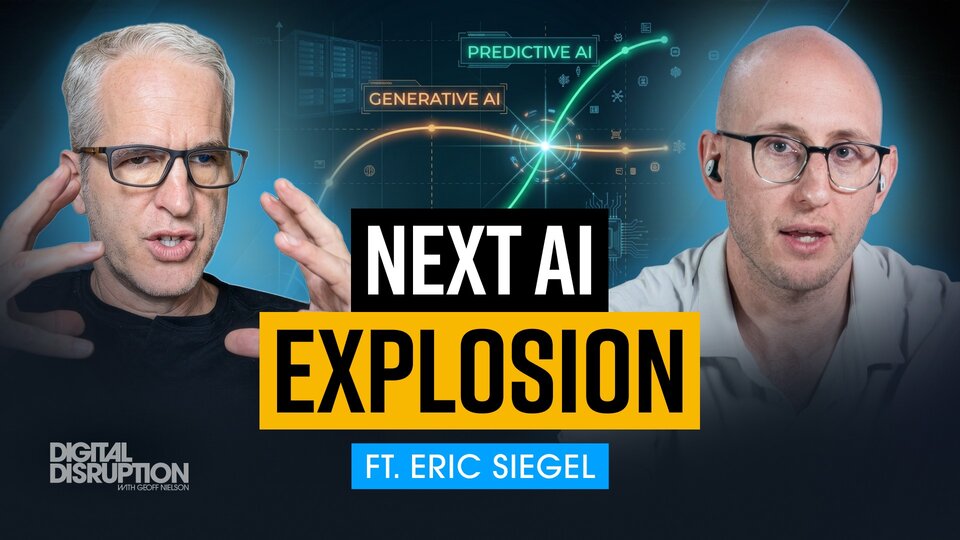
The Other AI Revolution: Why Predictive AI Will Overtake Generative AI in 2027
Predictive AI often gets ignored, yet it may hold the real key to business value in the current tech landscape.
Listen
Our Guest Peggy Johnson Discusses
AI Humanoid Robots Have Already Entered the Workforce. Should You Care?
Peggy Johnson, CEO of Agility Robotics, joins us on today's episode to look beyond the fear of robot overlords and ask: How will humans and robots work together in the years ahead?