
Digital Disruption
with Geoff Nielson


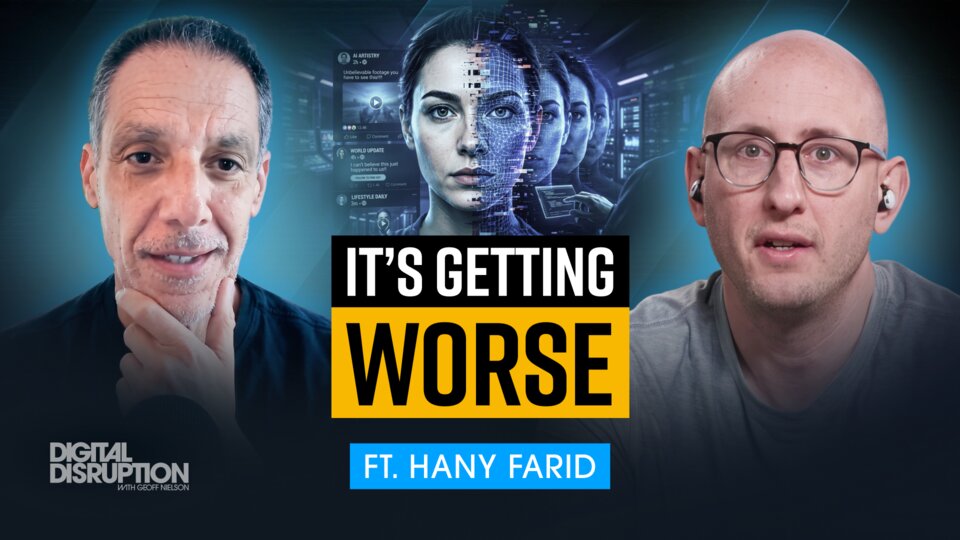
Our Guest Hany Farid Discusses
AI Has Made Everything Worse | Hany Farid on the Internet's Truth Problem
Hany Farid, one of the world’s leading experts on deepfakes and digital forensics, joins us to explain why AI-generated content is pushing us toward a world where we can no longer trust what we see, hear, or even who we’re talking to online.
From AI-generated misinformation and social media manipulation to voice cloning, deepfake video calls, and North Korean IT workers infiltrating major companies, Hany breaks down how rapidly the threat landscape is evolving. He explains why humans are not good at detecting deepfakes, how digital forensics experts actually identify manipulated media, and why organizations need to rethink cybersecurity, remote hiring, and digital identity.
This episode also dives into Big Tech’s role in the crisis, whether regulation and liability can make technology safer, the growing influence of large language models on how we access information, and what it will take to rebuild trust online.
Despite the risks, Hany remains optimistic about AI’s potential. The challenge, he argues, is learning from the mistakes of the social media era and finding a way to harness AI’s power without sacrificing safety, security, and trust.
00;00;01;29 - 00;00;05;20
HANY
We know that the North Koreans have penetrated fortune 500. We talked
00;00;05;23 - 00;00;07;20
HANY
one company who I won't mention by name.
00;00;07;20 - 00;00;09;25
HANY
It's one of the largest employers in the world.
00;00;09;25 - 00;00;15;25
HANY
They caught 1800 potential North Koreans. That's not a typo. 1800.
00;00;15;25 - 00;00;23;10
HANY
And that's the ones they caught. Now, you got to ask yourselves how many got through. So these are not hypothetical threats.
00;00;23;10 - 00;00;28;19
HANY
We talked to one US defense contractor who had five North Koreans in their organization.
00;00;28;19 - 00;00;31;12
HANY
Five. That's insane.
00;00;31;12 - 00;00;32;23
HANY
So I don't think there's
00;00;32;26 - 00;00;33;18
HANY
single fortune
00;00;33;21 - 00;00;36;26
HANY
company that probably hasn't gotten hit.
00;00;36;28 - 00;01;07;13
GEOFF
This is a show about the future of tech and the future of work. I'm Geoff Nielsen, and today we're diving into deepfakes and living in a trust no one digital world. My guest today is Hany Farid, the world's leading expert on deepfakes. He's a total tech rockstar and always amazing to listen to. The former dean of UC Berkeley's School of Information, he's now co-founder of Get Real Security and a forensic consultant to everyone from The New York Times to DARPA for how to uncover online fraud.
00;01;07;18 - 00;01;22;10
GEOFF
I want to ask him what he's seeing out there. How are we being manipulated, what's really at stake, and what can we do to protect ourselves when we can no longer believe our eyes? Let's find out.
00;01;22;12 - 00;01;49;27
GEOFF
Hany, thanks so much for joining today. Really happy to have you here. So let's jump into it. I want to talk about the era of deepfakes. Or, you know, it kind of feels like we're entering into, you know, what? I've been calling a trust no. One era. And I imagine you're thinking something similar, but just to sort of set the table, you know, if you're online, if you're using social media, what's your sense in terms of what proportion of all media these days is AI generated or faked in some way?
00;01;49;29 - 00;02;08;25
HANY
Yeah. I mean, look, let's be honest. Before the world of generative AI, social media was not a beacon of hope and trust in truth. So let's let's not pretend that we're fundamentally talking about an AI issue. Social media has been a problem for a long time because the business model of social media is user engagement, right? That's the business model.
00;02;08;25 - 00;02;30;07
HANY
It's not true. It's not honesty. It's not decency. It's how do I engage users for as long as possible? And it turns out we're sort of a bunch of jerks. And the absolute lowest common denominator of human nature engages us. And we all know this. So now I'm going to get back to your question. First of all, answering these questions is very difficult.
00;02;30;07 - 00;02;51;23
HANY
It's even difficult for the platforms. Meta doesn't even know what's happening on their platforms. TikTok doesn't know what's happening. But what I can tell you is it's not so much what percentage of the content is fake AI untrustworthy, it's what percentage of the content that is viewed. So understand there's a long tail on content that's uploaded. Lots of it gets 1 or 2 views.
00;02;51;23 - 00;03;19;07
HANY
I don't care about that stuff. But if you look at the stuff that drives engagement, the millions, tens of millions you're probably seeing upwards of half is now fake. I'm either fully AI generated. It's an AI influencer. It's somebody co-opting another influencer. It's state sponsored disinformation campaigns from Russia, Iran, North Korea, China. It's people trolling. It's ideological, or it's people simply trying to monetize.
00;03;19;07 - 00;03;40;28
HANY
And the reality is, is that if you are using social media as your prominent source of information, and I don't mean going to the BBC's, you know, Facebook or TikTok or YouTube page, I mean, literally using social media, you are being asked to be lied to. You are, and we should be honest about that. It is not a place to get reliable information.
00;03;40;28 - 00;04;03;00
HANY
And here's the thing it never was. It's not what it was designed for and it's not good at it. So I would say AI has made everything worse because it's fully democratized access to very sophisticated technology that used to be in the hands of the few. And now people can create fake accounts, fake influencers, fake content, fake images, fake video, fake audio.
00;04;03;02 - 00;04;19;06
HANY
Everything is fake. The text is fake. The whole thing could be running with an agent. I can today on my laptop run, run. An agent that is just on social media all day long, 24 over seven never gets tired and driving games. And then here's the other thing. Last thing I want to say about this is these the AI.
00;04;19;07 - 00;04;34;24
HANY
What's so great about the AI are what's so damaging about the AI is it learns. It's like, oh, I did this and it didn't engage, okay, I did this and it didn't gauge. So think the sort of a B testing that everybody does. The AI can now do this in a very rapid loop. So I would say probably more than half.
00;04;34;26 - 00;04;42;26
HANY
It's probably worse than that. And here's the thing. It's only going to get worse, right? The platforms are struggling to get a handle on this. YouTube did announce,
00;04;42;26 - 00;04;59;21
HANY
that they were eliminating over 100,000 channels that were AI slop, as we call it. So I think that the platforms are trying to get a handle on it, but the scale at which they operate and the complexity and sophistication is going to make it very hard for them.
00;04;59;24 - 00;05;20;27
GEOFF
I mean, to start, I guess lots of reactions to that. The number you throw out there of being a coin toss is, is really shocking. And it's shocking not just because it's so high, but because when you multiply that by how much content people are exposed to like it, it really is a staggering number when you think about, you know, just drowning in this content.
00;05;20;27 - 00;05;41;18
GEOFF
And I mean, one of the things I worry about sort of philosophically, I guess, is, you know, you've probably heard somewhere along the way the idea of like dead internet theory, but the idea that, like, if I'm using Instagram or I'm on Reddit or a social media platform, how far am I? From a world where if I'm not interacting with my friends, it could be all fake.
00;05;41;19 - 00;05;53;29
GEOFF
It could just be some sort of Truman Show where it's just this is all just farming me, plugging me into a machine to keep me engaged. And it feels terrifying. And. And how far is.
00;05;54;01 - 00;06;00;06
HANY
the matrix wasn't science fiction. It was a cautionary tale. Because, I mean, when you're describing essentially The Matrix,
00;06;00;09 - 00;06;12;16
HANY
look, you know, do I think we're at The matrix? No. But walk around and look at how people are on their devices, scrolling like like like little monkeys. I mean, we're not that far off.
00;06;12;18 - 00;06;37;15
HANY
And the paradox, of course, of the internet was it was meant to democratize access to information. And it did, but it didn't distinguish between good information and bad information. And so I think you're right. I do think that if you are spending your time the majority of your time on Reddit, on TikTok, on social media, you are living in an alternate reality that is created for you.
00;06;37;15 - 00;07;06;09
HANY
So this is the thing you have to understand is that the bubble you live in is really customized, because what these algorithms are doing are learning. What do you engage with, give them or heard more of that. And so you're sort of going down this rabbit hole. And it really is quite bizarre. And I don't think it's one of those things, you know, when you put a toad on a stove top and you turn up the heat very slowly, it doesn't notice, you can't notice, and all of a sudden it's over, right?
00;07;06;10 - 00;07;25;19
HANY
Your brain is melted. I think that's sort of what we've been doing for 20 years, and I don't think people have been noticing, and I do what worries me, Jeff, is that I think it's fine to have political disagreements. It's fine. We should we should disagree on things. There are things to disagree about, but we can't disagree on the fact that two plus two is four.
00;07;25;22 - 00;07;44;17
HANY
There are no opinions here. There's no like things. Either things happen or they didn't happen. And we are now arguing about facts. And that is a dangerous thing for a society, a democracy. And I would argue for an economy as well. Like we have to have a shared sense of reality. We can disagree on lots of things. I'm okay with disagreements.
00;07;44;17 - 00;07;56;13
HANY
I disagree with people all the time, but I can't have people calling me up and saying two plus two is seven because I saw it on Facebook, and that is the tenor of the conversations that we are living in right now.
00;07;56;16 - 00;08;20;28
GEOFF
It's a super scary prospect. And you use the word worry. And so if you if you play the clock forward here, what's the implication if we if something I guess dramatically different doesn't happen, what happens to our world if we continue down this path? And, you know, and as you said, it's not even necessarily a stagnant path. It's one that feels like it's marching in the wrong direction.
00;08;20;28 - 00;08;47;16
HANY
Yeah, I, I don't think it is hyperbolic to say this. I think these are existential threats to societies, democracies and economies, I really do. And look, you're sort of seeing it right now play out. We are living in this country right now in two or 3 or 4 alternate realities. How the right sees facts. If if you can call it that, and how the left sees facts again, if you can call it that.
00;08;47;16 - 00;09;09;25
HANY
And by the way, this isn't a Partizan issue. Both sides of the political spectrum have a problem with echo chambers. Let's be clear about that. But we we can't have civil conversations because one side says, you know, X and the other why says no, and that's it. That's sort of the end of the conversation. You know, my wife and I, my wife is a computational neuroscientist, and she's incredibly smart.
00;09;09;25 - 00;09;27;24
HANY
And one of the things she always does and we have a conversation, she said, let's start by agreeing on the facts, because if you can't agree on basic facts, you're nowhere right. There's nothing left at that point. And what's amazing about most of our conversations is sometimes we don't actually agree on the facts and then conversations over. There's nothing, there's nothing to be said anymore.
00;09;27;24 - 00;09;49;12
HANY
But I do think, I don't know how we have a democracy and elections when any side of the political aisle can say anything they want, and it doesn't matter if it's true or not, that sort of post-truth world. And I think that's dangerous. Here's another thing that's really dangerous. You know, it's easy to to jump up and down in the heads of social media and the markets of the world.
00;09;49;12 - 00;10;10;06
HANY
It's easy. But the other thing you have to realize, too, is that the large language models are in some ways more dangerous. And here's why. Like, like if Elon Musk doesn't like something that his grok AI is saying, he can put his finger on the scale and change it. In fact, that's not hypothetical. He has done that right.
00;10;10;07 - 00;10;34;11
HANY
We know that when grok says something that is negative towards Elon Musk or somebody he likes, he changes the AI algorithms to not say that. And now imagine if we are starting to get our information not from social media. Great. But what if we now are getting all of our information from Grok and Claude and ChatGPT? And now there's three people in the world who control the flow of information because that's their AI, right?
00;10;34;13 - 00;10;54;16
HANY
Imagine it's a state sponsored AI. So I think that's, you know, that's now almost the opposite of what the internet promise to do. It's reconsolidation, the flow of information under the hands of a couple of billionaires, trillionaire. And I would argue that is really dangerous for our democracy and society.
00;10;54;18 - 00;11;21;15
GEOFF
If you don't work in enterprise technology, you can skip ahead or take a quick brain-cation. But if you do, Infotech is your secret weapon. Infotech helps IT teams get projects done faster, better, and at a lower cost. Whether you're rolling out new tech, improving processes, or just looking for cost savings. Infotech provides unlimited access to practical tools and expert guidance you need to execute at a fraction of the cost of traditional consulting.
00;11;21;17 - 00;11;33;14
GEOFF
No matter the project, from AI strategy to cybersecurity to vendor negotiation, Infotech has you covered. Check it out at the link below, and don't forget to like and subscribe!
00;11;33;17 - 00;11;51;28
GEOFF
can we maybe take a step back and just kind of map the landscape a little bit more? Because I think if I if just to summarize, a lot of the message I've been hearing is that we are being manipulated through information at a mass scale by a number of different actors for a number of different purposes.
00;11;52;05 - 00;11;55;23
GEOFF
Can you map that landscape a little bit for me? You talked about it quickly. Yeah.
00;11;55;23 - 00;12;16;06
HANY
Yeah. So first, I think that's a good summary. You know, I'm a professor, so I rant and rave and you're a professional. So you summarize it in ten words. So well done. Yes we are being manipulated. But let's talk about who and how. So first, the vast majority of Americans, in fact, the vast majority of world citizens get the majority of their information from social media today.
00;12;16;06 - 00;12;35;28
HANY
That's a sad but true statement. Okay, now, what is the business model of the Facebook's and the TikToks of the world? They give away their product for free, and they want your time and your eyeballs to deliver you ads, to get you to buy stuff that you probably don't need. That is $1 trillion economy in a nutshell. It's the attention economy, right.
00;12;35;28 - 00;12;56;19
HANY
And what these algorithms have done, they didn't set out to burn the place to the ground, but what they learned is deliver content that drives engagement. It's a very simple optimization problem, and they don't care what the content is. Good, bad, ugly, illegal, horrible. It doesn't matter. Whatever drives engagement, you deliver it. And so you're being manipulated algorithmically on a very individual level.
00;12;56;21 - 00;13;20;12
HANY
Now who's manipulating you? A lots of different people. First, the tech companies are manipulating you. That's the algorithms. You're being manipulated by state sponsored actors. Russia, China, North Korea, Iran are manipulating us. There are sowing civil unrest because a destabilized United States is good for them. So with their state sponsored sophisticated actors, cyber criminals are trying to separate you from your money, right?
00;13;20;14 - 00;13;45;16
HANY
Fraud scams. Here's a cure for cancer. I've taken your kid. You have to send me $2,000. I mean, extort you with nonconsensual, intimate imagery, all forms of scams and frauds that are now being supercharged by AI. They were there, of course, before. And then there's the ideological people who are just ideological. They have a particular view, and they are trying to push that as hard as possible.
00;13;45;16 - 00;14;07;15
HANY
And then some people, it's just they're trying to monetize. They have no ideology. They're individuals just being like, I'm going to create content in order to drive engagement so I can make a couple of bucks every month and up and think about that scale, by the way, from state sponsored actors to some guy halfway around the world who's just trying to create some content that delivers ads for him, deliver some money for him and everything in between.
00;14;07;18 - 00;14;36;16
HANY
And here's the thing is, the harm to you as an individual is wide reaching. There are absolutely these frauds and scams, everything from ransomware and malware and extortion, getting you to buy products that are going to be damaging to you, or at best, not helpful people trying to separate you from your money. There are dangerous cyber criminals who are targeting your children, extorting them and trying to get them to do horrible things and leading to horrific consequences.
00;14;36;16 - 00;15;01;05
HANY
And then their state sponsored actors that are sowing that civil unrest and everything in between. So it's our mental health. It's our physical health. It's our our our dollar, it's our democracy. And everybody's got a different sort of goal here. Some of it is ideological and some of it is monetary. And meanwhile the platforms are have become trillion dollar platforms because they're indifferent to it, of course.
00;15;01;07 - 00;15;02;17
GEOFF
It's a.
00;15;02;19 - 00;15;04;20
Speaker 2
It's a scary landscape.
00;15;04;23 - 00;15;09;29
HANY
the slight pause there, by the way. It was really it was sort of an appropriate pause because how do you come back from
00;15;10;01 - 00;15;41;06
GEOFF
no. Well, well exactly. I'm just like taking it all in and just thinking to myself, wow, that's a, that's a bad scene. So, you know, not to get ahead of ourselves, but you know, the obvious next question to me is like, what do we do about that? And let's start. Let's maybe start as as individuals. I guess there's the smaller question of, you know, if every second piece of media we see is fake, can we get better at identifying that, or is there some sort of broader behavioral change needed here?
00;15;41;06 - 00;15;41;17
Speaker 3
good.
00;15;41;18 - 00;16;00;20
HANY
So I think that's the right question to ask. So here's here's the thing. You have to understand. You cannot as an individual become a digital forensics expert. You are not going to be able to tell the difference between real and fake. And that's not just me mouthing off, being arrogant. We do studies in my lab. We do perceptual studies where we show people images.
00;16;00;20 - 00;16;18;08
HANY
We show them, we have them listen to audio, we have them watch videos and a very controlled lab environment that is not emotional. It is not designed to trigger emotional responses. We are setting you up for success, and we're telling you half the content you will see is real. Half the content is fake. Do your best
00;16;18;08 - 00;16;20;21
HANY
and people are basically slightly above chance.
00;16;20;21 - 00;16;39;20
HANY
And that's in a controlled, unemotional lab environment. Put them out in the wild, you know, doom scrolling. You are not going to do this. It's just it's over, right? Your visual system and your auditory system have failed you. You are not going to do this. And if if you if your listeners take nothing else away from this, take this away.
00;16;39;22 - 00;16;59;19
HANY
You cannot do it reliably. I do this for a living and I've been doing it for a long time. It is really, really, really hard. And the worst thing you can do is think that you can do this well. That makes you more dangerous. I call it the arrogance ignorance problem. Very dangerous. It's fine not to know how to do something as long as you know you don't know how to do it.
00;16;59;19 - 00;17;10;23
HANY
So I don't think we can protect consumers at that level. And it's unfair. It would be like saying, hey, when you go to the grocery store, we're going to teach you how to figure out if the food is going to kill you or not.
00;17;10;24 - 00;17;28;21
HANY
we would never accept that. We'd never say, it's my responsibility. Every time I get my car to make sure the brakes don't fail. No, no, that's the car manufacturers problem. So I don't think we should put this on the consumer. Now, who should we put it on? I think there is there's really sort of two levers here.
00;17;28;21 - 00;17;47;15
HANY
You have regulatory and liability. Regulatory says we're going to pass laws that basically force the tech companies to do better. I mean, we've been talking about this for 20 years. And honestly, you know, here in the US we are almost nowhere. The EU, the UK, Australia, Canada, they're doing a little bit better. But this is really hard to pass laws.
00;17;47;16 - 00;18;07;17
HANY
The laws move at a snail's pace. The technology moves ten times faster. Lobbying efforts are phenomenally sophisticated and effective. I'm not that excited about the we should we should try we should try to put guardrails on this. But if you ask me, where would I? I think is probably the best place now. I think it's with liability. And I don't think that's a great answer, by the way.
00;18;07;17 - 00;18;26;14
HANY
But here's why I think it will work. The reason why the physical products that we buy and bring into our homes are so safe is we created product liability for these companies. We said, you create a product that you knew or should have known as cause harm. We're going to sue you back to the Dark Ages. And it turns out when you do that, which is an imperfect system, we should recognize.
00;18;26;14 - 00;18;50;09
HANY
But when you do that, the companies internalize the liability and they say, okay, if we don't make a safe product, this is going to be bad for us. Let's make a safe product. But we haven't done that with the tech industry. We let them off the hook for 25 years. I think that's starting to change. Its changing with the with the ruling in New Mexico recently, the ruling in California, the EU is cracking down saying, look guys, this isn't fun and games anymore.
00;18;50;10 - 00;19;05;29
HANY
It's not like Las Vegas. What state happens on the internet, stays on the internet. This isn't this is having real world consequences. And people are dying and people are being hurt and people are losing money. 10% of Facebook's profits come from frauds and scams. 10%.
00;19;06;04 - 00;19;06;20
GEOFF
Wow.
00;19;06;24 - 00;19;12;10
HANY
insane. If that was true of a bank, they would be shut down immediately, right?
00;19;12;11 - 00;19;37;12
HANY
So we have to figure out how to say to these tech companies, look, guys, you have to create safer products. You cannot internalize the profits and externalize the risks and harms. Party's over. And that would be my first sort of go to on the behavioral side, I would say there is something people can do. You're not going to become a digital forensics expert, but here's what you can do.
00;19;37;13 - 00;19;55;23
HANY
Get off of social media. And I know that's sort of a sort of a dumb thing to say, but it is everybody, even people who are on it. No, it's the right thing to do. Here's what I tell my students, by the way that works. I start there, I say, look, delete everything. You will thank me later. I swear to God, your mental health, your physical health.
00;19;55;23 - 00;20;18;07
HANY
And I swear to God your IQ will probably jump 30 points. But I recognize that by design these products are addictive. So what I tell my students in this, this actually works, is just take it off of your phone. You can keep the accounts. It's fine, I don't care, right? But take the apps off of your phone. And the reason you do that is that every spare minute you have of your life, you're not doing scrolling on these devices.
00;20;18;09 - 00;20;34;05
HANY
And if you need to have the accounts when you're back at your desk, you can go look at them. And I swear to God, students, you know, they have exactly the same pattern. When they do this, they do it. They say it was terrible for the first week, just like quitting cigarettes or or coffee. And then after that they're
00;20;34;08 - 00;20;35;09
HANY
like, oh my God.
00;20;35;09 - 00;20;41;28
HANY
And then they basically just stop going. That's the thing you have to understand. Look, he's deleting
00;20;42;00 - 00;20;46;11
GEOFF
I'm doing it right now. I'm doing it right now. I'm like when you say keep it.
00;20;46;11 - 00;20;47;10
Speaker 2
On the desktop,
00;20;47;10 - 00;20;52;25
GEOFF
When you when you say keep it on the desktop, I'm like, I can do that. So Instagram is gone.
00;20;52;27 - 00;21;02;27
HANY
you have to understand these things are addictive by nature and they are terrible, by the way. People can't see it. But I swear to God, he's deleting the apps off of his phone
00;21;02;29 - 00;21;09;29
GEOFF
Read it. Goodbye. I love that. There you go. One person at a time. I'm going to be an evangelist for the message to I love it, I love
00;21;10;04 - 00;21;12;14
HANY
like a pyramid scheme.
00;21;12;17 - 00;21;26;01
GEOFF
It's the anti pyramid scheme right. It's D it's deprogramming. It's unbreak washing. No that's awesome. Sorry I got distracted deleting my apps but I'm very happy. That's a very happy distraction.
00;21;26;01 - 00;21;49;22
GEOFF
So you know we kind of covered both sides here which I appreciate I guess sort of the demand for the social media stuff, the supply of it coming back to the supply. And of course, correct me if I have my facts wrong, but my recollection is there's a case going on right now, I want to say in Texas against Meta and Instagram how much liability there is for creating these things that are deliberately addictive here.
00;21;49;22 - 00;22;18;05
GEOFF
So I'm going to assume, based on what you said, that, that you're an advocate for cases like this, you think that there should be ramifications for that. So I mean, first of all, let's unpack this. Is that the right approach? And assuming this goes perfectly or close to it, what changes would you like to see Big Tech make that make this a more controlled and low harm environment for consumers?
00;22;18;05 - 00;22;43;18
HANY
say I'm a reluctant advocate I don't think liability is really the best solution. But we've tried everything else. We've tried regulation. We've tried boycotts. We've tried asking begging pleading threatening. Nothing works. And so this is sort of where we have landed. And I think it will affect change. I think it's an imperfect solution. But I do think it's sort of the the thing that we have that seems to be effective.
00;22;43;26 - 00;23;05;13
HANY
Number two is I'm not saying I just want people who are victims to have their day in court. This is not for me and you to decide. It's for a jury and a judge to decide. And let's just have the conversation right. And if the judge and jury say, hey, look, we don't think Facebook did anything wrong, I can live with that verdict, but let's have the conversation.
00;23;05;13 - 00;23;23;26
HANY
Let's have our day in court. And we have not had that for many, many, many years because the tech companies have managed to avoid liability for that. So I think this is good. Now, in terms of the changes, here's what's great about the liability solution is I don't I don't have to tell you what to change. You're going to figure it out for yourself.
00;23;23;28 - 00;23;45;11
HANY
Here's the thing that makes me crazy about the tech companies. They have built the nominal complex systems. And yet every time, every time it comes down to how do you make your product safer for kids? How do you make sure scammers and terrorists are not exploding your platform? They're like, oh man, that's a really hard problem. We don't know.
00;23;45;14 - 00;24;07;22
HANY
I'm like, no, you're a big fat liar. Because every time you need to solve a problem that you can profit from, you seem to have no problem whatsoever, by the way. And yet when it comes to the bare minimum to keep people safe, you play dumb. I'm not falling for that anymore. So the companies this is what's great about liability is you don't want the US government telling the companies how to make their products safer.
00;24;07;22 - 00;24;25;14
HANY
It's not really what you want because the government doesn't know and the products move too fast. The companies are going to internalize this liability. They're going to keep writing 100 to 200, $500 million checks, and they're eventually be like, all right, this isn't worth it anymore, right? The scales have tipped and they're going to start making their product safer.
00;24;25;15 - 00;24;38;05
HANY
Here's a few things I would advocate for, though. Australia just passed a ban on social media for kids under the age of 16. I think that's awesome. I'd make it like 30, but I live with 16, right? I think that's fine.
00;24;38;07 - 00;24;40;05
GEOFF
Over 60 while you're at it too,
00;24;40;08 - 00;24;46;24
HANY
and over 60. Yeah, yeah, it's a fair. That's a really good point. Yeah, yeah. You don't want you want your boomer parents on it.
00;24;46;26 - 00;25;17;14
HANY
I think that's good. I think we've been doing an experiment on young kids, and I think it's overwhelming evidence. This is very bad for them. It's bad for them. So I would say really forced these companies to make sure they know who their users are and don't let them play dumb. By the way, TikTok said somebody, some some C-suite and TikTok said, we know just about everything about our users within the first 90, 100 and 20s they know everything about you.
00;25;17;14 - 00;25;37;26
HANY
That's the whole point of the algorithms, right? That's what they tell their advertising. Oh, you want to target this very tiny little. They know how old you are. They know where you live. They know everything about you. So they they can do this right. They have got to reinvest in trust and safety. They've been eviscerated over these teams have been eviscerated over the last few years.
00;25;37;29 - 00;25;59;01
HANY
And here's the big one. And I don't know how to do this is I think the original sin of social media is the business model, right? When you give away your product for free, we as the users are not the customers. We're the product, right? We're it's the wrong business model. And the reason we have this business model for the young people listening is 25 years ago.
00;25;59;01 - 00;26;16;01
HANY
I know this is going to sound crazy. Nobody thought you can make money on the internet, which is sort of hilarious now that you think about it. But in the early days, remember this Google? Facebook was like, guys, this is really dumb. You're never going to make any money. Turns out the joke was on them. So I think we have to really fundamentally rethink the business model in a really deep way.
00;26;16;01 - 00;26;37;06
HANY
And one way that we can do that is this is where the government can step in. And because one of the things that these tech companies have become is just gigantic monopolies, and they can squash any anybody in the competitive landscape, let the market be sort of open and let's make room for new business models. We live in a different time right now.
00;26;37;06 - 00;26;54;15
HANY
And and the problem is every time there's like a fresh new startup with a new idea, one of these big tech giants comes here and just wipes them off the face of the earth. Right. And we need we need sort of a healthier ecosystem so that better and new ideas can come around the the age of Mark Zuckerberg is over.
00;26;54;18 - 00;27;22;24
HANY
We need we need we need the next better version of that. And so I think that's where the government can come in and create incentives for new companies with better models and protect them from the big giants. And by the way, I will remind everybody that in the early days when Microsoft dominated the landscape, Google was trying to come up in the early days and they went and complained to the Department of Justice, saying, Microsoft is destroying us with their anti-competitive monopolistic patterns.
00;27;22;24 - 00;27;43;04
HANY
And they were. And what did the DOJ did? They went to Microsoft and said, knock it out, knock it off. And now Google is saying, no, no government regulation, bad government, bad guys. You are here because the government protected you. You can't walk through the door and then close it for the next guy. Right? So let's stop pretending somehow that the government is inherently bad.
00;27;43;04 - 00;27;49;16
HANY
The government can do things to create fair, open ecosystems, or people can compete.
00;27;49;18 - 00;28;08;08
GEOFF
So so here's where my mind goes and what concerns me. You talk about needing that next generation of kind of tools and products and platforms, and it's looking more and more like we have that and it's lens. Right? It is these these AI generative AI tools. And as you said earlier, in some ways they're even worse than the incumbents.
00;28;08;09 - 00;28;26;08
GEOFF
Right. Because, you know, you've got the Elon's of the world who can put their thumb on the scale. And it may be imperceptible to us in ways that are more subtle. If we're unlucky, then, you know, the current roster. So what do we do about that when it comes to the generative AI tools that people are using more and more?
00;28;26;08 - 00;28;34;00
GEOFF
And if I had a crystal ball, I'd say are going to be using more at the end of the year than the start of the year and more next year than this year. What do we do there?
00;28;34;07 - 00;28;52;25
HANY
Yeah. First of all, it's a great question. So the danger here, just to put a really fine point on this, is the companies that have built like the best LMS, large language models of the world are sort of the winners from the last two decades because they have all the data, they have all the money, they have all the compute, and, you know, some tiny little startup.
00;28;52;25 - 00;29;19;16
HANY
It's hard. It's not impossible. Right? You're seeing some movement out of these small companies, out of China, although there's some controversy as to what they're really doing. But yeah, I worry that the winners from the last 20 years are going to be the winners of the next 20 years, and how are we going to compete? I think there is a potential solution here, which is that we, the government, has to step in and say, look, either we're going to create a fully open source model that is ethically trained, open source weights.
00;29;19;16 - 00;29;39;06
HANY
Anybody can tap into it and build the next generation. The government should do this. It's awesome because if you allow anybody to step in with an open source model and use that as the base, imagine the ecosystem that you can create. And we're not relying on Sam Altman and Elon Musk and a handful of companies who are that last year's winners?
00;29;39;06 - 00;29;43;29
HANY
I think there are things that the government can do to create a level playing field here.
00;29;44;02 - 00;30;08;02
HANY
don't know what the future of large language models looks like, but it's sure looking like it's going to play it or it's, you know, variations on it are going to play a huge role everywhere. And, you know, in the same way that access to the internet is essentially now the same as access to electricity or water, probably access to this kind of AI, LLM, whatever you want to call it, is going to be of that equivalent.
00;30;08;02 - 00;30;25;02
HANY
And we've got to figure out how to make sure that that is not consolidated power, both for the fairness of the ecosystem, but also, as we were just talking about, you don't want three people in the world who can put their finger on the scale and change all of the information that everybody sees instantaneously.
00;30;25;04 - 00;30;34;18
GEOFF
Hany, listening to that, it's really interesting and it makes complete sense about, you know, having the government play some sort of role here, trying to get to more of a true open source model.
00;30;34;18 - 00;30;52;26
GEOFF
And, you know, one of the reactions that I had to that is it's funny and I guess ironic given, you know, the the topic of this conversation that I feel like there's such a strong narrative these days about, like, that's the last thing you should do. We have no choice but to let these companies do it themselves. They're the only ones who can do it.
00;30;52;26 - 00;31;20;05
GEOFF
You have to put faith in them. The reason I say that's ironic is because to me, that's a narrative that's so obviously being shaped and manipulated by the companies themselves. And there's so much whether you call it misinformation or disinformation, there's so much narrative shaping by, you know, big players, invisible players here. What do you consider to be, I guess, the most harmful narratives right now are the most BS you're hearing in this entire space.
00;31;20;09 - 00;31;48;03
HANY
I'll tell you. I'll tell you. I'm glad you asked this question. So first, and I hear this all the time, is from the Sam Altman's the Elon Musk's all the big AI and tech companies do not regulate us, do not create liability because China will beat us. That's the narrative, right? This is a national security concern. And the reason why this is such BS is that creating safe products is a national safety concern, right?
00;31;48;06 - 00;32;12;04
HANY
Of course it is. Right. It would be like saying, look, guys, we need to create the next airline that's going to compete and jet that's going to compete. Don't force us to make it safe because then we'll have to compete with China. Yeah I'm not flying on that jet. If the motto of the airline is move fast and break things, nobody's flying that airline.
00;32;12;04 - 00;32;32;20
HANY
And yet here we are in Silicon Valley. You know, everybody's like, oh, yeah, sure. Move fast and break things. No safety, no precautions. This is a national security concern if we build unsafe products. And by the way, we unleash them in critical infrastructures, making decisions about who gets targeted and more controlling our energy infrastructure. You don't think that's a national security concern?
00;32;32;21 - 00;32;47;23
HANY
Are you out of your mind? Don't let them get away with this. This is not an us versus them. This is a convenient line. And by the way, this is the same BS we heard in the last 25 years. Get out of the way of the internet. Let the internet be the internet. You are going to stifle innovation.
00;32;47;23 - 00;33;05;05
HANY
And the reason why you should reject that is we do not accept that in any other industry, the car industry doesn't get to say, get out of the way or we won't be able to compete with China. No, we say make your product safe, test them, make sure I'm not going to explode when I get into my car.
00;33;05;06 - 00;33;06;17
HANY
Medicine, food.
00;33;06;18 - 00;33;31;10
HANY
like we force safety and it turns out that's good for consumers, it's good for the industry, it's good for everybody. And if you don't like the way another country is doing what they're doing, we have other mechanisms to deal with that, right? We don't we don't say we are going to reduce ourselves to the lowest common denominator and tear the place to the ground just because somebody else is doing that.
00;33;31;13 - 00;33;57;23
GEOFF
I think that's exceptionally well said, and I don't have a lot to add on to that. I really, really like that framing device, so maybe I'll switch gears a little bit and Haney return to something we talked about earlier, which is, you know, the detection of deepfakes or altered media. You know, you mentioned that for the like for the most part, we can't do it like we're screwed out here, you know, in the masses, you know, for for the geeks out there.
00;33;57;24 - 00;34;05;01
GEOFF
How did how do you do it if you know you're out there on the frontier, what does that look like to it? To like a true professional.
00;34;05;01 - 00;34;05;10
Speaker 3
yeah.
00;34;05;11 - 00;34;24;27
HANY
So let me start by saying there's a little tension in this question. Right. Because the more I tell you and your listeners how I do this, the more my adversary learns from what we do. Right? There's always been this tension in cyber of how much do you give up? How much do you not give up? But having said that, let me tell you a few things.
00;34;24;27 - 00;34;50;22
HANY
So first there is no there's no like just magic button. You don't put a button on the keyboard and say enhance, right. And then or, you know, analyze. That's just not how it works, right? Every image, every audio, every video is just different. So let me give you a couple of examples. So here's one I really like. So for example this is just yesterday we were dealing with a piece of content from a major news outlet.
00;34;50;22 - 00;35;11;05
HANY
And it was a video taken outdoors of an explosion. Yeah. And we really like outdoor images and videos. And the reason we like them is that we actually understand them fairly well. So we know, for example, that outdoors there is one dominant light source, the sun. Right. You can see it on my background here. And the sun has some very particular behaviors.
00;35;11;05 - 00;35;33;08
HANY
Right. Like all the shadows in the scene will be consistent with one light source. The pattern of illumination will be consistent with one light source. And so we can physically measure what is the pattern of illumination in the scene, and is it physically plausible and consistent across it. So we have a light pole over here. We have a person standing over here we have a building.
00;35;33;08 - 00;35;57;18
HANY
Over there is the pattern of a lighting and illumination consistent across that the scene physics based explainable not give it you know ask the AI what this is. That doesn't work. Don't. First of all here's another PSA. Do not do not do not upload a piece of content to some website you found that says that it has a 99% accuracy in detecting real versus fake.
00;35;57;19 - 00;36;16;21
HANY
They're lying. It doesn't. And it doesn't work. Those things don't work. They're all nonsense. I found three of those sites that, I swear to God, were random number generators. They're just they're just stealing your data. They're just your data, and then they're just giving you a random answer and you're like, oh, it's so smart. And you can just go look at the JavaScript code.
00;36;16;21 - 00;36;39;15
HANY
It's actually not that hard. Okay. So physics based modeling of the physics of the world, the lighting, when it comes to people, we have a whole different set of techniques. So here's one of my favorite ones. One of the one of the things we've been seeing that's really problematic is on calls like this. By the way, you were talking to somebody and they can change their identity in real time.
00;36;39;15 - 00;37;02;17
HANY
They can do what's called a face swap deepfake from eyebrow, the chin cheek to cheek. You can just change your face. And we've seen, for example, North Korean IT workers penetrating fortune 500 companies, cyber criminals coming in and getting they're not going through the firewall. They're actually going through HR, getting jobs, and then they're on the inside stealing IP and planting huge problem across the industry, by the way.
00;37;02;17 - 00;37;20;05
HANY
Huge. So how did they do this. So what they do is they take your face for example, a single image of you. And then as I'm sitting in front of the camera, it's just putting your face on my face. No matter how I move and how I blink my eyes and talk. And so it's called the face swap deepfake.
00;37;20;13 - 00;37;39;17
HANY
Here's what's really cool about that. It's think about like if I put on a rubber mask as I move, the mask conforms to my face. Well, that's what you have to do digitally with a face swap. And when you do that, it's constantly shifting the pixels, right? It's called the warping. And warping has a very specific mathematical definition.
00;37;39;17 - 00;38;07;20
HANY
And so and we can define it. And then when we see a video like this one, either in a stream or in a digital file that we saw on social media, we can detect those very specific manipulations. Yeah. So a whole host of these techniques that we've developed. But let me I want to just pop up one level here and say the way that I don't think you should do this and the way a lot of people are thinking about this problem is this is an AI problem.
00;38;07;20 - 00;38;32;04
HANY
You solve it using AI, get a bunch of data, throw it into your favorite transformer, deep neural network, whatever it is, and have it learn. And the problem with those approaches is twofold. One is they don't really work and you don't know when they don't work. But here's the bigger problem. You can't explain what they're doing. You get to the other end of it and imagine you're in a court of law and you're somebody like me and saying, hey, we've done a forensic analysis of this piece of content and it's fake.
00;38;32;04 - 00;38;58;03
HANY
And the judge or the prosecutor says, well, how do you know? And I got to be like, wow, you know, the computer told me so. I mean, that's not an answer, right? I mean, if you're going to accuse somebody of of fraud or committing a crime or manipulating media, you got to be able to say something. So we are driven both academically and over at get real security, really understanding what this problem is, not going into it blind and just hoping for the best.
00;38;58;03 - 00;39;22;01
HANY
And so we have physics based techniques. We have geometric techniques, we have statistical techniques. We are not antagonistic to AI. I don't mind bringing AI into the into the loop when we need it, but it's it's very judicious, if you will. And then, you know, there's a lot of other stuff I won't talk about really cool stuff, things that, you know, we don't want to necessarily be known because it's adversarial, right?
00;39;22;02 - 00;39;39;07
HANY
What we're doing is adversarial, but a lot of it is really just understanding the 3D physical world, understanding what we expect to see in a natural video image, audio recording, and then looking for deviations of that that are represented of AI.
00;39;39;09 - 00;40;02;01
GEOFF
It's it's very cool. And, you know, as you were speaking, it just reminds me that, yeah, I'm probably not going to be able to do that. And most people aren't, as we're kind of idly scrolling through our phones. You brought up you brought up a scenario that we haven't talked about yet that I think warrants further exploration, which is like the the enterprise scenario, the North Korean hacker that's made their way in.
00;40;02;01 - 00;40;25;23
GEOFF
And by the way, there's the versions of this to where you get a call from the CEO and they say, I need a wire transfer. Whatever. There's there's versions of this. What if you're speaking with business leaders, with technology leaders, what are the enterprise scenarios that they need to have on their radar in this space? And what are the what are the precautionary steps you would recommend there?
00;40;25;24 - 00;40;46;27
HANY
Yeah. I'm glad you talked about that because we have been talking about consumers. But let's now talk about the enterprise. Let's talk about, you know, trillion dollar economy. So first of all, these are not hypothetical threats. When I say North Koreans are this is a multi-billion dollar a year industry for for North Korea. It's how they're funding their government is with IT workers who are working in us.
00;40;46;27 - 00;41;07;17
HANY
And I mean, it's it's you can't make this stuff up. You mentioned the CEO attacks. These are not made up 10 million, 20 million, $30 million scammed. And by the way, for every one of them you read about in the newspaper, there's ten that you haven't read about brand damage, people creating videos of your CEO or your brand, getting them online because they don't like you.
00;41;07;17 - 00;41;27;16
HANY
They don't like something you said. The damage that can happen to a brand is unbelievable how fast it can happen. So here's the thing that enterprise has to understand. This is not an if. This is a when. And I can tell you, I over the last four years a real I've talked to a lot of C-suite, a lot of boards, a lot of CISOs, a lot of CEOs.
00;41;27;18 - 00;41;47;26
HANY
You either have been attacked and don't know about it, or you've been attacked and you know about it and it's it's coming. So let's let's go down the list of what we are seeing. So first, so much of our day to day interactions are now on these things. Right. And they're they're great. They're convenient. Right. I don't if you want to interview somebody and there are 3000 miles away, you don't have to fly them out.
00;41;47;27 - 00;42;07;20
HANY
Just get on the call and talk to them. Right. But it's also a vulnerability because we know cyber criminals. Bait and switch interview. My favorite one is people hire other people to do the tech interviews. That person goes through the process, gets an offer, and then two months later, somebody else shows up to work and nobody's connecting the dots, right?
00;42;07;20 - 00;42;25;01
HANY
It's two months later, like, I, we interviewed this guy. I'm like, okay, sort of looks like my guys who can remember. So you're seeing that. You're seeing the North Korean imposters. You're seeing people who do what's called over employment. They have 5 or 6 jobs, and then they just outsource it to India, and then they're just in, you know, it's it's completely crazy.
00;42;25;03 - 00;42;49;29
HANY
And by the way, a lot of those companies are competitors of each other. So there's this weird crosstalk between the these things. So absolutely onboarding from the interview process. The onboarding is a huge vulnerability. And I think enterprise is starting to wake up to that. You're starting to see that there is fraud, particularly in the financial sector. So if your bank, for example, uses my my voice is my password, you should change banks.
00;42;50;01 - 00;43;12;28
HANY
Your voice is no longer secure. It was 10s of your voice, Jeff. I can clone it and I can call your bank and I'll pass any biometric. So fraud at the financial institutions have become a huge problem. Insurance companies. Somebody smashed into my motorcycle a couple of months ago, totally trashed it and drove away and call the insurance company.
00;43;13;01 - 00;43;25;03
HANY
Yeah. No problem. Take a video of it, send us the video. They write me a check. I'm like, well, that was cool. I'm like, do you guys not know how AI works?
00;43;25;06 - 00;43;27;01
GEOFF
You wanted to check?
00;43;27;04 - 00;43;31;08
HANY
are going to deal with this from Airbnb's, right? People are real estate.
00;43;31;08 - 00;43;56;10
HANY
People are creating fake images of houses, Airbnbs, eBay's. Anything where commerce is happening online has become a problem. The brand protection I already talked about up and down the stack, you're seeing the enterprise being attacked, and my sense of the landscape is some of the enterprise is waking up. They got they got they got whacked. This is what happens in cyber, right?
00;43;56;11 - 00;44;17;18
HANY
Everybody's like, oh yeah, it's a problem. And then they get hit and they get hard and now they have to respond. And my thing is guys get out ahead of this. You know this is coming. You know it's coming. Everybody knows it's coming. But of course you know they're dealing with 100 different threats. So I think that we are going to see more and more problems in the coming.
00;44;17;20 - 00;44;40;26
HANY
I was going to say years, but really months. And you're seeing it escalate. We're seeing it escalate. Just yesterday I was talking to the president of a of a large bank and he's getting attacked. People are creating fakes of him circulating them, and it's bad for his bank and it's bad for him, and it's happening every day. So and here's the thing is, anybody can do this.
00;44;40;27 - 00;44;55;07
HANY
I mean, the reason why this is happening is a single individual can do this with a keyboard and access to internet. It's nothing. There's no barrier to entry anymore. And so that's why I think the threat is becoming so sophisticated, so, so much more prevalent.
00;44;55;10 - 00;45;04;04
GEOFF
So let's get let's get super tactical about this. You talked about organizations waking up is this you talk about getting out ahead of it. What does that look like
00;45;04;06 - 00;45;17;00
GEOFF
you're one of the lucky few who says, yes, this is a problem. I know it's a problem. I'm worried about onboarding. I'm worried about deepfakes. I know that there's so many, you know, employee centric vulnerabilities here.
00;45;17;05 - 00;45;28;05
GEOFF
What does that look like? Is it awareness training? Like what types of tactics are going to be I guess the the highest impact in terms of protecting your organization?
00;45;28;09 - 00;45;43;08
HANY
I think there's three things every organization should be doing right now. And it's got to start with, as you just said, Jeff awareness. You got to know. And look, nobody wants to do those silly trainings on cybersecurity and all these things that we do. But it turns out, you know, they're actually pretty helpful. This keeps things a top of mind.
00;45;43;09 - 00;45;58;13
HANY
Know what a fishing scam is? No. You know, remember that. Don't click on the link. For God's sakes. Don't click on the link. I mean, so that that kind of awareness is good and a lot of people don't know, for example, that on a real time call like this, I can change my voice in my face, in my in my voice.
00;45;58;17 - 00;46;21;24
HANY
I'm sorry. My voice in my face. They don't know. And just not knowing is already a vulnerability. So I think awareness training is really important. Two is policy. You got to start creating some policies. I mean, I've talked to some companies who said, all right, no more remote interviews. I think that's insane. I think that's an insane response to a threat because it's so extreme in some ways.
00;46;21;26 - 00;46;37;14
HANY
But, you know, you got to start putting in some policies. Let's say, look, when people how many calls have you and I been on where people joined from some phone number and nobody knows who it is and their cameras not on. How are you in a business meeting? It'd be like somebody walking into your business room and nobody know who they are.
00;46;37;14 - 00;46;55;22
HANY
And everybody's like, nah, it's fine. Like, look, we got to start having some more reasonable policies. We have to stop being so cavalier about who's joining these calls from some random number without their camera on. So I think that there's just some good policy. And number three is tech. So this is you know obviously my bread and butter now.
00;46;55;22 - 00;47;14;03
HANY
So for example over get real. What we have done is we have developed technology that can join a zoom call, a teams call, a WebEx call, any any video call. And it monitors it's think about it as these are the transcribers, the things that are transcribing your calls. Right. Sort of annoying, but pretty cool actually. At the end of it.
00;47;14;04 - 00;47;31;08
HANY
Right. You get these nice summarization, you get action items. Who's doing what really really good. So it's the same type of thing. It's a little what we call trust advisor that joins your call, and it monitors and monitors the face and the voice of all the participants. And then you get to decide at the back end, well, what do you do if you find a fake, right.
00;47;31;09 - 00;47;48;04
HANY
Do you notify everybody? That's probably not a great idea, right. Because the bad guys on the call. Do you know why the moderator do you notify somebody in the in the chief information security officer. Like you have to decide on policy there. That's where the policy kicks in. Again, I think if you're interviewing people remotely, you are out of your mind.
00;47;48;04 - 00;48;06;00
HANY
If you're not using this technology, you are absolutely out of your mind, because I can tell you, you're interviewing people who are not who they say they are. So and it's a pretty light lift. Honestly, you still get to use zoom. You're not flying people out, which would be an insane response to this or a disproportionate, I would say.
00;48;06;01 - 00;48;26;18
HANY
So I think there are technological solutions here that will help. I think the combination of training, policy and tech will start to protect institutions way more than most of them are. Now, I'll add one last thing to this. By the way, this is not hypothetical. We know that the North Koreans have penetrated fortune 500. We talked to one company who I won't mention by name.
00;48;26;18 - 00;48;51;11
HANY
It's one of the largest employers in the world. They caught 1800 potential North Koreans. That's not a typo. 1800. Right. And that's the ones they caught. Now, you got to ask yourselves how many got through. So these are not hypothetical threats. These are these are happening to your organization. We talked to one US defense contractor who had five North Koreans in their organization.
00;48;51;11 - 00;49;13;01
HANY
Five. That's insane. Right. So I don't think there's a single fortune five company that probably hasn't gotten hit. Almost certainly. And it's just a question of whether they figure it out or not. So I do think there has to be audits. We worked with one customer that just didn't audit, like okay, we we almost certainly missed it. Go back and read it.
00;49;13;01 - 00;49;23;03
HANY
Everything right. So you got to backfill it to you can't it can't just be forward looking. You got to go back and backfill and figure out who are all your remote workers.
00;49;23;05 - 00;49;36;27
GEOFF
It's it's extremely scary. And the numbers are I've used this word before a few times. They're staggering and they're like sobering in a pretty big way as well. And yeah, I'm I'm glad to hear at
00;49;37;04 - 00;49;40;20
HANY
this person told me 1800 I'm like 18. He's
00;49;40;23 - 00;49;42;14
HANY
1800.
00;49;42;17 - 00;49;45;04
GEOFF
Yeah.
00;49;45;07 - 00;50;12;07
GEOFF
So I want to come back to something you said though, just to put a slightly different lens on it. So, you know, you obviously spend a decent amount of your time speaking with, as you said, CEOs, CISOs, CIOs, CTOs who are, you know, in some way or another being kept up at night by these challenges. What are the predominant themes or I guess, actual activities that are that are on their mind?
00;50;12;09 - 00;50;17;22
GEOFF
And what's kind of your what are the the macro level themes of advice you're giving them?
00;50;17;22 - 00;50;18;11
Speaker 3
Yeah.
00;50;18;16 - 00;50;45;05
HANY
First thing is you enumerate a bunch of different C-suite, right? CEO, CSO, CTO, CIO. First thing is nobody knows who owns this problem. And this is a problem. I we were in a fortune 500 company board meeting with a bunch of their C-suite, and somebody in the board said, this isn't a problem. I'm like, all right. And then five hands went up from five different divisions being like, no, no, this is what happened.
00;50;45;08 - 00;51;06;14
HANY
But nobody is comparing notes because nobody owns this, right? The CSO owns. All right. Malware attacks, ransomware attacks. They own that. So nobody owns this. And so everybody's just so that's a part of the problem. And I don't know if we need a chief AI officer I mean God forbid I would I want a nightmare, but somebody's got to own this in the organization.
00;51;06;14 - 00;51;25;23
HANY
You got to figure out who that is. And it's complicated because in some cases it's more on the HR side. Sometimes it is more on the CIO side, sometimes it is more CSO. And so you got to figure out who owns this problem. And there has to be better communication after that. It really depends on the sector. The financial sector is dealing with things that are entirely different.
00;51;25;24 - 00;51;54;15
HANY
You know, huge employers, you know, the Amazons of the world dealing with something entirely different because they're onboarding like 100 people a day, right? The scale of which they're operating is completely different. So I would say it's fast moving right now the threat is moving very fast. And my thing is, when I've noticed this, it's so interesting, like when I when I physically go to a company, I have to go through all kinds of security checks, right?
00;51;54;16 - 00;52;16;22
HANY
I go to the desk, they look at my ID, they take a picture of me, they know exactly who I am. I have a badge. I'm allowed in certain places, not in other places. They have very tight controls in the physical space. When I got in the call with those same people from the same company, they're like, hey, get on the call, I can I mean, it's this is like this weird juxtaposition of the way we treat physical security and digital security.
00;52;16;22 - 00;52;35;25
HANY
And I don't think those are fundamentally different. I can do just as much damage from here in my office on, on a, on this screen as I can do in a physical space. So I think we have to start thinking about these interactions, these digital interactions, differently. Here's another one too. By the way. That was a really interesting conversation.
00;52;35;25 - 00;52;51;05
HANY
Is it was the same president of the bank the other day and he said, look, I'm worried that when I get on calls, I don't know who I'm talking to. I'm like, yeah, he said. But here's the other thing I'm worried about. I'm worried that other people won't trust me when I'm on a call with them, which I thought was really interesting.
00;52;51;10 - 00;53;10;13
HANY
Like when I get on a call, I want you to be able to trust that it's me. And I thought that was a really sort of cool idea, too, and I hadn't thought about it that way. So I think this notion of trust is going to become really. And you know, what's interesting about this conversation is I'm saying a lot is this is not that different than what we were talking about 50 minutes ago.
00;53;10;14 - 00;53;31;25
HANY
Trust, right. How do you trust what you see online? How do you trust this digital interaction? And I think we're going to have to get a handle on this because otherwise, you know, everything is up for grabs. Now, I don't know how we I don't know how we do business. I don't know how we consume information. Everything is suspect at this point.
00;53;31;28 - 00;53;51;09
GEOFF
I'm glad you brought that up in the kind of close the loop moment, because it feels like a different flavor of the same challenge. And, you know, if you can't trust that what you're seeing, you know, on your phone, on social media is real. How do you know that your CEO is real and the same? I have the same concern about this, which is, are we on a trajectory for this to get better?
00;53;51;09 - 00;54;12;07
GEOFF
We on a trajectory for this to get worse. And, you know, just just based on a lot of our conversation, I'm, I'm a bit worried that it's actually going to get worse before it gets better. So so, you know, Hany, you said that the answer is probably not just shut it all down remotely and you better be in the CEO in the room with the CEO if you're going to trust him or her.
00;54;12;07 - 00;54;26;04
GEOFF
So that's not the answer. How do we start rebuilding this trust digitally? Is it having some sort of authenticator on the call? What what does trust actually look like if we're going to get over the hump of this problem?
00;54;26;07 - 00;54;42;11
HANY
First, I think you're right. It's going to get worse before it gets better and almost everything does, right. This has to get bad. People are going to get whacked. It's going to be ugly. And then we're going to hopefully crawl our way out of this. So I do think that's probably the true doctor. And I think this will unfold over the next few years.
00;54;42;13 - 00;55;13;23
HANY
And that's what we've been seeing. So what does it look like? First, let's acknowledge that nothing is perfect. Right. But we are far from perfect, right? We're not even close to being good. I think we are going to have to figure out how to have trusted communication. Number one, like when I get on a call with my bank, when I get on a call with somebody and I'm doing business with I'm talking to a potential investor, I've got to figure out how they can trust me, and I can trust them because I think the day of, all right, I'm on a video call with somebody, I know who it is now is over.
00;55;13;24 - 00;55;27;21
HANY
And by the way, that's a relatively new phenomenon. I mean, that really is just in the last two plus years. So I think we're going to have to figure that out. And that's going to have to be a combination of tech, policy, awareness, etc.
00;55;27;23 - 00;55;32;10
HANY
there may become a situation where like, look guys, this is too important. We're going to do it in person.
00;55;32;10 - 00;55;46;16
HANY
I was just having this conversation with some of the folks over at Get Real. Like, maybe there are going to be certain times or like, look, we're not having this call. I mean, I can tell you my world is really weird. And I get on calls all the time. I was going to call yesterday and I was almost sure it was a deep fake.
00;55;46;16 - 00;56;09;16
HANY
And I spent the first 15 minutes just like just scrutinizing because I didn't, I couldn't I couldn't add our trusted advisor because it was somebody else's call, like, like, we can't have this. It's it's, you know, and here's the thing this is really important to is that we can't just enter a world where we distrust everything, right? That doesn't get us where we want either, because then you get on calls and you're like, freaked out and you start hanging up on people, and that's no good either.
00;56;09;21 - 00;56;12;17
HANY
Right? So we've got to find that middle ground. And I
00;56;12;18 - 00;56;29;28
HANY
think this is a place. And here's the good news about the technology here is that it can actually work really, really effectively. One of the things that is working to our advantage in real time calls like this is the adversary has to create a fake at roughly one every 30s 30th of a second, right?
00;56;29;29 - 00;56;47;11
HANY
That's the frame rate of the video. I can wait five seconds to figure out if it's fake or not. I have a lot of time, and you and I have been talking for almost an hour now, so imagine that call unfolding. Not for seconds now, but for minutes. We'll figure it out, right? We have a lot of signals that we can look at.
00;56;47;11 - 00;57;06;29
HANY
So I do think that technology this is a problem, particularly in real time calls because we are analyzing as it's unfolding. And that's quite different than something's been posted on social media. It's been up there for an hour and it has 10 million views. By the time I see it, it's very hard to ring that bell. So that problem is much harder.
00;57;07;00 - 00;57;14;27
HANY
I mean, we are working on it, but this one I think is actually tractable. And I tell you why we're so excited to be working on it.
00;57;14;29 - 00;57;39;18
GEOFF
I'm glad you've you've veered into the good news camp, which I like. And I wanted to sort of, you know. Yeah, well, try to end on a positive note after there's been so much doom and gloom and rightfully so. By the way, I think everything you said is completely valid and should be on people's minds. But just to continue along that thread, what makes you optimistic about the future of this space and the future of tech?
00;57;39;18 - 00;57;40;28
Speaker 3
00;57;41;01 - 00;57;44;06
HANY
So.
00;57;44;09 - 00;58;20;24
HANY
Look, I've been I've been doing this for a long time. I've lived through the personal computer revolution, the internet revolution, the mobile revolution, and now the AI revolution. And I don't think there is a time in the last 30 years that has been this exciting, really. I mean, something really amazing is happening. I was sitting down a couple of days ago with a colleague of mine here at Dartmouth College who's a theoretical computer scientist, mathematician, and we were talking about how AI is now proving theorems, open problems for 100 years that mathematicians haven't been able to solve.
00;58;20;25 - 00;58;46;10
HANY
AI is solving them. It's amazing. These are really, really hard problems. Like a bunch of really smart mathematicians try to solve these. And AI came around in an hour, figured it out. Holy crap. That's amazing, right? We now build entire end to end software products for prototyping in hours. What would have taken us six months? It's incredible the things you can do with this technology.
00;58;46;10 - 00;59;07;24
HANY
There's no question I don't know. You know where Llms will hit the wall. I don't know what comes after that, but something really amazing is happening with this technology. And I don't, you know, there's there's a lot of, you know, naysayers. There's a lot of people saying that, you know, the other side of that, something is happening. And I think it's really exciting.
00;59;07;24 - 00;59;30;24
HANY
And I think it's an enabling technology. You don't need to have a degree in computer science to write code anymore. That's amazing. We are going to start solving open math problems. That's amazing. I just think that we should learn the lesson from the last 25 years that we have to figure out how to harness the power of this technology while keeping people safe.
00;59;30;24 - 00;59;55;03
HANY
And I think it's the second part of that that we forgot for the first 20 years. Right. We harness the power of technology, but we did less of a good job of keeping people safe. So I think we should learn from that mistake. And I think you can have both. I reject the idea that somehow creating safe products is antithetical to making, you know, a leading and innovating.
00;59;55;03 - 01;00;13;23
HANY
I think they can coexist. And in fact, I think it's better for everybody. There is real fatigue out there around AI and tech. People hate Silicon Valley. They hate these tech industries because they're sort of running over. They're running everybody over. We're not caring about it. And that's not good for the industry. The industry has to understand that this is not good for you.
01;00;13;23 - 01;00;21;08
HANY
And so everybody benefits when you make a safer, better product that we can all use without burning the place to the ground along the way.
01;00;21;11 - 01;00;37;16
GEOFF
Well, that is a, in my view, fantastic note to end on. I completely agree with you, and I think it gives everybody who's listening a lot to think about. So I wanted to say a big thank you for joining the program. I think it's been really eye opening and insightful.
01;00;37;18 - 01;01;01;28
GEOFF
Most viewers don't know this, but Digital Disruption is developed by Infotech Research Group, a leading advisor to technology leaders around the world. If that's not you, you don't need to care. So skip ahead and enjoy our content. But if you are a technology leader, Infotech helps IT teams get projects done faster, better, and at a lower cost. Infotech provides unlimited access to practical tools and expert guidance
01;01;01;28 - 01;01;16;24
GEOFF
you need to execute at a fraction of the cost of traditional consulting. No matter the project, from AI strategy to cybersecurity to vendor negotiation. Infotech has you covered. Check it out at the link below and don't forget to like and subscribe!



The Next Industrial Revolution Is Already Here
Digital Disruption is where leaders and experts share their insights on using technology to build the organizations of the future. As intelligent technologies reshape our lives and our livelihoods, we speak with the thinkers and the doers who will help us predict and harness this disruption.
Listen


Our Guest Ravin Jesuthasan Discusses
AI Is Breaking the Economics of Work. No One Is Ready
In this episode, futurist and bestselling author Ravin Jesuthasan joins Geoff to discuss generative AI, AI agents, and the impact of automation on jobs.
Listen
Our Guest Blaise Agüera y Arcas Discusses
Is AI Already Conscious? Google’s Blaise Agüera y Arcas Explains
Blaise Agüera y Arcas joins us on this episode of Digital Disruption to talk about AI consciousness, large language models, and why intelligence is inherently social. He explains how AI agent swarms work together, what recursive self-improvement looks like today, and why he questions the idea that smarter machines will inevitably dominate humanity.
Listen
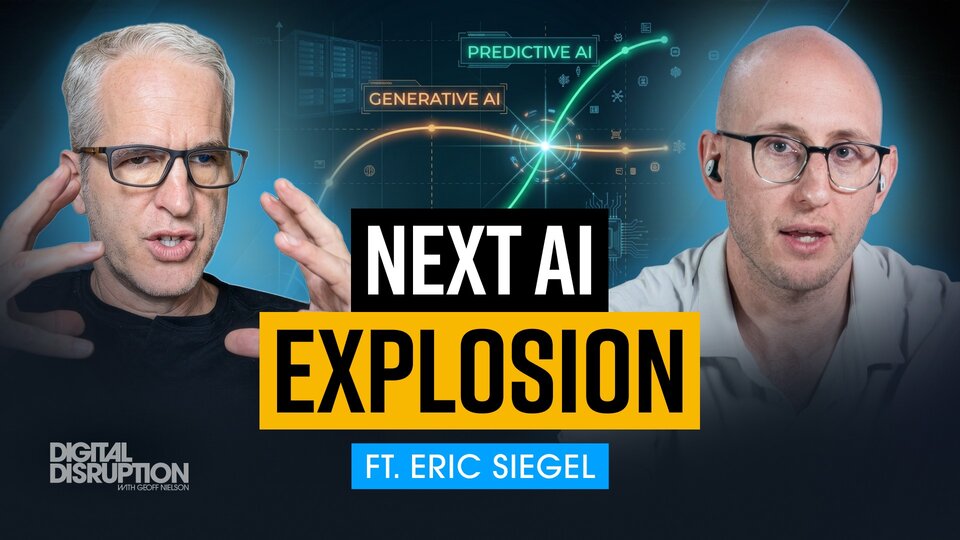
Our Guest Eric Siegel Discusses
The Other AI Revolution: Why Predictive AI Will Overtake Generative AI in 2027
Predictive AI often gets ignored, yet it may hold the real key to business value in the current tech landscape.
Listen
Our Guest Peggy Johnson Discusses
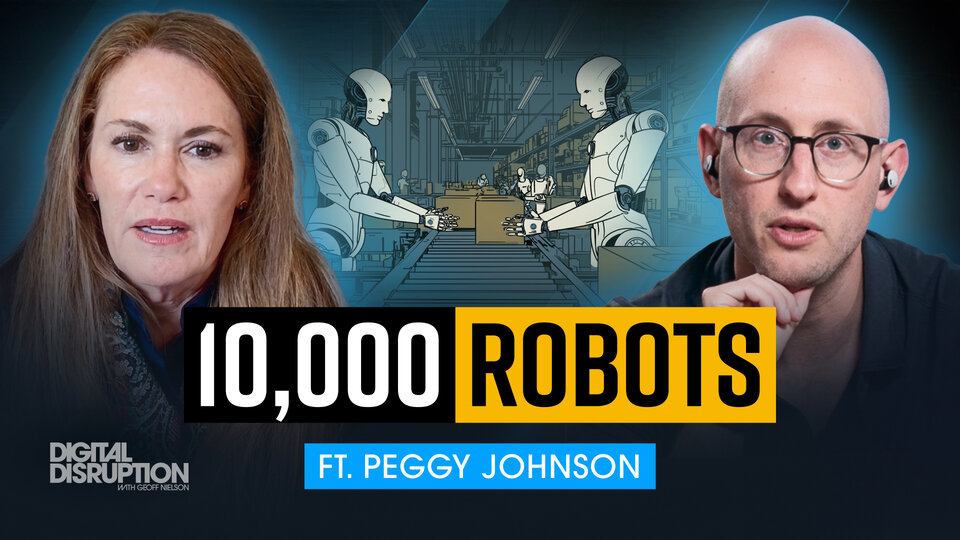
AI Humanoid Robots Have Already Entered the Workforce. Should You Care?
Peggy Johnson, CEO of Agility Robotics, joins us on today's episode to look beyond the fear of robot overlords and ask: How will humans and robots work together in the years ahead?