
Project & Portfolio Management Software Selection Guide
Streamline the process of selecting the right project & portfolio management platform for your organization.
Project & portfolio management (PPM) has evolved from task tracking into a strategic capability that enables organizations to prioritize investments, optimize resources, and deliver measurable outcomes. As portfolios grow to include projects, products, and operational initiatives, choosing the right PPM platform has never been more critical – or more complex. Use this guide to cut through the crowded PPM marketplace and evaluate platforms based on real organizational needs, maturity, and use cases – not vendor hype.
Selecting a PPM solution is harder than it looks, with overlapping tools, blurred lines between PM, PPM, and SPM, and varying levels of organizational maturity complicating platform selection. Without a structured, maturity-aware approach, organizations risk limited visibility, poor adoption, and PPM investments that add complexity instead of clarity.
Make better decisions, not just better projects.
PPM has evolved beyond tracking tasks and timelines into a strategic decision-support capability for leadership. Modern PPM platforms give executives the visibility needed to compare investments, understand trade-offs, and align portfolios with strategic priorities. The real value of PPM lies in enabling informed decisions about where to invest, what to delay, and what to stop – not simply ensuring individual projects stay on schedule.
Hybrid delivery is the new normal.
Most organizations no longer operate exclusively as Agile or Waterfall. As portfolios expand to include IT projects, products, and operational initiatives, PPM platforms must support hybrid delivery models while preserving unified governance and portfolio visibility. The right PPM solution enables flexibility at the team level without sacrificing portfolio-level control or consistency.
Choose a PPM platform that grows with the organization.
PPM selection isn’t a short-term decision – it’s a multiyear investment that should support where your organization is going, not just where it is today. The right PPM platform allows organizations to start with core capabilities and progressively expand as maturity increases. Choosing a solution that scales over the next five to ten years helps avoid costly re-platforming, protects adoption momentum, and maximizes long-term value.
Use this step-by-step guide to select the right PPM platform with confidence.
This guide helps reduce decision fatigue by separating table-stakes capabilities from true differentiators and grounding evaluation in real portfolio needs. Explore key market trends and learn from real-world case studies, including practical SWOT analyses that highlight the strengths and weaknesses of leading PPM vendors. Then, use Info-Tech’s structured approach to build your business case, streamline requirements, and move from shortlist to finalist with confidence.
Use our three-phase approach, along with practical tools and templates, to:
- Understand the PPM marketplace by defining core capabilities, distinguishing table stakes from differentiators, and exploring key trends.
- Build the business case and requirements by eliciting and prioritizing needs, and developing an inclusive RFP approach.
- Select and prepare for implementation by comparing vendors, validating finalists through consistent demos, and planning for phased rollout and adoption.
Project and Portfolio Management Software Selection Guide
Streamline the process of selecting the right project and portfolio management platform for your organization.
Analyst Perspective
Implementing the right PPM platform is essential to driving portfolio performance, enabling strategic execution, and maximizing organizational value.

Selecting the right project portfolio management (PPM) platform is a critical decision for organizations seeking to improve visibility, strengthen governance, and align investments with strategic outcomes. As portfolios expand to include products, services, and IT assets, organizations must balance speed with oversight and deliver work through multiple methodologies. Modern PPM solutions now offer integrated roadmapping, resource planning, financial management, and AI-enabled insights, capabilities that help leadership teams make informed, data-driven decisions across increasingly complex project environments.
PPM initiatives succeed when driven collaboratively across business, IT, and operational teams. While PMOs or IT departments often lead the evaluation, effective selection requires input from Finance, product teams, HR, and executive sponsors. Each group brings unique requirements, from usability and reporting needs to integration, data governance, and resource management considerations. Without alignment across stakeholders, PPM initiatives risk low adoption, limited data accuracy, or becoming disconnected from organizational priorities.
The selection of a PPM platform should follow a structured process: defining strategic, operational, and financial objectives; identifying required capabilities such as portfolio planning, resource capacity management, hybrid delivery support, and integration with existing ecosystems; and evaluating deployment models and scalability. A disciplined vendor assessment, including demos, use-case validation, and reference checks, helps ensure the selected solution supports both current needs and future maturity.
To maximize long-term value, organizations should plan for phased implementation, data standardization, integration with systems of record, change management, and training. Starting with core PPM functions – intake, prioritization, scheduling, resource visibility – and gradually “switching on” advanced capabilities such as scenario modeling, financial governance, and product-based planning ensures sustainable adoption. This structured approach strengthens organizational alignment, improves portfolio performance, and enhances the ability to adapt as strategic priorities evolve.
Sahana Muhundhan
Research Analyst
Info-Tech Research Group
Executive summary
Your Challenge |
Common Obstacles |
Info-Tech’s Approach |
|---|---|---|
|
|
|
Info-Tech Insight
PPM tools only succeed when they fit into your broader ecosystem. Prioritize platforms that integrate cleanly rather than operate in isolation.
Info-Tech’s methodology for selecting the right project
1. Understand the PPM Landscape and Trends |
2. Build the Business Case and Streamline Requirements |
3. Select the Right PPM Vendor |
|
|---|---|---|---|
Phase Steps |
|
|
|
Phase Outcomes |
|
|
|
Guided Implementation
What does a typical GI on this topic look like?
| Phase 1 | Phase 2 | Phase 3 |
|---|---|---|
Call #1: Understand what a project and portfolio management (PPM) platform is. Discuss core capabilities and key trends. |
Call #2: Build the business case to select a right-sized PPM. Call #3: Define your core PPM requirements. Call #4: Build procurement items, such as an RFP. |
Call #5: Evaluate the PPM vendor landscape and shortlist viable options.
|
A Guided Implementation (GI) is a series of calls with an Info-Tech analyst to help implement our best practices in your organization.
The PPM procurement process should be broken into segments:
- Create a vendor shortlist using this selection guide.
- Define a structured approach to selection.
- Review the contract.
Info-Tech offers various levels of support to best suit your needs
| DIY Toolkit | Guided Implementation | Workshop | Consulting |
|---|---|---|---|
| "Our team has already made this critical project a priority, and we have the time and capability, but some guidance along the way would be helpful." | "Our team knows that we need to fix a process, but we need assistance to determine where to focus. Some check-ins along the way would help keep us on track." | "We need to hit the ground running and get this project kicked off immediately. Our team has the ability to take this over once we get a framework and strategy in place." | "Our team does not have the time or the knowledge to take this project on. We need assistance through the entirety of this project." |
Diagnostics and consistent frameworks are used throughout all four options.
Project and Portfolio Management Software Selection Guide
Speed up the process to build your requirements and select the right PPM platform for your organization.
EXECUTIVE BRIEF
What exactly is a PPM platform?
Project and portfolio management (PPM) platforms are comprehensive solutions that help organizations manage individual projects while optimizing project portfolios and ensuring strategic alignment with business objectives. Sophisticated PPM platforms enable project managers and teams to collaborate on and execute day-to-day activities while providing leaders with the visibility and tools to balance resources, assess risk, and steer investments toward strategic, high-impact initiatives. By centralizing work, resources, and data in a unified environment, PPM platforms improve decision-making, enhance coordination, and help maximize return on investment.
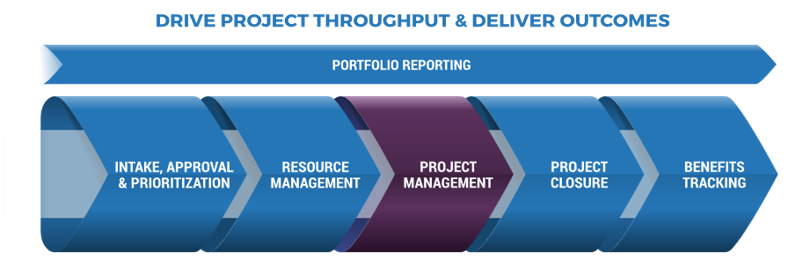
Common features for mature PPM platforms may include but are not limited to:
- Collaborative task scheduling and dependency management
- Resource management and allocation planning
- Portfolio analytics and real-time dashboards
- Scenario modeling and “what-if” analysis for strategic planning
- Strategic roadmapping with business goal and OKR alignment
- Financial and benefit tracking across portfolios
- Risk assessment and mitigation capabilities
- Interoperability through open APIs and enterprise integrations
Info-Tech Insight
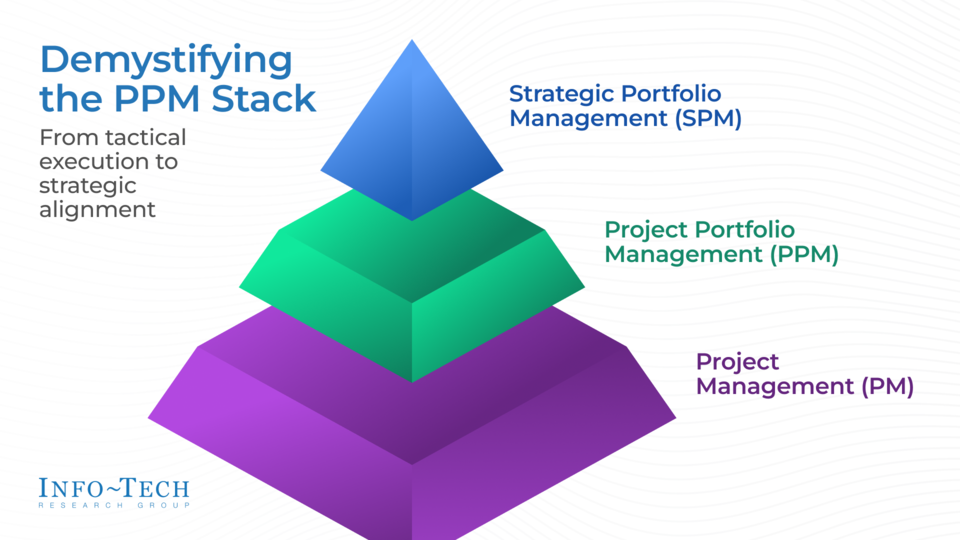
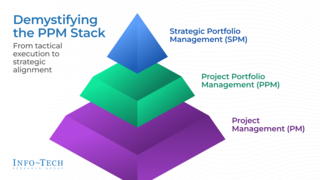
Modern PPM platforms typically include various degrees of project management (PM), traditional project portfolio management, and strategic portfolio management (SPM) capabilities. This unified approach enables organizations to operate at tactical and strategic levels within a single platform.
Phase 1
Understand PPM Marketplace Capabilities and Trends
Phase 1 |
Phase 2 |
Phase 3 |
|---|---|---|
1.1 Define PPM Platforms 1.2 Review Table Stakes and Differentiating Capabilities 1.3 Explore Market Trends |
2.1 Build the Business Case 2.2 Streamline the Requirements Elicitation Process for PPM 2.3 Develop an Inclusive RFP Approach |
3.1 Compare Key Players in the PPM Vendor Landscape 3.2 Engage the Vendor Shortlist and Select Finalist 3.3 Prepare for Implementation |
This phase will walk you through the following activities:
- Level-set an understanding of PPM technology.
- Define which PPM features are table stakes (standard) and which are key differentiating functionalities.
- Understand the latest trends in PPM space.
This phase involves the following participants:
- PMO Leader/Head of PM
- IT Leadership/Enterprise Architecture
- Finance Lead
- Product Lead
- Resource Management Lead
How it got here: Evolution of PM
Charting the evolution of PM through the decades
Foundations of Portfolio Thinking |
Governance and Constraints Emerge |
From PPM to Strategic Alignment |
|---|---|---|
|
|
|
About Info-Tech
Info-Tech Research Group is the world’s fastest-growing information technology research and advisory company, proudly serving over 30,000 IT professionals.
We produce unbiased and highly relevant research to help CIOs and IT leaders make strategic, timely, and well-informed decisions. We partner closely with IT teams to provide everything they need, from actionable tools to analyst guidance, ensuring they deliver measurable results for their organizations.
What Is a Blueprint?
A blueprint is designed to be a roadmap, containing a methodology and the tools and templates you need to solve your IT problems.
Each blueprint can be accompanied by a Guided Implementation that provides you access to our world-class analysts to help you get through the project.
Need Extra Help?
Speak With An Analyst
Get the help you need in this 3-phase advisory process. You'll receive multiple touchpoints with our researchers, all included in your membership.
Guided Implementation 1: Understand PPM Marketplace Capabilities and Trends
- Call 1: Understand what a project and portfolio management (PPM) platform is. Discuss core capabilities and key trends.
Guided Implementation 2: Build the Business Case and Streamline Requirements
- Call 1: Build the business case to select a right-sized PPM.
- Call 2: Define your core PPM requirements.
- Call 3: Build procurement items, such as an RFP.
Guided Implementation 3: Select the Right PPM Vendor
- Call 1: Evaluate the PPM vendor landscape and shortlist viable options.
- Call 2: Review implementation considerations.
Contributors
- 1 anonymous contributor
 Get the Most Out of Your Microsoft Dynamics Finance and Operations
 Build an ERP Strategy and Roadmap
 Select an ERP Implementation Partner
 Get the Most Out of Your ERP
 Select an Enterprise Application
 2020 Applications Priorities Report
 Sync or Sink: Aligning IT and HR for the Future of Work
 Project & Portfolio Management Software Selection Guide
 Build Your S/4HANA Migration Plan