
Develop a Master Data Management Practice and Platform
Power better decisions with unified master data.
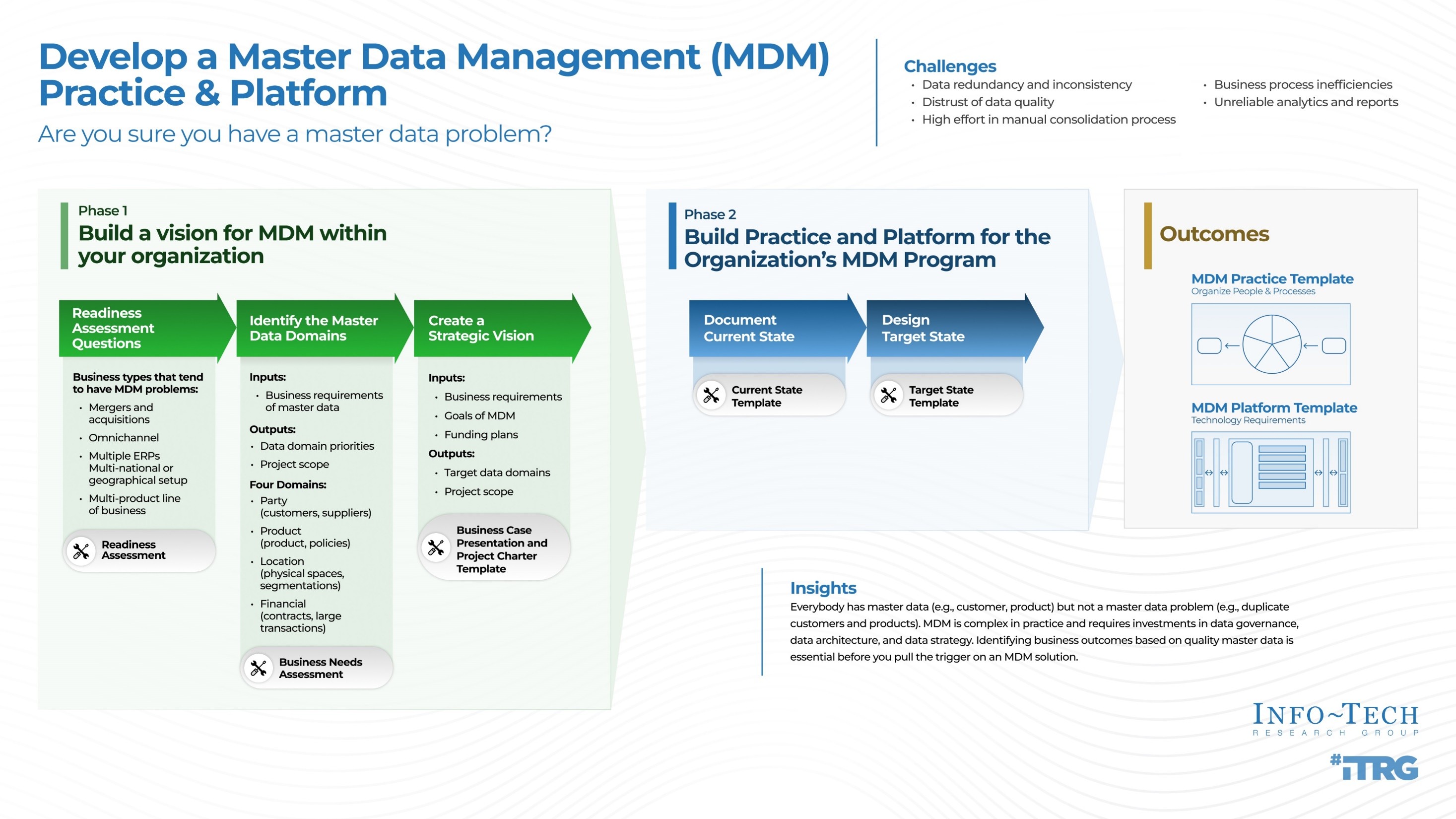
- The volume of enterprise data is growing rapidly and comes from a wide variety of internal and external data sources (e.g. ERP, CRM). When data is located in different systems and applications, coupled with degradation and proliferation, this can lead to inaccurate, inconsistent, and redundant data being shared across departments within an organization.
- Data kept in separate sources can result in poor stakeholder decision making and inefficient business processes. Some common master data problems include:
- The lack of a clean customer list results in poor customer service.
- Hindering good analytics and business predictions, such as incorrect supply chain decisions when having duplicate product and vendor data between plants.
- Creating cross-group consolidated reports from inconsistent local data that require too much manual effort and resources.
Our Advice
Critical Insight
- Everybody has master data (e.g. customer, product) but not master data problems (e.g. duplicate customers and products). MDM is complex in practice and requires investments in data governance, data architecture, and data strategy. Identifying business outcomes based on quality master data is essential before you pull the trigger on an MDM solution.
Impact and Result
This blueprint can help you:
- Build a list of business-aligned data initiatives and capabilities that address master data problem and realize business strategic objectives.
- Design a master data management practice based on the required business and data process.
- Design a master data management platform based on MDM implementation style and prioritized technical capabilities.
Member Testimonials
After each Info-Tech experience, we ask our members to quantify the real-time savings, monetary impact, and project improvements our research helped them achieve. See our top member experiences for this blueprint and what our clients have to say.
9.0/10
Overall Impact
$16,069
Average $ Saved
11
Average Days Saved
Client
Experience
Impact
$ Saved
Days Saved
Ideal Industries, Inc.
Guided Implementation
9/10
$12,419
2
The ability to have a second review on a pending services contract before signature saved time and an estimated $7-10K in savings
UN-World Intellectual Property Organization
Workshop
9/10
N/A
N/A
The value delivered by the InfoTech workshop facilitator, Jean Bujold, goes far beyond what can be measured in time or dollar terms. His charisma a... Read More
Lindt & Sprungli (north America) Inc.
Guided Implementation
9/10
$19,720
20
Nozom Alkhebrat IT Co.
Guided Implementation
9/10
$4,000
5
Fernco Inc
Workshop
10/10
N/A
N/A
Worse: Fernco is in the process of developing a Data Quality culture so to be able estimate time and dollar savings from MDM workshop is difficult ... Read More
Circular Materials
Workshop
10/10
$25,000
10
Appreciated the hands-on modelling work with Reddy and Dirk. We will be walking away from the workshop with a good foundation of models that captu... Read More
Fusion Superplex
Guided Implementation
8/10
$25,000
50
WernerCo.
Guided Implementation
8/10
$68,000
10
I love the thought leadership. I wish master data was easy.
Northern Ontario School of Medicine
Guided Implementation
10/10
N/A
120
Everyone went smoothly, everything was great. Not 'worst' parts to report thus far.
Cengage Learning
Guided Implementation
8/10
N/A
50
Fisheries and Oceans Canada
Guided Implementation
10/10
$25,000
50
Igor was very knowledgeable, delivered relevant materials synthesized from the Info-Tech website resources, and has offered access to other relevan... Read More
Blommer Chocolate Company
Guided Implementation
8/10
$13,600
10
Provided practical thoughts on how to get started.
Amedisys Holding, LLC
Guided Implementation
1/10
N/A
N/A
Both teams were both completely unprepared for the call.
CF Industries Enterprises Inc
Guided Implementation
8/10
$2,584
2
AAA Club Alliance Inc.
Guided Implementation
9/10
N/A
N/A
Igor is very knowledgeable about this area and the challenges companies face in moving forward implementing MDM. Lots of good ideas!
North Country HealthCare
Guided Implementation
10/10
$34,000
120
Unified Health Services
Guided Implementation
10/10
N/A
20
All great. Very helpful. This info will help us jumpstart our data architecture efforts.
Develop a Master Data Management Practice
Power better decisions with unified master data.
Analyst perspective


Master data represents the core business entities that drive how an organization operates (such as customers, products, employees, and locations). A master data management (MDM) practice creates a single, consolidated view of these entities, ensuring the business operates from consistent, complete, and trusted information.
A well-designed MDM practice enables integration across systems and business units, reducing fragmentation from mergers, multiple ERPs, and digital transformation initiatives. This consistency improves the accuracy of analytics, allowing leaders to trust metrics and insights based on shared definitions. As organizations increasingly rely on AI, shared and consistent data semantics become critical, providing the structures and meanings AI models depend on. When master data is managed as a governed business capability rather than a standalone technical effort, it establishes a foundation for scalable growth, trusted analytics, and responsible, explainable AI.
Sustained MDM success is driven by the right balance of technology, governance, and active executive sponsorship. With a clear, step‑by‑step blueprint, organizations can build and scale an MDM practice that consistently delivers measurable business value.
Ruyi Sun
Research Specialist
Data & Analytics Practice
Info-Tech Research Group
Varun Palengetira
Principal Advisory Director
Data & Analytics Practice
Info-Tech Research Group
Executive summary
|
Your Challenge |
Common Obstacles |
Info-Tech’s Approach |
|---|---|---|
|
Your organization is experiencing data challenges, including:
|
|
|
Info-Tech Insight
MDM is complex in practice and requires investments in data governance, data architecture, and data strategy. Identifying business outcomes based on quality master data is essential before you pull the trigger on an MDM solution.
What is master data and master data management?
- Master data domains include the most important data assets of an organization. For this data to be used across an enterprise in consistent and value-added ways, the data must be properly managed. Some common master data entities include customer, product, and employees.
- Master data management (MDM) is the control over master data values to enable consistent, shared, contextual use across systems, of the most accurate, timely, and relevant version of truth about essential business entities (DAMA-DMBOK).
- The fundamental objective of MDM is to enable the business to see one view of critical data elements across the organization.
- MDM systems are designed to unify critical data assets across disparate systems, creating a single, consistent view of key business entities and making the data accessible to the people, processes, and applications that depend on it. The end goal of MDM implementation is to ensure the most important data assets can drive the decisions that support strategic objectives, improve analytics precision, and power AI solutions. When reinforced with robust governance, standards, and enterprise data practices, MDM establishes a sustainable foundation for trusted insights, operational efficiency, and scalable, data-driven innovation.
- The conceptual model of master data lays the foundation for the enterprise ontology, and actual master data records with defined relationships lay foundation for the enterprise knowledge graph – both components are quintessential for successful use of AI.
Why manage master data?
Master data drives practical insights that arise from key aspects of the business.
|
Data Readiness for AI |
Innovation Leadership |
Risk Management |
Operational Excellence |
|---|---|---|---|
|
Ensure your AI initiatives are built on a foundation of trusted, unified master data. AI models are only as good as the data they consume. Clean, consistent master data is the prerequisite for accurate and actionable AI outputs. |
Gain insights on your products, services, usage trends, industry directions, and competitor results, and use these data artifacts to support decisions on innovations, new products, services, and pricing. |
Maintain more transparent and accurate records and ensure that appropriate rules are followed to support audit, compliance, regulatory, and legal requirements. Monitor data usage to avoid fraud. |
Make sure the right solution is delivered rapidly and consistently to the right parties for the right price and cost structure. Automate processes by using the right data to drive process improvements. |
| 26% of CDOs are confident their data can support new AI-enabled revenue streams (IBM, 2025). | 67% of organizations don’t completely trust their data used for decision-making (Precisely, 2024). | 80% of senior risk decision-makers believe they are capable of verifying risk information at speed when it matters (ASIS International, 2025). | 87% of operations leaders say poor data quality has hampered digital initiatives (PwC, 2026). |
Your challenge
Modern organizations have unprecedented data challenges.
- The volume of enterprise data is growing rapidly and comes from a wide variety of internal and external data sources (e.g. ERP, CRM). When data is located in different systems and applications, coupled with degradation and proliferation, this can lead to inaccurate, inconsistent, and redundant data being shared across departments within an organization.
- For example, customer information may not be identical in the customer service system, shipping system, and marketing management platform because of manual errors or different name usage (e.g. GE or General Electric) when input by different business units.
- Data kept in separate siloed sources can also result in poor stakeholder decision-making and inefficient business processes. Some issues include:
- The lack of clean customer list results in poor customer service.
- Hindering good analytics and business predictions, such as incorrect supply chain decision when having duplicate product and vendor data between plants.
- Creating cross-group consolidated reports from duplicate and inconsistent local data requires too much manual effort and resources.
On average, 25 different data sources are used for generating customer insights and engagement.
On average, 16 different technology applications are used to leverage customer data.
Source: Deloitte Digital, 2020
Common obstacles
Finding a single source of truth throughout the organization can be difficult.
Changes in business process often come with challenges for CIOs and IT leaders. From an IT perspective, there are several common business operating models that can result in multiple sets of master data being created and held in various locations. Some examples could be:
- Integrate systems following corporate mergers and acquisitions
- Enterprise with multiproduct line
- Multinational company or multigeographic operations with various ERP systems
- Digital transformation projects such as omnichannel
In such situations, implementing an MDM solution helps achieve harmonization and synchronization of master data and provide a single, reliable, and precise view of the organization. However, MDM is a complex system that requires more than just a technical solution. An organization might experience the following pain points:
- Failure to identify master data problem and organization’s data needs.
- Conflicting viewpoints and definitions of data assets that should reside in MDM across business units.
Building a successful MDM initiative can be a large undertaking that takes some preparation before starting. Understanding the fundamental roles that data governance, data architecture, and data strategy play in MDM is essential before the implementation.
83% of respondents believe that data silos undermine innovation by hampering cross-department collaboration.
Source: IBM, 2026
Common pitfalls during MDM implementation
Boiling the Ocean
Attempting enterprise-wide MDM across multiple domains at once overwhelms teams, delays value, and increases the risk of failure.
Master Data Exists in a Single System
Master data often exists across multiple systems (ERP, CRM). MDM aims to create a single source of truth, not necessarily a single physical location.
Weak or Missing Business Case
Without a clear ROI and business justification, MDM is perceived as expensive, slow, and high-risk. This creates friction, making it harder to secure funding and executive sponsorship.
Single Owner or IT-Led Ownership
Assigning ownership to a single individual or IT creates a bottleneck and lacks the business accountability needed for sustained data quality.
Tool-First/Overengineering
Selecting an MDM platform before defining processes and governance sets the wrong foundation. The tool must serve the strategy.
MDM as an IT Project
When MDM is driven by IT instead of being business-led, data definitions are set by technical teams rather than the people who use the data. This results in a system that's technically functional but practically ignored.
Insight summary
Overarching insight
MDM is complex in practice and requires investments in data governance, data architecture, and data strategy. Figuring out what the organization needs out of its master data is essential before you pull the trigger on an MDM solution.
Phase 1 insight
A master data management solution will assist you in solving master data challenges if your organization is large or complex, such as a multinational corporation or a company with multiple product lines, with frequent mergers and acquisitions, or adopting a digital transformation strategy such as omnichannel.
Organizations often have trouble getting started because of the difficulty of agreeing on the definition of master data within the enterprise. Reference data is an easy place to find that common ground.
While the organization may have data that fits into more than one master data domain, it does not necessarily need to be mastered. Determine what master data entities your organization needs.
Although it is easy to get distracted by the technical aspects of the MDM project – such as extraction and consolidation rules – the true goal of MDM is to make sure that the consumers of master data (such as business units, sales) have access to consistent, relevant, and trusted shared data.
Phase 2 insight
An organization with activities such as mergers and acquisitions or multi-ERP systems poses a significant master data challenge. Prioritize your master data practice based on your organization’s ability to locate and maintain a single source of master data.
Leverage modern capabilities such as artificial intelligence or machine learning to support large and complex MDM deployments.
About Info-Tech
Info-Tech Research Group is the world’s fastest-growing information technology research and advisory company, proudly serving over 30,000 IT professionals.
We produce unbiased and highly relevant research to help CIOs and IT leaders make strategic, timely, and well-informed decisions. We partner closely with IT teams to provide everything they need, from actionable tools to analyst guidance, ensuring they deliver measurable results for their organizations.
What Is a Blueprint?
A blueprint is designed to be a roadmap, containing a methodology and the tools and templates you need to solve your IT problems.
Each blueprint can be accompanied by a Guided Implementation that provides you access to our world-class analysts to help you get through the project.
Need Extra Help?
Speak With An Analyst
Get the help you need in this 2-phase advisory process. You'll receive multiple touchpoints with our researchers, all included in your membership.
Guided Implementation 1: Build a vision for MDM
- Call 1: Identify master data problem and assess your organizational readiness for MDM.
- Call 2: Define master data domains and priorities.
- Call 3: Determine business requirements for MDM.
Guided Implementation 2: Build an MDM Practice Platform
- Call 1: Document current architectural state.
- Call 2: Discover the MDM implementation styles of MDM and document target architectural state.
- Call 3: Create MDM data practice and platform.
- Call 4: Summarize results and plan next steps.
Contributors
- Selwyn Samuel, Director of Enterprise Architecture, Furniture manufacturer
- Julie Hunt, Consultant and Author, Hub Designs Magazine and Julie Hunt Consulting
- David Loshin, President, Knowledge Integrity Inc.
- Three anonymous contributors
 Build a Robust and Comprehensive Data Strategy
 Activate Data Governance
 Build a Data Architecture Roadmap
 Sprint Toward Data-Driven Culture Using DataOps
 Develop a Master Data Management Practice and Platform
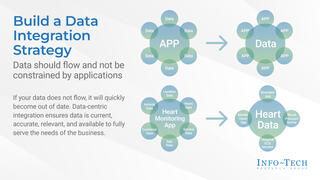 Build a Data Integration Strategy
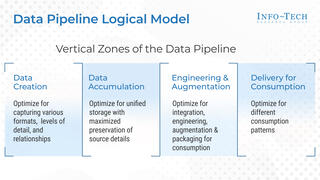 Build a Data Pipeline for Reporting and Analytics
 Break Open Your DAM With Intuitive Metadata
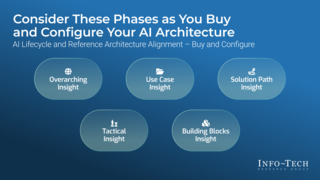 Define the Components of Your AI Architecture
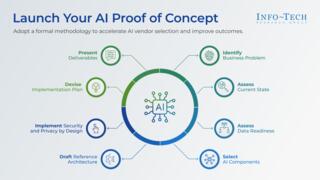 Launch Your AI Proof of Concept
 Create Your Agentic AI Roadmap for Data Management
