
Select a Student Information System for K-12 Education
Clarity at the outset ensures confidence in selection.
Selecting an SIS is one of the most significant and complex technology transformations a K-12 organization can undertake. It requires:
- Balancing comprehensive SIS functionality with ease of use.
- Ensuring seamless integration with existing systems (ERP, HRIS, LMS, Ministry reporting).
- Managing costs beyond licensing, including implementation and training.
- Gathering and prioritizing requirements from diverse stakeholders.
Our Advice
Critical Insight
- Defining key capabilities and workflows at the outset brings structure and reduces risk.
- SIS selection must be driven by organizational strategy, not just technical requirements.
- Effective integration and data security are essential for long-term success.
Impact and Result
- Improved operational efficiency and educational outcomes.
- Enhanced compliance and reporting capabilities.
- Reduced risk of project failure through structured selection and integration.
- Empowered educators and administrators with reliable, integrated data.
Select a Student Information System for K-12 Education
Clarity at the outset ensures confidence in selection.
Analyst perspective
Spend more time before you implement.
The digital transformation of K-12 education is foundational to success. From personalized learning platforms to integrated assessment tools, technology underpins the modern classroom experience. At the center of this ecosystem lies the student information system (SIS), a critical enabler of operational efficiency and educational outcomes.
Selecting an SIS is not merely a procurement exercise; it is a strategic decision that will influence your ability to deliver on institutional goals. The right SIS should align with your vision for teaching and learning, support compliance and reporting requirements, and integrate seamlessly with other digital tools. When the system works well, it empowers educators and administrators without friction. When it fails, it becomes a bottleneck that erodes trust and efficiency.

Mark Maby
Principal Research Director for Education, Industry Practice
Info-Tech Research Group
Executive summary
Your Challenge
Selecting an SIS is one of the most significant and complex technology transformations a K-12 organization can undertake.
- You need to balance comprehensive functionality with usability.
- Integration across the application portfolio must be seamless.
- The SIS must interface with existing systems (ERP, HRIS, LMS, ministry reporting, etc.), many of which may be legacy or poorly documented systems.
Common Obstacles
- The SIS market is crowded with vendors offering a wide range of products, each with different features, pricing models, and support structures.
- Gathering and prioritizing requirements from diverse stakeholders – teachers, administrators, IT, parents, and regulatory bodies – is complex.
- The cost goes beyond just the platform license and includes both implementation and training.
Info-Tech’s Approach
SIS selection must be driven by your organization’s overall strategy. Ensure you are ready to embark on this journey with the right resources.
Determine what SIS solution fits your organization through a structured requirements gathering process to create a vendor evaluation framework.
Ensure strong points of integration between SIS and other software such as ERP and HRIS. No SIS should live in isolation.
Info-Tech Insight
Processes often go undocumented in K-12 education, undermining effective SIS selection. Defining key capabilities and workflows at the outset brings needed structure, aligns choices with strategic goals, and reduces risk.
Your challenge
A modern student information system is becoming an important but complex transformation in K-12 organizations.
- End users prioritize data: Over 50% of SIS buyers sought dashboards that provide administrators with real-time access to attendance, grades, behavior incidents, and financial data (Market Growth Reports, 2025).
- Effective data requires effective integration: 64% of systems support plug-and-play integration with LMS, HR, and ERP tools (Market Growth Reports, 2025).
- Risk mitigation: 45% of North American and European institutions ranked data security as the top SIS purchasing factor, with outdated encryption in legacy systems posing major risks (Market Growth Reports, 2025).
A modern student information system is demanded for both strategic imperatives and risk mitigation.
K-12 SIS platforms are widely adopted for efficiency and improved communication
Over 85% adoption — Among schools in developed regions (Source: Global Growth Insights, 2025)
Common obstacles
These barriers make this challenge difficult to address for many organizations:
- K-12 SIS is a fragmented market with many small vendors catering to the unique reporting requirements of specific jurisdictions.
- Vendors offering a wide range of products, each with different features, pricing models, and support structures.
- Gathering and prioritizing requirements from diverse stakeholders – teachers, administrators, IT, parents, and regulatory bodies – is complex.
- The SIS must interface with existing systems (ERP, HRIS, LMS, Ministry reporting, etc.), many of which may be legacy or poorly documented systems.
Cost is the top obstacle.
24% — 24% of small and medium schools postponed SIS purchases due to high upfront costs. (Source: Verified Market Research)
35% — Implementation and training can account for as much as 35% of IT budgets. (Source: Verified Market Research)
Select a Student Information System for K-12 Education
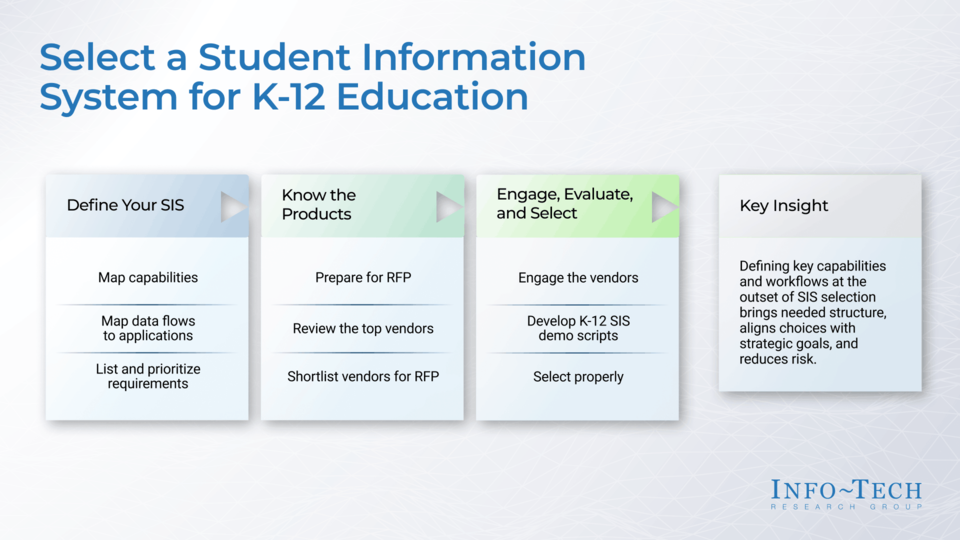
Define your SIS |
Know the products |
Engage, evaluate, and select |
| Map capabilities | Prepare for RFP | Engage the vendors |
| Map data flows to applications | Review the top vendors | Develop K-12 SIS demo scripts |
| List and prioritize requirements | Shortlist vendors for RFP | Select properly |
INSIGHT
Processes often go undocumented in K-12 education, undermining effective SIS selection. Defining key capabilities and workflows at the outset brings needed structure, aligns choices with strategic goals, and reduces risk.
Leverage tools and templates designed for K-12 SIS selection:
- K-12 Reference Architecture
- Process Inventory
- Data Flow Map
- Requirements Template
- Vendor Landscape
- Demo Scripts
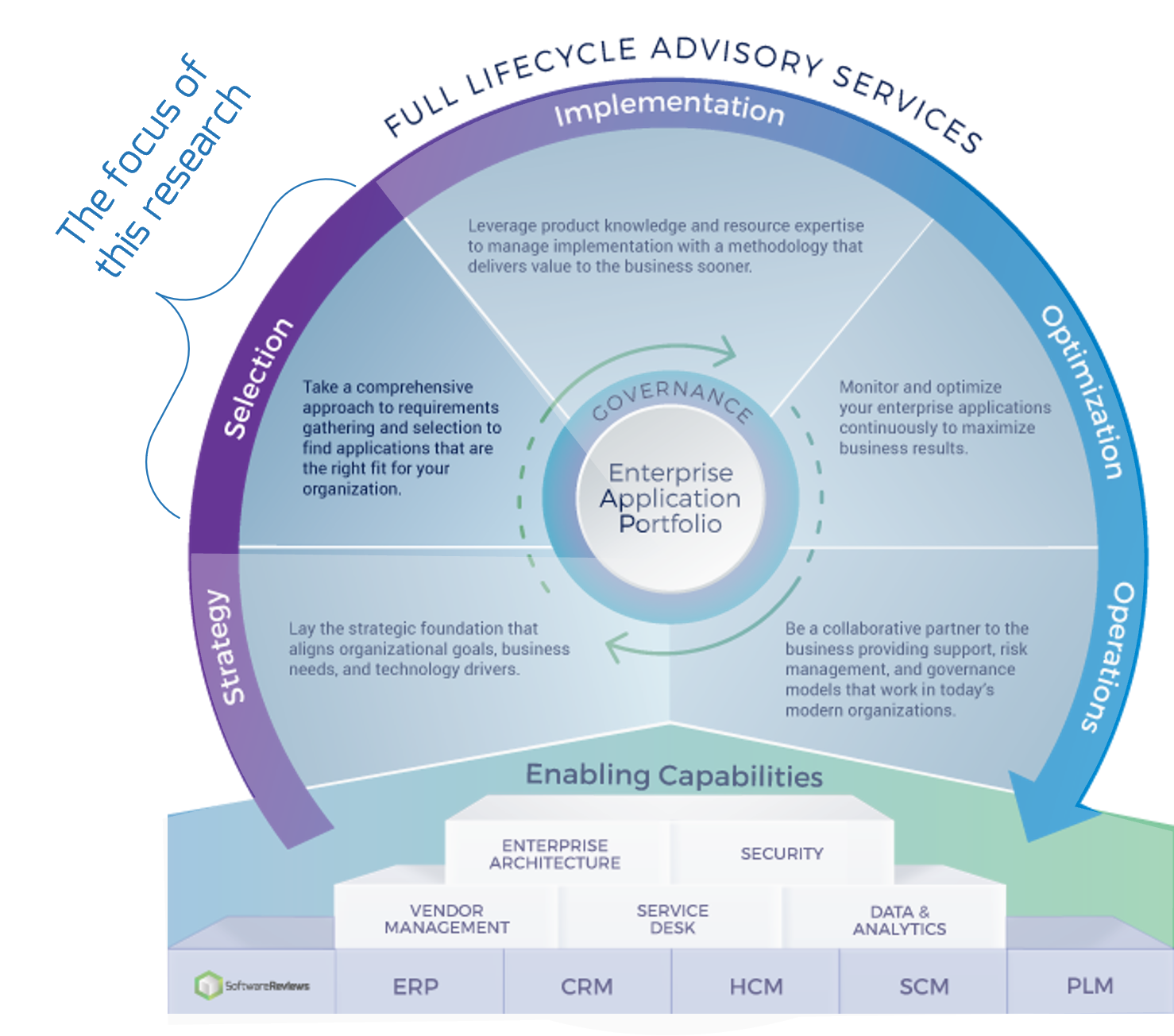
This research provides K-12 specific content within the selection component of Info-Tech’s larger methodology on Enterprise Applications Lifecycle Advisory Services.
Metrics for the value of using this project
Time & Efficiency Metrics
- Reduction in selection timeline through a structured methodology vs. ad hoc approach
- Fewer vendor demonstrations needed through a pre-qualified shortlist to eliminate unsuitable vendors early
- Reduction in evaluation rework through standardized templates and clear requirements to prevent scope creep
Risk Mitigation
- Reduction in vendor misalignment through structured evaluation
- Fewer integration issues through data flow mapping, identifying technical requirements upfront
- Greater stakeholder buy-in through inclusive requirements gathering process vs. top-down selection
Financial Impact
- Cost savings on implementation through better vendor negotiation position and informed selection
- Reduction in change orders through comprehensive requirements gathering, minimizing post-contract modifications
Quality & Success
- Higher user adoption rates by including usability and change management criteria
- Faster time to full deployment through clear requirements that accelerate implementation
Info-Tech’s methodology for selecting a K-12 student information system
1. Define your SIS |
2. Know the products |
3. Engage, evaluate, and select |
|
Phase steps |
|
|
|
Phase outcomes |
List and review business capabilities and translate into SIS requirements. Prioritize requirements for selection. | Gain an understanding of the product offerings on the market that suit your requirements. | Engage the vendors through RFPs and conduct a proper evaluation with an objective evaluation criteria and framework. |
What is a student information system?
An information management system for education institutions to manage student data.
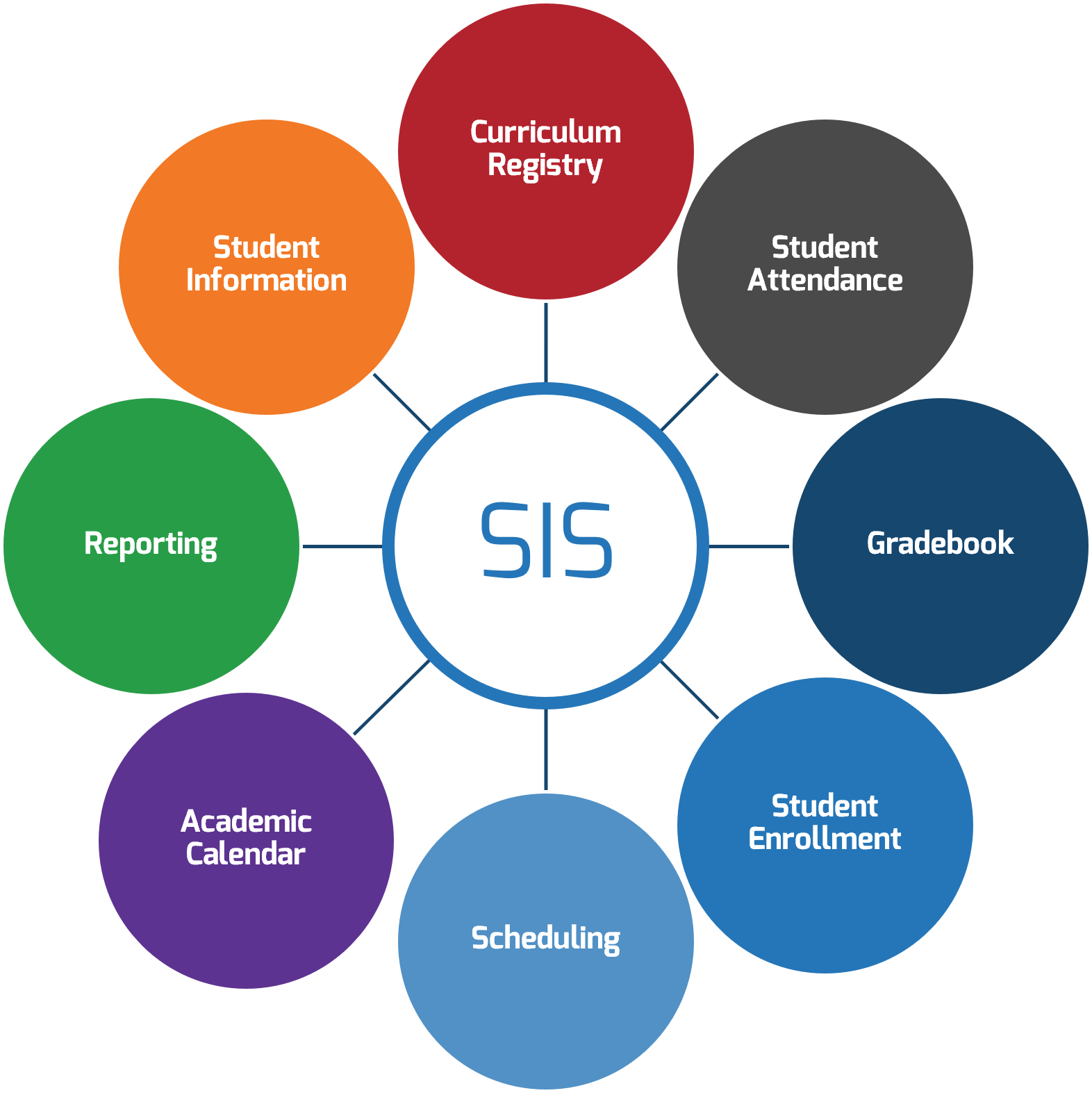
- The student information system facilitates the flow and management of student information across a school district. It allows for the seamless integration of systems and creates a holistic view of student information for administrators, principals, and teachers.
- The SIS is considered the lifeblood of school districts. Problems with the SIS will have a dramatic impact on the ability of districts to serve the needs of students, teachers, and staff.
K-12 student information market characteristics
Increasing consolidation across a fragmented market
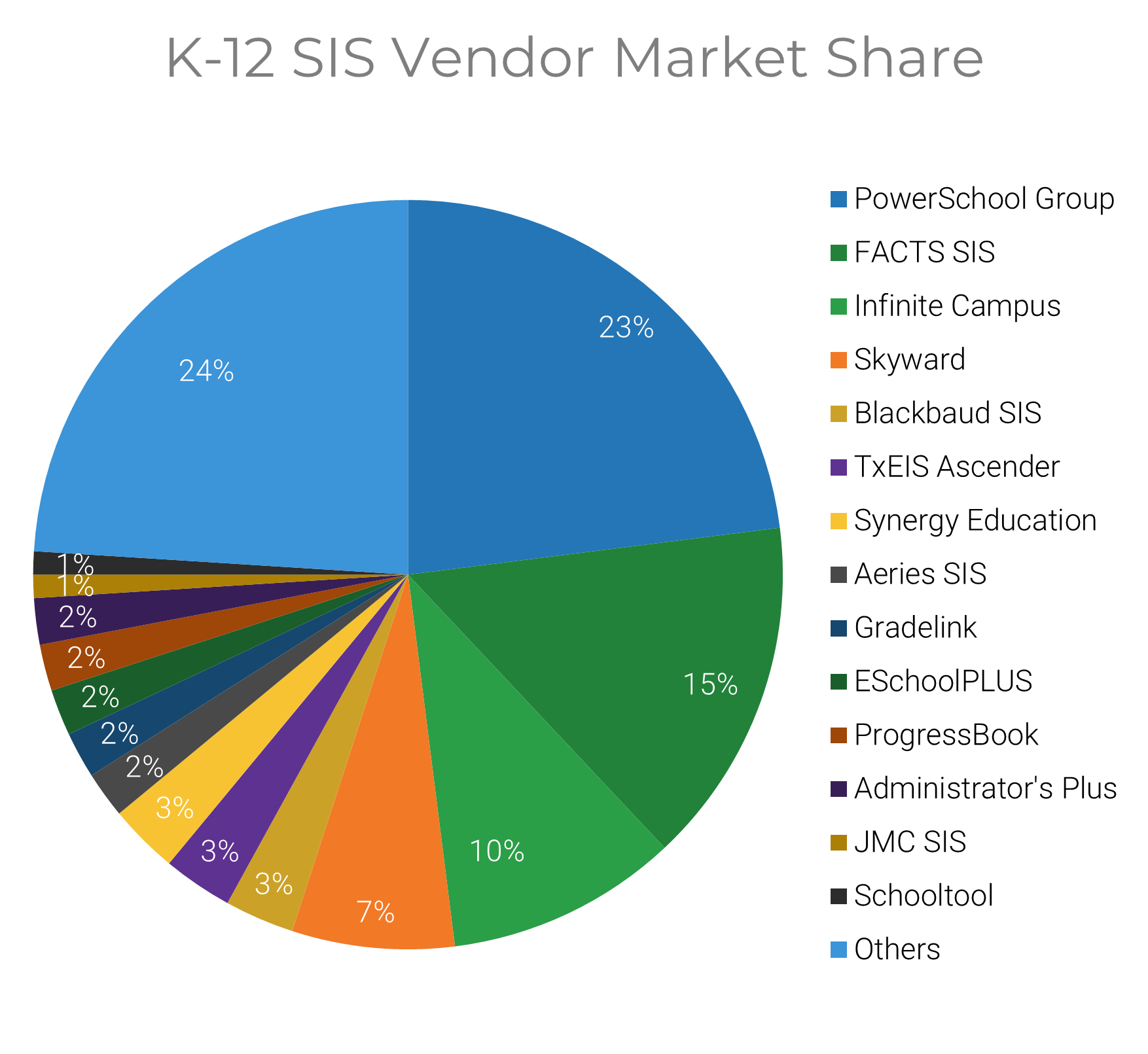
Four vendors control 45% of the K-12 market for student information systems: PowerSchool, FACTS SIS, Infinite Campus, and Skyward.
Infinite Campus and Skyward have both grown organically by gaining market share customer by customer. In contrast, PowerSchool has gained market share over the past few years by acquiring many competitors.
FACTS SIS is the dominant player among private and independent schools.
The remaining market is fragmented across smaller vendors who have a strong presence in regional areas, often due to expertise in local reporting requirements.
Case study

INDUSTRY: Education | SOURCE: TDSB Presentation
Strategic SIS selection at TDSB: Ensuring continuity and compliance
Challenge
The Toronto District School Board (TDSB) faced the end of life for its Trillium Student Information System, which was essential for student data and ministry reporting. With support ending in August 2021, TDSB needed a new SIS that would ensure compliance, continuity, and modernization, while minimizing disruption to school operations and meeting the diverse needs of its large educational community.
Solution
TDSB followed provincial procurement rules, evaluating both the Vendor of Record (VOR) solution and PowerSchool’s SIS. Stakeholder sessions showed strong preference for PowerSchool, which offered proven migration expertise, robust training, integration capabilities, and cost advantages. The board chose PowerSchool as a single-source solution, submitting a rationale to the Ministry to justify bypassing the standard VOR arrangement.
Results
PowerSchool was selected, with 85% of stakeholders supporting the choice. Negotiated discounts saved over $2.2 million. A phased migration plan minimized operational impact, and strong governance ensured project oversight. Success criteria included on-time, on-budget delivery, accurate data migration, minimal school disruption, effective staff training, and continued compliance with Ministry reporting requirements.
About Info-Tech
Info-Tech Research Group is the world’s fastest-growing information technology research and advisory company, proudly serving over 30,000 IT professionals.
We produce unbiased and highly relevant research to help CIOs and IT leaders make strategic, timely, and well-informed decisions. We partner closely with IT teams to provide everything they need, from actionable tools to analyst guidance, ensuring they deliver measurable results for their organizations.
What Is a Blueprint?
A blueprint is designed to be a roadmap, containing a methodology and the tools and templates you need to solve your IT problems.
Each blueprint can be accompanied by a Guided Implementation that provides you access to our world-class analysts to help you get through the project.
Talk to an Analyst
Our analyst calls are focused on helping our members use the research we produce, and our experts will guide you to successful project completion.
Book an Analyst Call on This Topic
You can start as early as tomorrow morning. Our analysts will explain the process during your first call.
Get Advice From a Subject Matter Expert
Each call will focus on explaining the material and helping you to plan your project, interpret and analyze the results of each project step, and set the direction for your next project step.
Unlock Sample ResearchContributors
- 14 K-12 technology leaders participated in a roundtable discussion