
Business Reference Architecture for US State Governments
Drive innovation solutions by accelerating the building of your agency’s organizational business capability map, defining strategic focus, and prioritizing key capabilities and capability gaps.
- You need to improve your state government agency’s organizational understanding of business capabilities and how IT can support the delivery and accessibility of essential services.
- Your agency wants to sharpen its alignment and focus on organizational outcomes and value by using architecture to better inform innovation, stakeholder engagement, management, and IT strategy capabilities. This starts with a solid business reference architecture.
- You don’t have a clear path for capturing the right information, modeling the agency across functional areas, engaging the right people, linking with the needs of the organization, and aligning with IT.
- The agency and IT often speak in their own languages without a wholistic and integrated view of mission, strategy, goals, objectives, organizational functional processes, projects, and measures of success.
- The agency and IT often focus their attention within silos and miss the holistic value of an overarching value stream and capability view.
Our Advice
Critical Insight
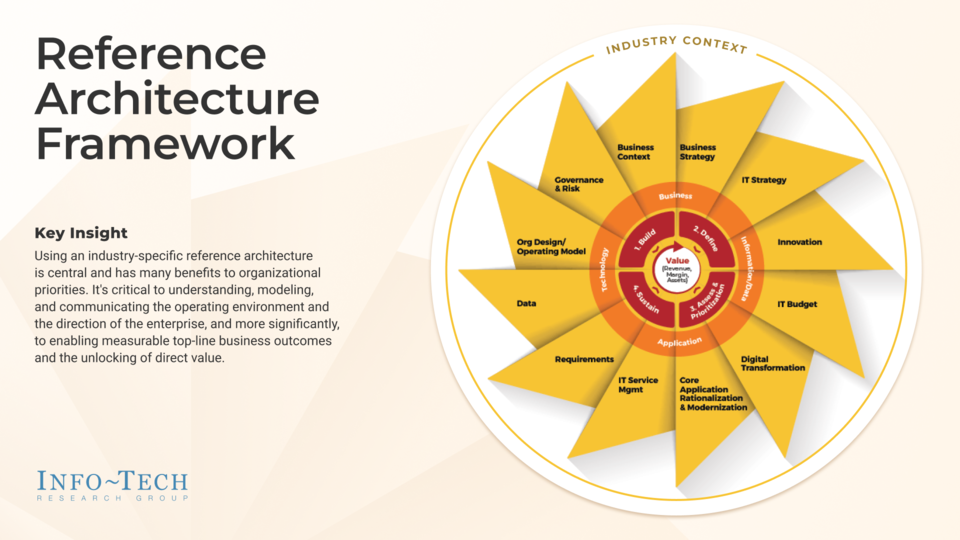
Using an industry-specific reference architecture is central to, and has many benefits for, a state government agency’s priorities. It is critical for understanding, modeling, and communicating the operating environment and the direction of the agency and, more significantly, for enabling measurable top-line organizational outcomes and unlocking direct value.
Impact and Result
- Build your state government agency’s capability map by defining the organization's value streams, which describe high-level functions of the operational environment.
- Define your agency’s key capabilities and develop a prioritized strategy map.
- Assess potential gaps in key capabilities for planning priorities through a review of state government processes, information, applications, and technology support of key capabilities.
- Adopt capability-based strategy planning by ongoing identification and road-mapping of capability gaps.
US State Government Business Reference Architecture Guide
Drive innovation solutions by accelerating the building of your agency's organizational business capability map, defining strategic focus, and prioritizing key capabilities and capability gaps.
Analyst Perspective
Align people, processes, and technology with key agency goals, outcomes, and initiatives.
A government agency business reference architecture – as part of an overarching enterprise architecture suite of architectures including data, application, technology, and AI – can be used for a variety of strategic planning initiatives. It connects strategy to execution in a manner that is accurate and accountable, and it promotes the efficient and effective use of agency resources.
A government agency business reference architecture helps accelerate the strategy design process and enhances IT's ability to align people, processes, and technology with key agency goals, outcomes, and initiatives.
Using an industry-specific business reference architecture is central to, and has many benefits for, agency and organizational priorities at all levels of government. It is critical for understanding, modeling, and communicating the operating environment and the direction of the organization and, more significantly, for enabling measurable top-line organizational outcomes and unlocking direct value.
A state government business reference architecture, across the organization at all levels of government, is a powerful tool to enable communication with key agency stakeholders and will provide the context in which to align strategically for a digitally-transformed, scalable, engaged, constituent-centric future.

Neal Rosenblatt
Principal Research Director
Public Health Industry
Info-Tech Research Group
Executive Summary
Your Challenge
You need to improve your state government agency's organizational understanding of business capabilities and how IT can support the delivery and accessibility of essential services.
Your agency wants to sharpen its alignment and focus on organizational outcomes and value by using architecture to better inform innovation, stakeholder engagement, management, and IT strategy capabilities. This starts with a solid business reference architecture.
Before executing any strategic initiatives, use this blueprint to understand the ways your agency creates organizational value and the underlying capabilities and processes of your organization.
Common Obstacles
You don't have a clear path for capturing the right information, modeling the agency across functional areas, engaging the right people, linking with the needs of the organization, and aligning with IT.
The agency and IT often speak in their own languages without a wholistic and integrated view of mission, strategy, goals, objectives, organizational functional processes, projects, and measures of success.
The agency and IT often focus their attention within silos and miss the holistic value of an overarching value stream and capability view.
Info-Tech's Approach
Build your state government agency's capability map by defining the organization's value streams, which describe high-level functions of the operational environment.
Define your agency's key capabilities and develop a prioritized strategy map.
Assess potential gaps in key capabilities for planning priorities through a review of state government processes, information, application, and technology support of key capabilities.
Adopt capability-based strategy planning by ongoing identification and road-mapping of capability gaps.
Info-Tech Insight
Using an industry-specific reference architecture is central to, and has many benefits for, a state government agency's priorities. It is critical for understanding, modeling, and communicating the operating environment and the direction of the agency and, more significantly, for enabling measurable top-line organizational outcomes and unlocking direct value.
Business reference architectures enhance operational efficiency and service delivery
The adoption of business reference architectures among US state governments reflects diverse levels of adoption, maturity, and integration.
A business reference architecture serves as a blueprint for an organization, providing a structured framework that delineates its operations, processes, and information flows. It offers a standardized template to guide the design and implementation of business processes, ensuring alignment with strategic objectives and facilitating consistency across various departments. This architecture is not a one-size-fits-all solution but rather a reference model that can be tailored to meet the specific needs of an organization.
It is important to distinguish what a business reference architecture is from what it is not. It is a high-level, abstract framework that provides guidance and best practices for structuring business processes and information systems. It is not a detailed implementation plan or a specific technology solution. Instead, it serves as a foundation upon which organizations can build customized architectures that address their unique requirements.
Implementing a business reference architecture presents several challenges for state governments. These include the complexity of aligning diverse agencies with varying missions,
overcoming resistance to change and ensuring interoperability among existing systems. Additionally, the need for significant upfront investment in time and resources can be a barrier, especially for states with constrained budgets.
Recent trends indicate a growing recognition of the value of business reference architectures in enhancing operational efficiency and service delivery. States are increasingly adopting frameworks such as The Open Group Architecture Framework (TOGAF) to guide their enterprise architecture initiatives. This shift is driven by the need to modernize legacy systems, improve data management, and respond to evolving technological landscapes.
By embracing these architectures, states can achieve greater alignment between their strategic objectives and operational processes, leading to improved efficiency and service delivery to the public.
Sources: "State CIO Top Ten Policy and Technology Priorities for 2025," NASCIO, 2024; StateScoop, 2024
1 The 2024 NASCIO State CIO Survey includes responses from 49 state chief information officers to questions on nine topics.
US States Exhibit Low Levels of EA Maturity
The National Association of State Chief Information Officers (NASCIO) annual CIO survey report1 shows that states exhibit low levels of maturity regarding enterprise architecture: Only 13% reported a "high" level of EA maturity, and a plurality — 35% — reported a "low" level of EA maturity.
"The encouraging news is that most states have an enterprise architecture program. However, the level of maturity in more than half the states is still not at a sufficient maturity level."
– Doug Robinson, Executive Director, NASCIO
Info-Tech's approach
Info-Tech's approach to business reference architecture serves as a set of generalizable instructional tools for US state governments.
It is a "how-to" approach that can be tailored to meet each state's unique requirements and priorities using Info-Tech's methodology.
Info-Tech Insight
Realizing the many variations and EA maturity levels across states, Info-Tech's framework is designed as a baseline to illustrate rather than exhaustively cover the subject. It is instructional by design, offering a "how-to" approach to developing a business reference architecture for US state governments. In essence, this framework is intended to capture around 80% to 85% of a typical state government's operating environment, leaving about 15% to 20% open to customization and deep dive leveraging Info-Tech's methodology. Accordingly, our business reference architectures serve as general, instructional tools – guides that members can adapt and tailor to meet the unique demands of their respective operating environments and requirements.
Key Points
This architecture is designed to be adaptable across different state government structures and scales.
All Level 1 capabilities (functions) and Level 2 capabilities (services) can be adjusted, renamed, or expanded based on specific state contexts, legislative mandates, technology maturity, and strategic priorities. They represent a generalizable framework useful as a reference point for enterprise architecture and government modernization efforts.
Value streams represent the core functions that directly deliver value to stakeholders – internal and external – constituents, and the community.
Shared business capabilities (operations focused) and enabling business capabilities (strategy, policy, and governance focused) are essential services that support the efficient operation across all value streams.
Alignment with standards-based practices (e.g. TOGAF GRM and US FEA) ensures that the architecture is relevant to state governments in the United States.
The Info-Tech difference:
Practical, Outcome-Focused Guidance:
Info-Tech emphasizes actionable recommendations over theoretical abstractions, ensuring that each business reference architecture initiative for state governments directly leads to improved service delivery and measurable outcomes.
Holistic, Research-Driven Approach:
Backed by robust methodologies and in-depth analyses, Info-Tech offers strategies that integrate people, processes, and technology – ensuring alignment between IT capabilities and the unique needs of public sector organizations.
Collaborative Expertise & Best Practices:
By working closely with government leaders and leveraging global best practices, Info-Tech helps shape architectures that reflect real-world constraints and opportunities, promoting sustainable modernization.
Rapid Value Realization:
Through clear roadmaps and priority assessments, Info-Tech accelerates the path from strategic planning to implementation, enabling state agencies to optimize operations, reduce costs, and enhance citizen engagement more quickly.
Successfully develop and deploy your business reference architecture
To successfully develop and deploy a business reference architecture, it is recommended that state governments:
- Engage Stakeholders: Involve all relevant parties, including agency leaders, IT personnel, and end-users, to ensure the architecture meets diverse needs.
- Adopt a Phased Approach: Implement the architecture in stages to manage complexity and allow for adjustments based on feedback and evolving requirements.
- Invest in Training: Provide education and resources to staff to build the necessary skills for effective implementation and maintenance.
- Leverage Existing Frameworks: Utilize established frameworks like TOGAF to benefit from industry best practices and reduce development time.
- Ensure Flexibility: Design the architecture to be adaptable to accommodate future changes in technology and organizational priorities.
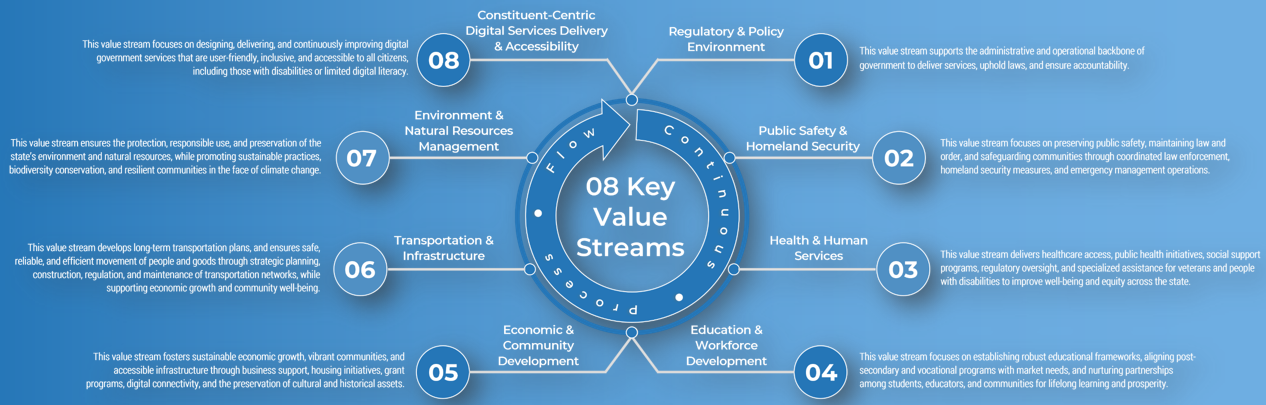
Business Reference Architecture Framework For State Governments Focused on Continuous Process Flow:
Info-Tech Insight
Business reference architectures are heavily focused on processes. They provide a framework that outlines key business functions, capabilities, and the processes that connect them, essentially acting as a blueprint for how a state government agency should ideally operate across different functional areas.
Three key points about business reference architecture and process flow:
Process-centric design: Business reference architectures visually map out major business functions (value streams), defined by capabilities often including their steps, decision points, and interactions between different agencies, departments, or systems.
Alignment with technology: The architecture describes how and identifies where data, applications, and technology should be used to support and optimize business processes.
Communication tool: By providing a common understanding of core processes, reference architectures facilitate communication and collaboration within and between departments, agencies, and IT teams.
Industry Overview: State Government
| US state governments operate as key administrative and legislative bodies within the federal system, holding constitutional authority over a wide range of public services. From managing education and healthcare to overseeing transportation and environmental policies, state governments serve as the critical link between local communities and the broader national framework. They are often responsible for adapting federal initiatives to meet regional needs, ensuring that policies remain relevant and effective for diverse populations. One of the most prominent challenges facing state governments is the complexity of balancing finite resources with expanding public service demands. Budget constraints, shifting demographics, and emergent crises – such as natural disasters or public health emergencies – can strain already tight financial and human capital. Additionally, ensuring equitable access to resources poses a persistent obstacle: rural or economically disadvantaged regions may lack the same infrastructure or service availability found in urban areas. Bureaucratic silos and resistance to change further complicate cross-agency collaboration, hindering the flow of data and best practices. Despite these obstacles, recent trends highlight a shift toward data-driven decision-making, digital transformation, public-private partnerships, and constituent-centered digital services delivery and accessibility. State governments increasingly employ artificial intelligence, cloud computing, and advanced analytics to streamline processes – ranging from online service portals to real-time traffic monitoring. The move toward remote work arrangements and digital-first strategies has further accelerated under changing workforce dynamics, prompting enhanced cybersecurity measures and the adoption of shared service models. Collaboration between states has also grown, allowing for the exchange of innovative solutions and policy experimentation in areas like energy efficiency, environmental regulation, health information exchange, and expanded broadband access. As US state governments continue to adapt to evolving economic and societal pressures, they remain pivotal engines for effective governance and public service delivery. While facing budgetary, technological, and organizational hurdles, states increasingly rely on digital tools and interagency collaboration to elevate efficiency, reduce costs, and address constituent needs more proactively. By embracing technology-driven strategies, championing equitable access, and nurturing a culture of innovation, state governments are poised to meet current challenges and shape a resilient, constituent-centered future. |
 |
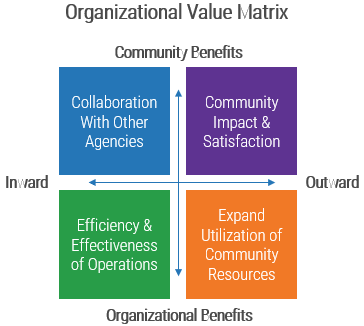
Agency organizational value realized must be the primary success factor
By mapping agency organizational value across a state government's value chain, leaders and analysts can more clearly see how programs within each value stream drive targeted outcomes.
An organizational value matrix provides a succinct view of strategic focus areas, identifies opportunities for improvement, and supports data-driven decision-making.
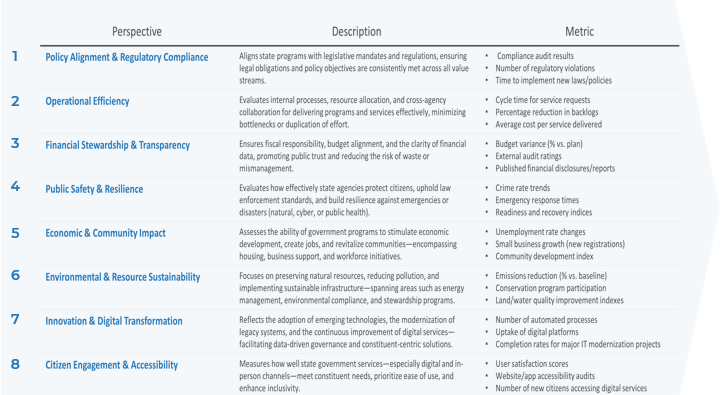 |
Note: Illustrative example. Not exhaustive. |
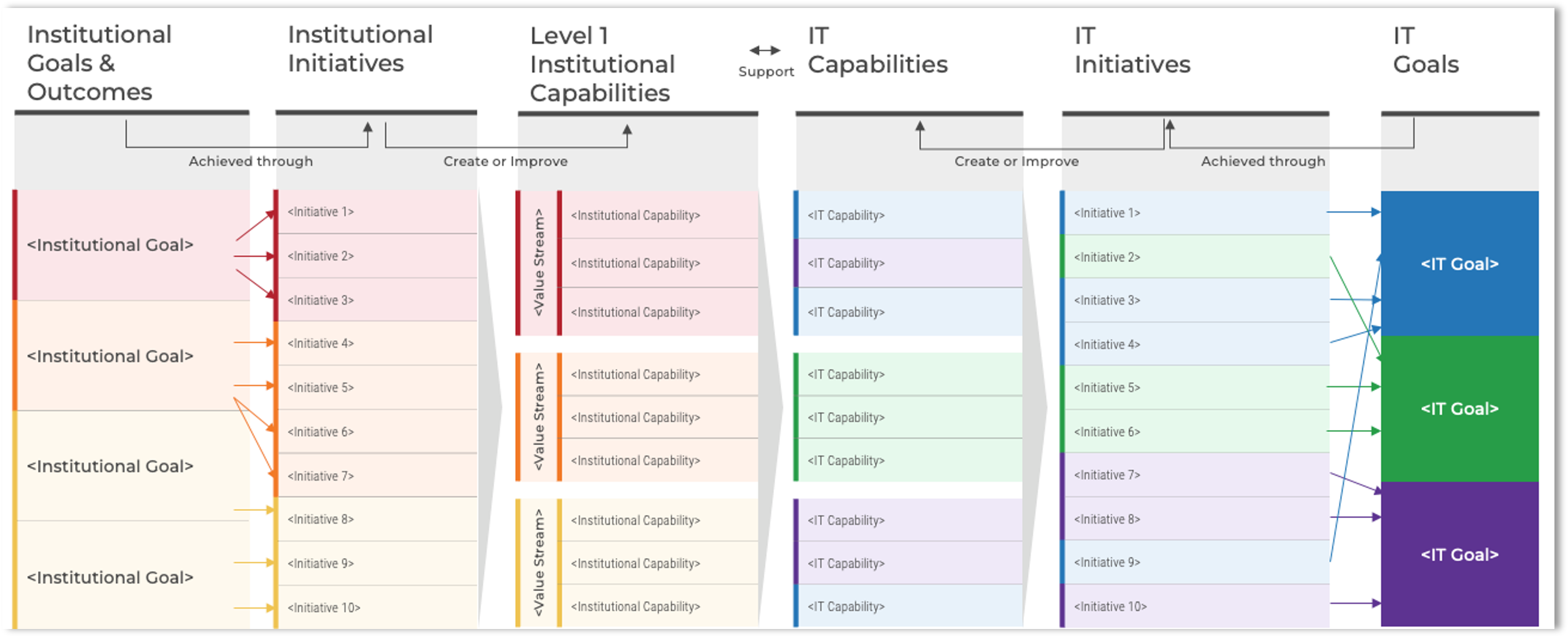
Values, goals, and outcomes cannot be achieved without organizational capabilities
Break down agency organizational goals into strategic, achievable initiatives focused on specific value streams and organizational capabilities.
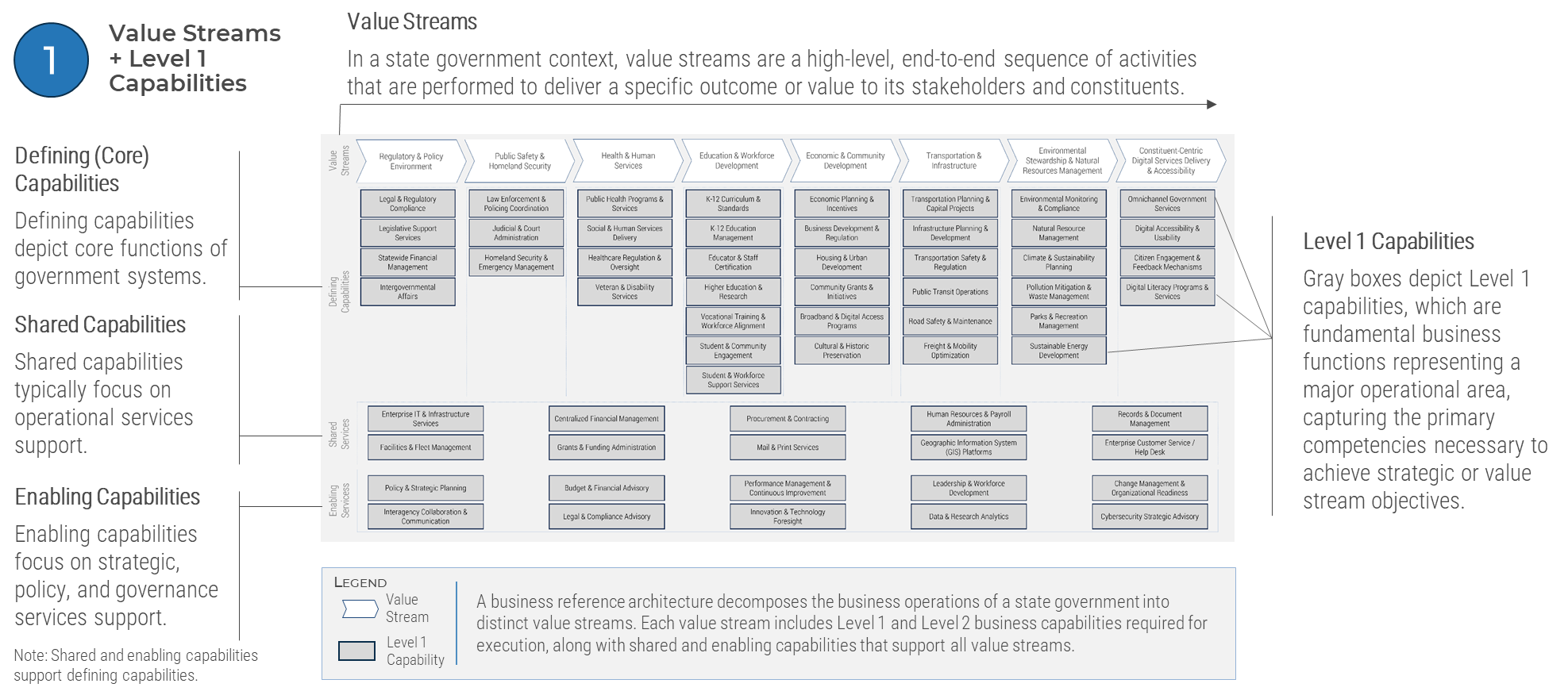
Mapping state government capabilities: How to read a capability map: Level 1
Each capability map in this blueprint follows the same format.
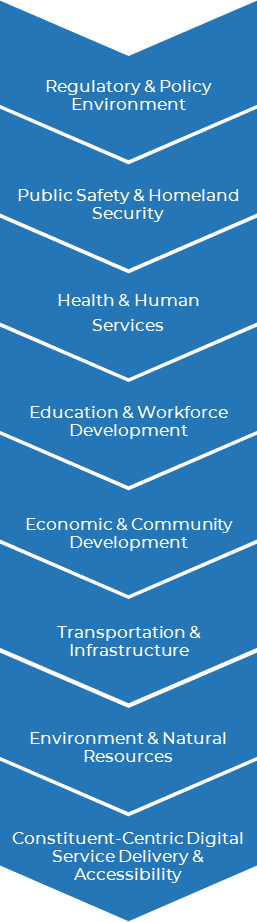
Value Streams
In a state government context, value streams are a high-level, end-to-end sequence of activities that are performed to deliver a specific outcome or value to its stakeholders and constituents.
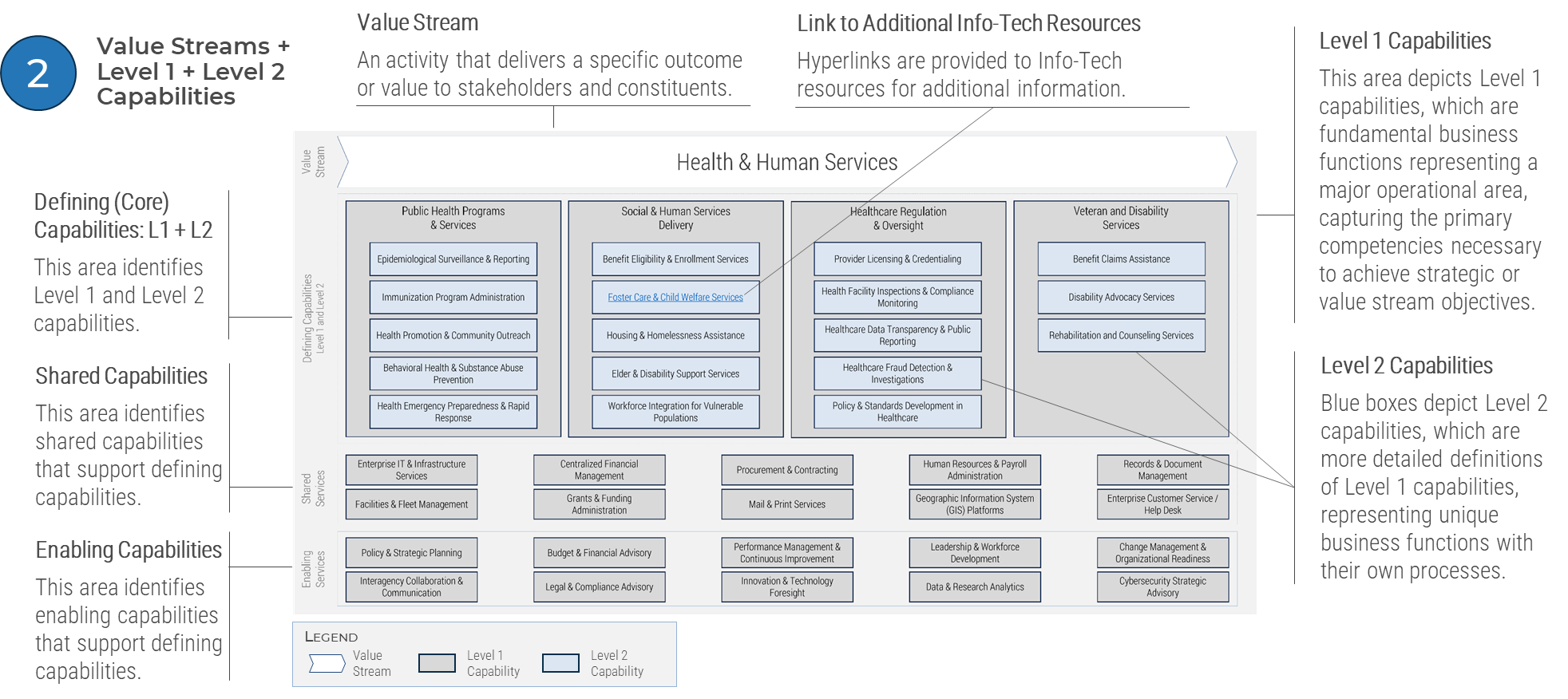
Mapping state government capabilities: How to read a capability map: Level 2
Each capability map in this blueprint follows the same format.
Business reference architecture capability map for US state governments
Level 1 Capabilities
Business capability map for state governments defined …
In business reference architecture for state governments, the primary view of the agency is known as a business capability map.
At a high level, a business capability defines what an agency does to enable value creation, rather than how.
Business capabilities:
- Represent stable government agency business functions.
- Are unique and independent of each other.
- Typically, will have a defined business outcome.
A business capability map for state governments provides details that help the agency business architecture practitioner direct attention to a specific area of the agency's organization for further assessment.
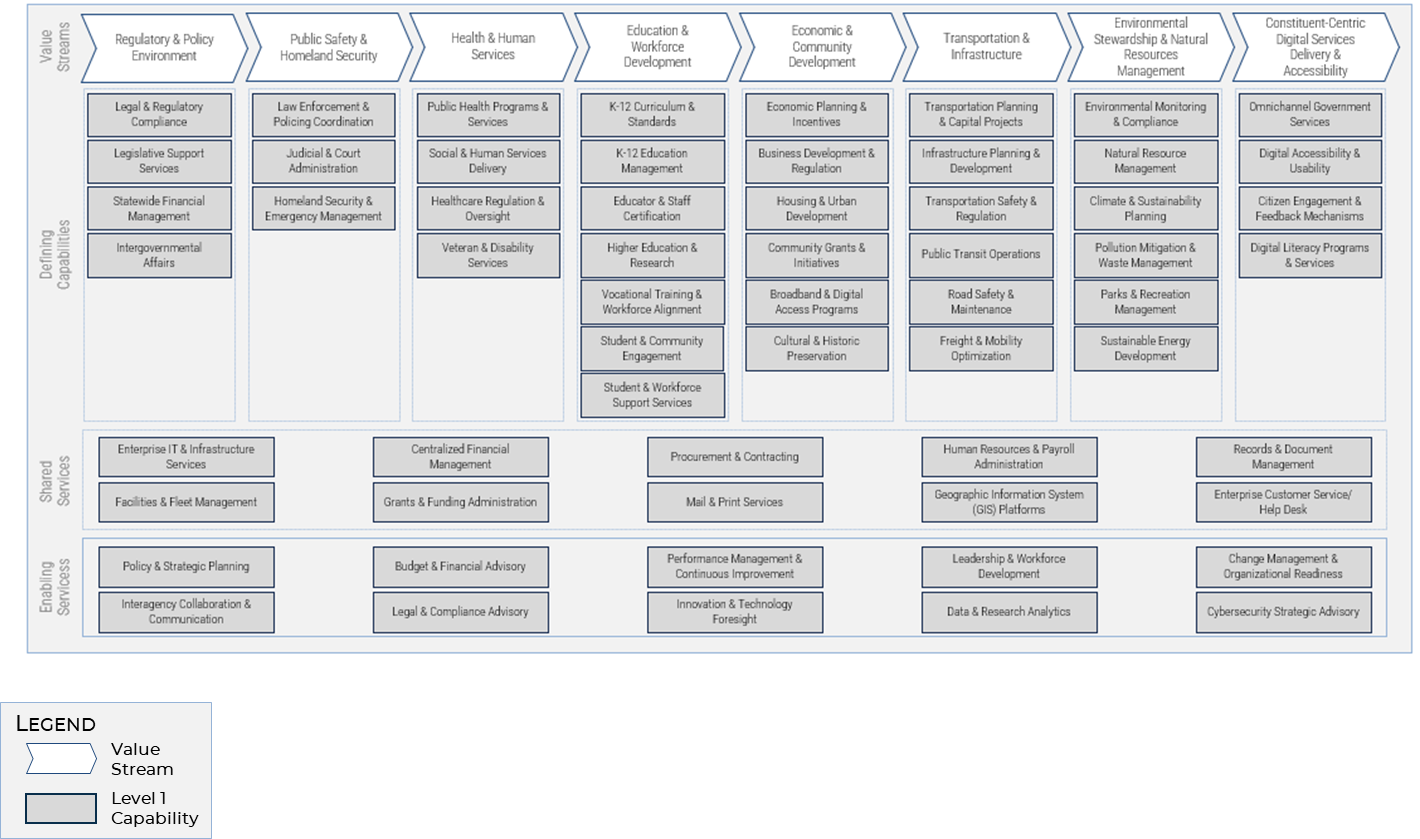
For illustrative purposes only. Not an exhaustive list of value streams or capabilities.
Info-Tech's methodology for business reference architecture
Phase 1: Build Your Agency's Business Capability Map |
Phase 2: Use Agency Organizational Capabilities to Define Your Strategic Focus |
Phase 3: Assess Key Agency Capabilities For Planning Priorities |
Phase 4: Adopt Capability-Based Strategy Planning |
|
|---|---|---|---|---|
Steps |
1.1 Define your agency's value streams. |
2.1 Define your agency's key capabilities. |
3.1 Review agency organizational processes. |
4.1 Consolidate and prioritize capability gaps. |
Outcomes |
|
|
|
|
Blueprint deliverables
Each step of this blueprint is accompanied by supporting deliverables to help you accomplish your goals:
US State Government Business Reference Architecture Template
Use this template with the US State Government Business Reference Architecture Guide to document strategy outputs, including core capabilities, value streams, and strategy maps aligning goals with services.
Shared vs. Enabling Services Supplement
Use this supplement to understand how shared and enabling services each play unique, vital roles in supporting state agency core capabilities in public sector service delivery.
US State Governments Business Reference Architecture Library Tool
Use this centralized resource with the US State Government Business Reference Architecture Guide for key definitions, values streams, and organizational business capabilities.
Key deliverable:
US State Government Business Reference Architecture Guide
Leverage a validated view of US state government organizational capabilities to realize measurable top-line business outcomes and unlock direct value.
Info-Tech offers varying levels of support to suit your needs.
For 25 years, Info-Tech has provided comprehensive and connected research frameworks, diagnostics, and advisory services to our members..
DIY Toolkit |
Guided |
Workshop |
Executive & Technical Counseling |
Consulting |
|---|---|---|---|---|
"Our team has already made this initiative a priority, and we have the time and capability, but some research along the way would be helpful." |
"Our team knows that we need improve, but we need assistance to determine where to focus. Some check-ins with an expert along the way would help keep us on track." |
"We need to hit the ground running and get this project kicked off immediately. Our team has the ability to take this over once we get a framework and strategy in place." |
"Our team and processes are maturing; however, to expedite the journey we'll need a seasoned practitioner to coach and validate approaches, deliverables, and opportunities." |
"Our team does not have the time or the knowledge to take this initiative on. We need assistance through the entirety of this project." |
Receive unlimited |
Get support from Info-Tech's team of IT and Industry |
Have analysts facilitate your team as they define a key initiative or solve a problem. |
Build a dedicated relationship with a senior analyst to advise on key initiatives or your career. |
Leverage our consulting services team for |
Diagnostics and comprehensive frameworks are used throughout all five options.
Guided Implementation
What does a typical GI on this topic look like?
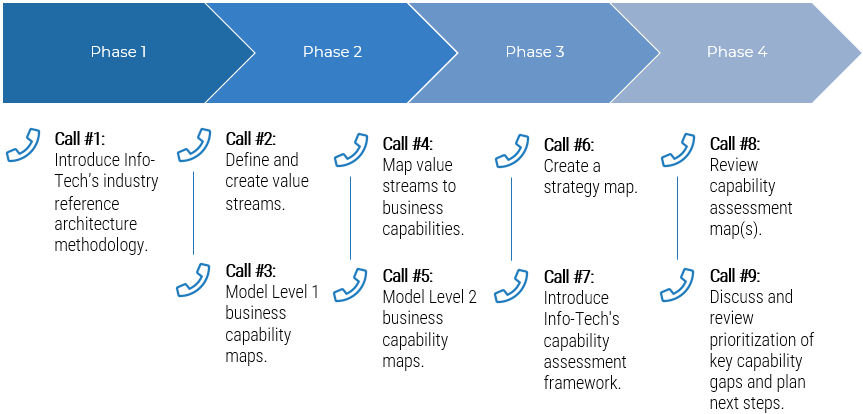
A Guided Implementation (GI) is a series of calls with an Info-Tech analyst to help implement our best practices in your organization.
A typical GI is between 6 to 9 calls over the course of 1 to 4 months.
Workshop Overview
Contact your account representative for more information.
workshops@infotech.com 1-888-670-8889
Session 1 | Session 2 | Session 3 | Session 4 | |
|---|---|---|---|---|
Topics | Define value streams and build a capability map | Identify key capabilities and develop a strategy map | Review processes, assess data, and identify technology opportunities | Consolidate and prioritize capability gaps |
Activities | 1.1 Define your agency's value streams. | 2.1 Define your agency's key capabilities. | 3.1 Review agency business processes. | 4.1 Consolidate and prioritize capability gaps. |
Outcomes |
|
|
|
|
Understanding government systems is crucial for analyzing value and addressing IT capability needs
Each system's structure influences policy-making processes, constituent engagement, service delivery, and accessibility.
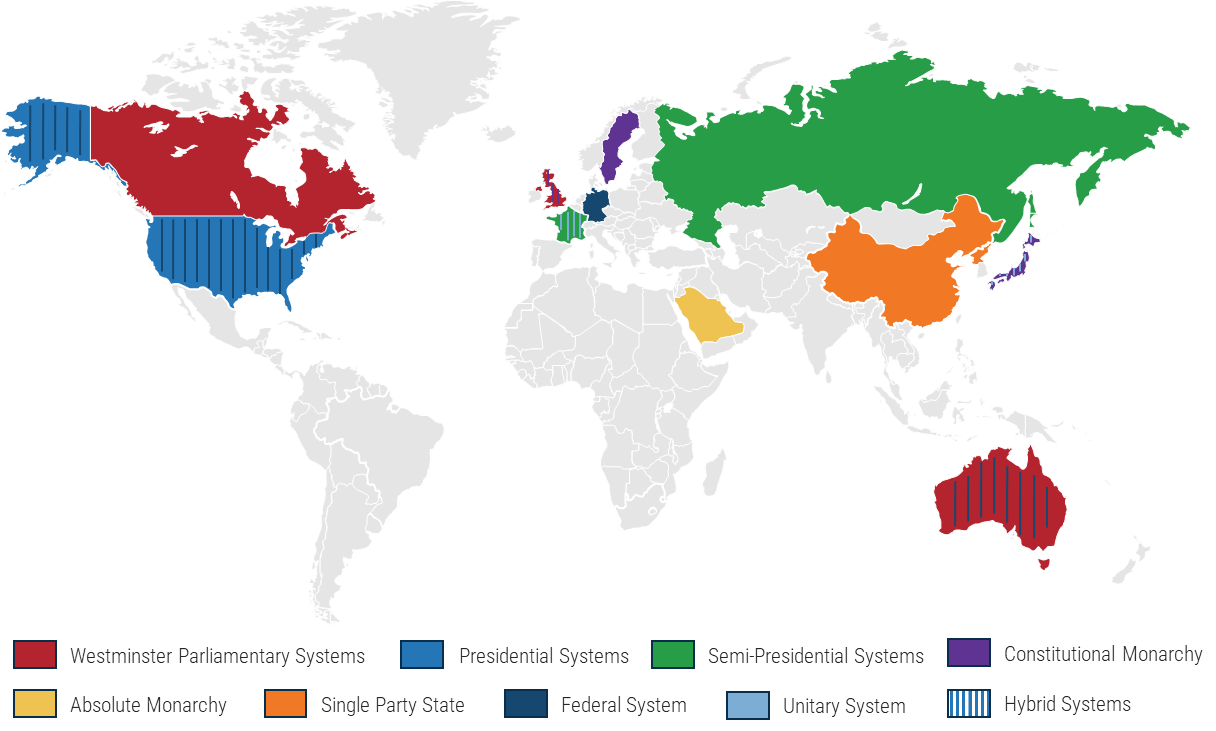
Government systems around the world vary significantly in their structures and functions, shaping how countries are governed and how policies are made and implemented. Key systems include the Westminster parliamentary system, presidential system, semi-presidential system, constitutional monarchy, absolute monarchy, single-party state, federal system, and unitary system. Some are hybrid systems that employ more than one system of government such as the US, the UK, Australia, France, and Japan.
About Info-Tech
Info-Tech Research Group is the world’s fastest-growing information technology research and advisory company, proudly serving over 30,000 IT professionals.
We produce unbiased and highly relevant research to help CIOs and IT leaders make strategic, timely, and well-informed decisions. We partner closely with IT teams to provide everything they need, from actionable tools to analyst guidance, ensuring they deliver measurable results for their organizations.
What Is a Blueprint?
A blueprint is designed to be a roadmap, containing a methodology and the tools and templates you need to solve your IT problems.
Each blueprint can be accompanied by a Guided Implementation that provides you access to our world-class analysts to help you get through the project.
Contributors
- Craig Brooks, Senior Technical Advisor, OMES, State of Oklahoma
- Kathy Costello, Enterprise Business Architect, Architecture & Innovation, Washington Technology Solutions (WaTech)
- Kimberly Crabtree, Agency Chief Enterprise Architect, California Health and Human Services Agency, State of California
- Madhu Gottumukkala, Commissioner, Bureau of Information & Telecommunication, State of South Dakota
- Nick Stow, Chief Technology Officer, Architecture and Innovation Division, Washington Technology Solutions (WaTech)