
Select an HR and Finance System for K-12 Education
Operational excellence begins with the right administrative foundation.
K-12 organizations face several challenges when it comes to HR and finance systems:
- Managing aging or fragmented HR and finance systems that no longer meet compliance or operational needs.
- Ensuring seamless integration across payroll, fund accounting, procurement, and government reporting.
- Managing total cost of ownership beyond licensing, including implementation, training, and change management.
- Aligning stakeholders from Finance, HR, IT, and school leadership around shared requirements.
Our Advice
Critical Insight
- HR and finance systems are compliance instruments. Government reporting, fund accounting, and collective agreement obligations must be non-negotiable inputs in the selection process.
- ERP selection must be driven by mapped processes and prioritized requirements, not vendor brand recognition or peer influence.
- Data flow mapping and integration planning must occur before vendor engagement, not after contract signature.
Impact and Result
- Reduced selection timeline and fewer vendor demonstrations through a structured, prequalified shortlist.
- Improved vendor negotiation position and fewer post-contract change orders through comprehensive requirements gathering.
- Reduced risk of misalignment through structured evaluation criteria and objective scoring.
- Higher user adoption and faster deployment through change management and usability criteria built into the process.
Select an HR and Finance System for K-12 Education
Operational excellence begins with the right administrative foundation.
Analyst perspective
Your back office is your strategic foundation.
The student-facing ecosystem of K-12 education rightly commands attention, but it is built on an administrative foundation that is frequently overlooked until it fails. Human resources and financial management systems are the operational core of every school board and district. They govern how staff are hired, paid, and supported, and how public funds are planned, tracked, and reported.
Selecting an HR and financial management system, or a combined ERP, is among the most consequential and least visible technology decisions a K-12 organization will make. Unlike a student information system, the consequences of a poor ERP selection often manifest slowly: reporting failures that only surface at year-end, payroll errors that erode staff trust, or audit findings that expose gaps in financial controls. When these systems work well, they are invisible. When they fail, they dominate board meetings and ministerial correspondence.
This guide provides a structured K-12–specific approach to selecting HR and financial management software, from defining your requirements to evaluating vendors and reaching a confident decision.

Mark Maby
Principal Research Director for Education, Industry Practice
Info-Tech Research Group
Executive summary
Your Challenge
HR and financial management systems are the administrative backbone of every K-12 organization, and they are increasingly complex to select and sustain.
- Compliance is nonnegotiable.
- The workforce is K-12’s largest cost center.
- Integration expectations are rising.
- Legacy risk is material.
Common Obstacles
These barriers make ERP selection uniquely difficult in K-12:
- State and provincial compliance fragmentation
- Bundled procurement complexity
- Vendor consolidation risk
- High switching costs and incumbent advantage
- Underestimated implementation costs
Info-Tech’s Approach
Before engaging the market, drive selection from organizational strategy and compliance requirements, not vendor marketing.
Map your data flows and integration points before selecting. The systems cannot exist in isolation from the student information system (SIS), payroll, and government reporting ecosystems.
Engage Finance, HR, and IT as coequal stakeholders throughout. Use a weighted scoring model to reach a defensible, consensus-based decision.
Info-Tech Insight
In K-12 education, HR and financial systems are not optional infrastructure; they are compliance instruments. State and provincial reporting obligations, fund accounting standards, and collective agreement management requirements must be nonnegotiable inputs to any selection process.
Your challenge
HR and financial management systems, the administrative backbone of K-12, are increasingly complex to select and sustain.
- Compliance is nonnegotiable: From accounting standards to collective bargaining agreements, jurisdiction-specific compliance qualify vendors, regardless of product quality.
- The workforce is K-12's largest cost center: An HR system that cannot accurately model position costs, salary grids, and benefit entitlements creates fiscal risk.
- Integration expectations are rising: Districts increasingly expect HR, Finance, Payroll, and the SIS to share a unified data model.
- Legacy risk is material: Many K-12 organizations have operated the same financial system for 15 to 20 years.
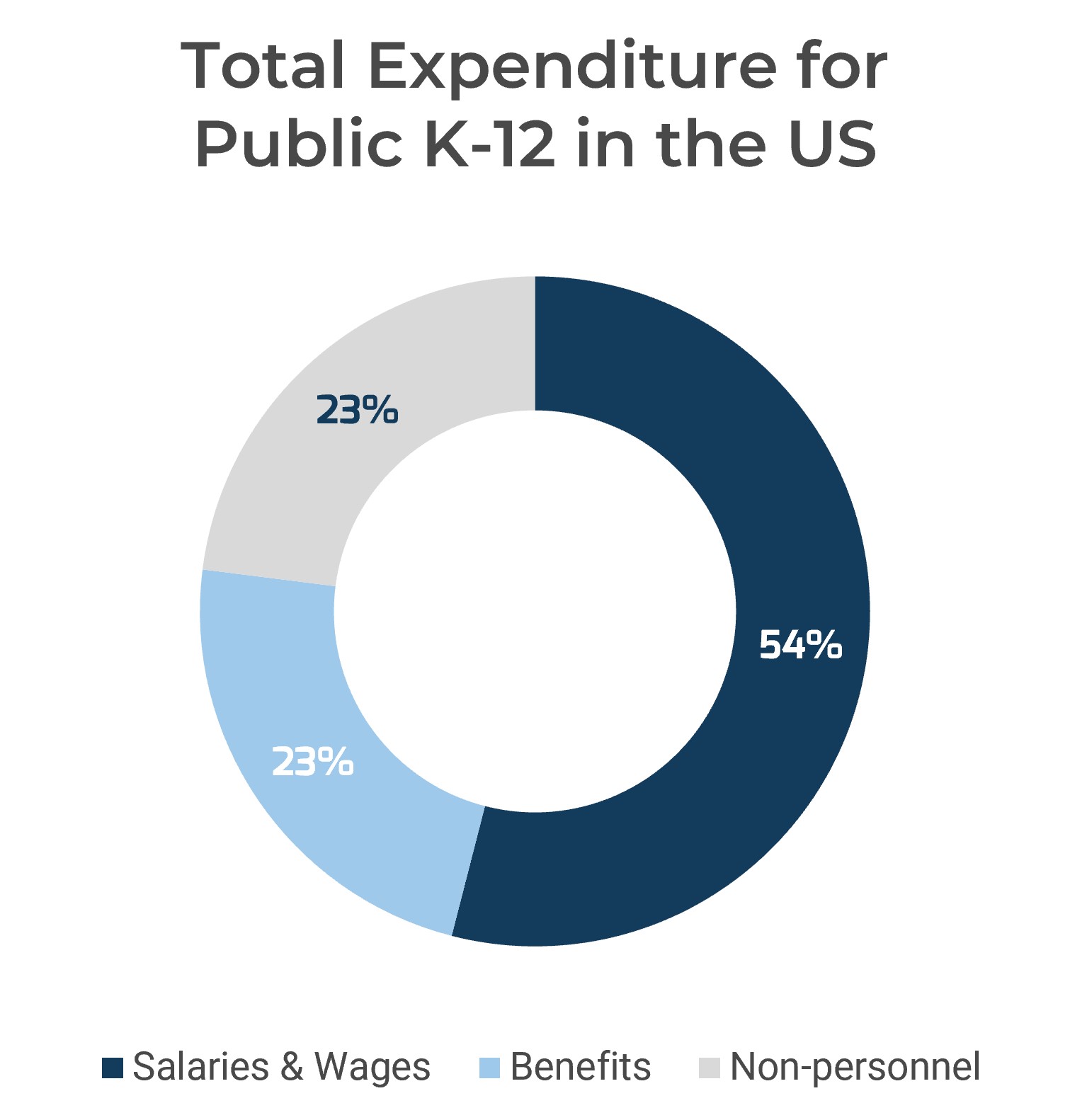 (Source: National Center for Education Statistics, 2024)
Common obstacles
These barriers make HR and financial management system selection uniquely difficult in K-12
- State and provincial compliance fragmentation: Each jurisdiction maintains distinct standards and reporting mandates. No single vendor can claim equal compliance depth in all jurisdictions.
- Bundled procurement complexity: In most districts, HR or finance is not selected independently. Districts must evaluate the full ERP bundle, not isolated modules.
- Vendor consolidation risk: Private equity–backed acquisition activity means that platforms under a single brand may share a data model. Districts must validate product roadmap continuity before committing.
- High switching costs and incumbent advantage: Districts who have had incumbent ERPs for 10 to 20 years face data migration complexity, retraining costs, and institutional inertia.
- Implementation costs are underestimated: Implementation, data cleansing, training, and change management consistently account for 35% to 50% of total ERP project costs and are routinely excluded from early-stage budget estimates (Advances in Real-Time Intelligent Systems, 2024).
Cost of Enterprise Implementation and Integration
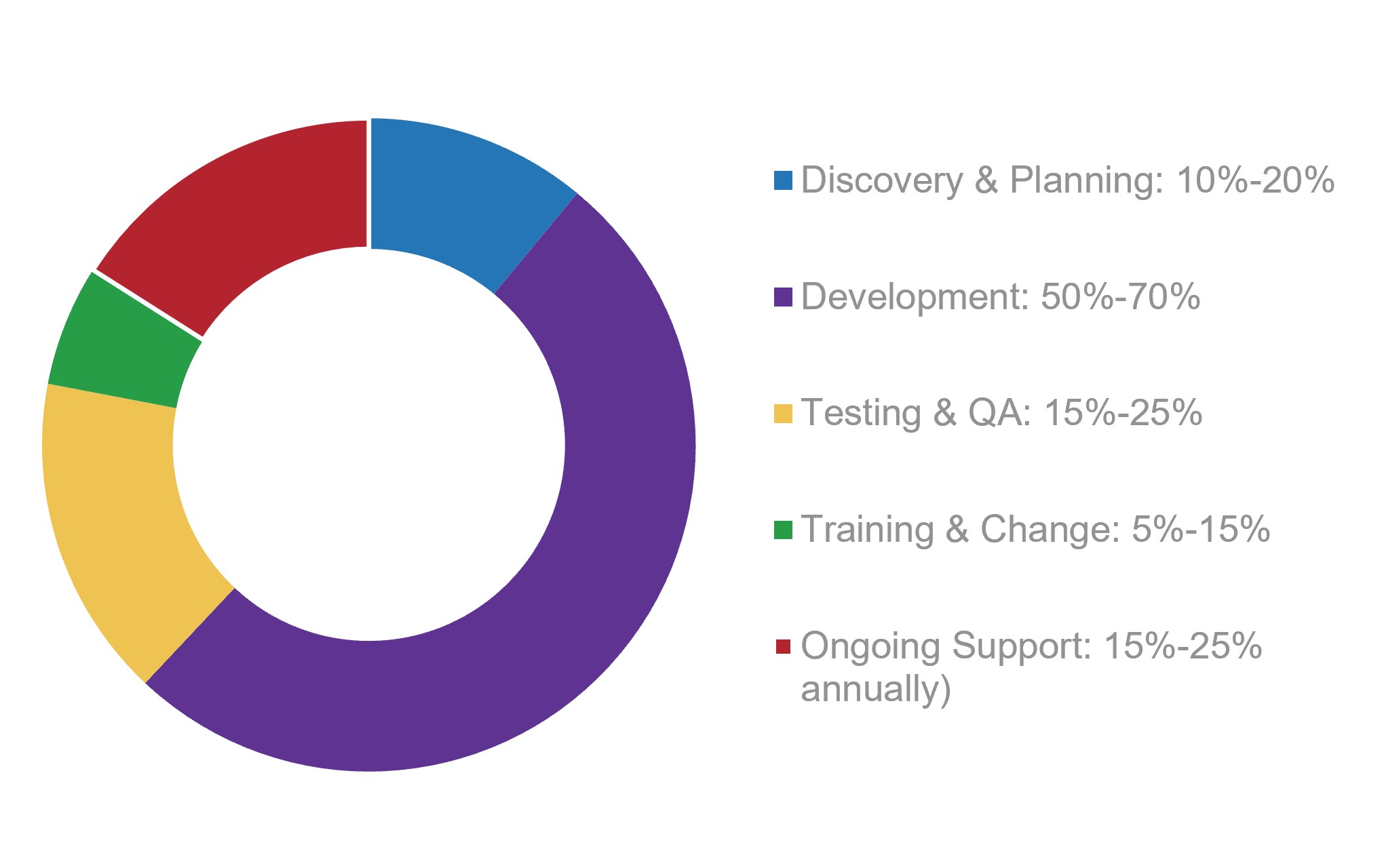 (Source: Branch Boston, 2025)
Select an HR and finance system for K-12 education
Define your ERP |
Know the products |
Engage, evaluate, and select |
| Map capabilities | Prepare for RFP | Engage the vendors |
| Map data flows to applications | Review the top vendors | Develop K-12 ERP demo scripts |
| List & prioritize requirements | Shortlist vendors for RFP | Select properly |
INSIGHT: In K-12 education, HR and finance systems are not optional infrastructure; they are compliance instruments. State and provincial reporting obligations, fund accounting standards, and collective agreement management requirements must be nonnegotiable inputs to any selection process.
Leverage tools and templates designed for K-12 HR and finance system selection:
 K-12 Reference Architecture
 Process Inventory
 Data Flow Map
 Requirements Template
 Vendor Landscape
 Demo Scripts
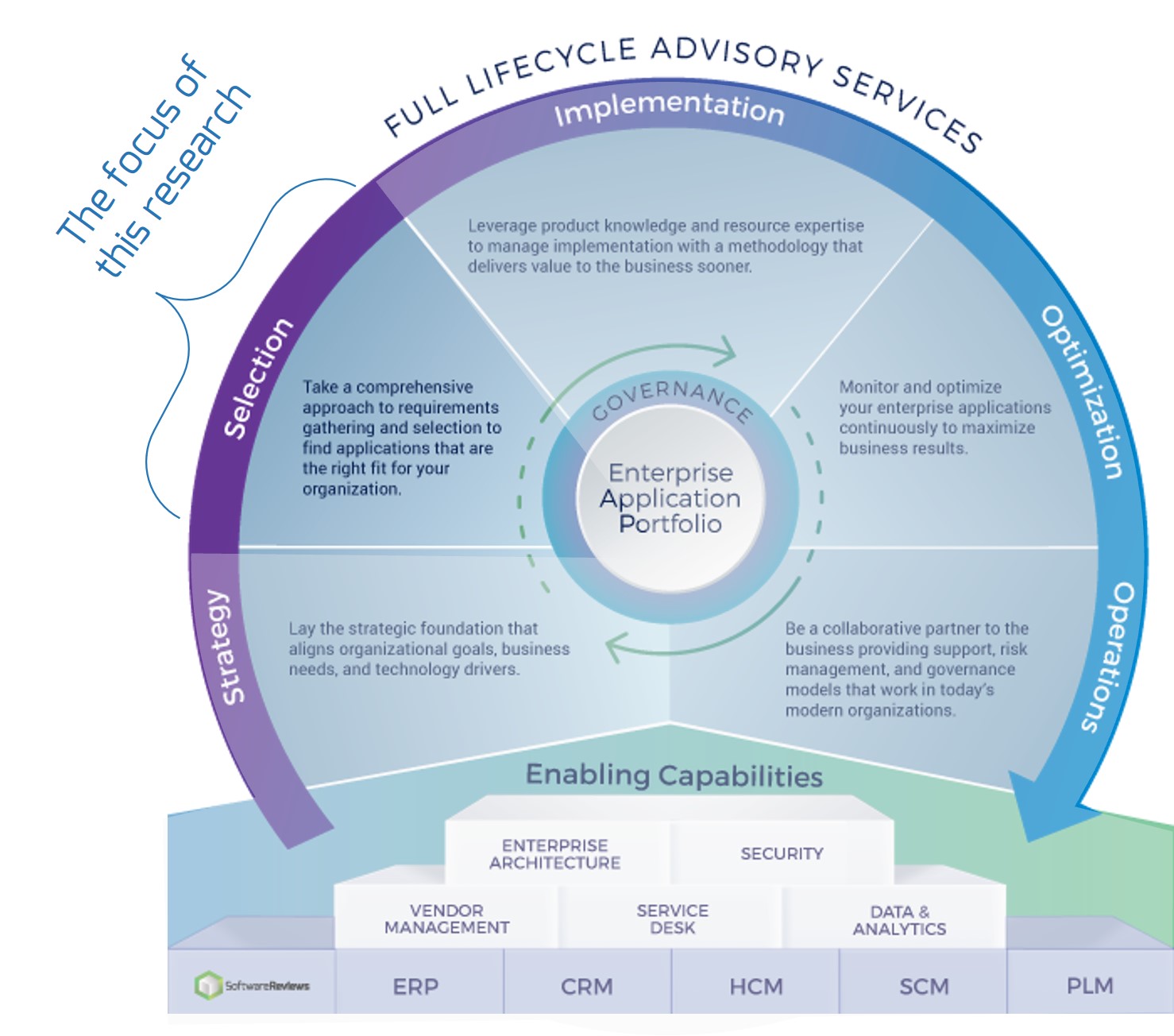
This research provides K-12 specific content within the selection component of Info-Tech’s larger methodology on Enterprise Applications Lifecycle Advisory Services.
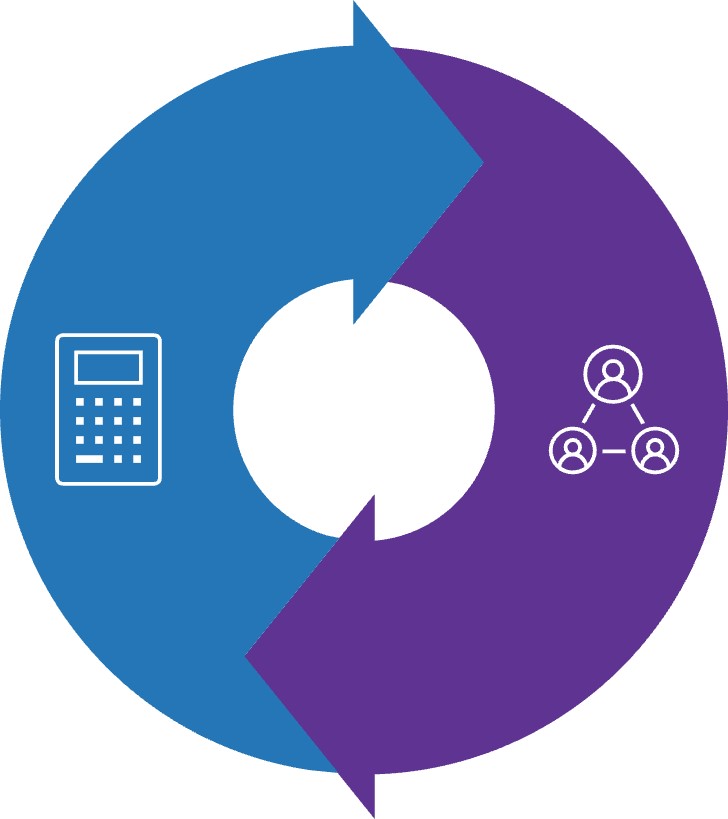
Metrics for the value of using this project
Time & Efficiency Metrics
- Reduction in selection timeline through a structured methodology vs. ad hoc approach
- Fewer vendor demonstrations needed through a pre-qualified shortlist that eliminates unsuitable vendors early
- Reduction in evaluation rework through standardized templates and clear requirements to prevent scope creep
Risk Mitigation
- Reduction in vendor misalignment through structured evaluation
- Fewer integration issues through data flow mapping that identifies technical requirements up-front
- Greater stakeholder buy-in through inclusive requirements gathering process vs. top-down selection
Financial Impact
- Cost savings on implementation through better vendor negotiation position through informed selection.
- Reduction in change orders through comprehensive requirements gathering minimizes post-contract modifications.
Quality & Success
- Higher user adoption rates by including usability and change management criteria
- Faster time to full deployment through clear requirements that accelerate implementation
Info-Tech’s methodology for selecting a K-12 HR and finance system
1. Define your HR and finance system |
2. Know the products |
3. Engage, evaluate, and select |
|
Phase steps |
|
|
|
Phase outcomes |
Map current-state HR and financial processes. Identify integration points. Translate into prioritized requirements. | Understand the product landscape and identify vendors that meet your mandatory requirements and jurisdiction-specific compliance obligations. | Engage the vendors through RFPs and conduct a proper evaluation with an objective evaluation criteria and framework. |
What are HR and finance systems?
A management information system for education institutions to manage HR and finance data.
- A K-12 HR and financial management system, commonly referred to as an enterprise resource planning (ERP) system, is an integrated platform that manages the workforce and financial operations of a school district or board.
- HR functions include position management, recruiting and onboarding, employee record management, attendance and absence tracking, collective agreement administration, performance appraisal, and HR reporting and analytics.
- Financial functions include budget development and management, general ledger, accounts payable and receivable, procurement and purchasing, p-card management, school funds management, project and capital financial tracking, cash management, payroll, tax reporting, and financial auditing.
Financial Functions
- Project and Capital Finance
- Accounts Receivable
- Accounts Payable
- General Ledger
- Tax Reporting
- School Funds
- Procurement
- Budget
- P-Card
- Audit
HR Functions
- Attendance and Absence Tracking
- Employee Record Management
- Collective Agreement Admin
- HR Reporting and Analytics
- Recruiting and Onboarding
- Performance Appraisal
- Position Management
- Reporting
Case study

INDUSTRY: K-12 Education | SOURCE: Sourcewell
ERP migration through a user-focused implementation
Challenge
Sioux Falls Public Schools, the largest school district in South Dakota, faced end-of-life for its existing finance and HR system. The district needed to migrate multiple outdated platforms into a unified ERP without disrupting payroll, benefits administration, or financial operations. A key complexity was the district's combination of benefit options for staff, which a homegrown legacy system had been managing in ways that were difficult to replicate or migrate.
Solution
The district selected PowerSchool’s eFinancePlus as a unified HR, payroll, and finance ERP solution and engaged Sourcewell as its implementation partner. They centered on change management and user adoption from the outset. More than 200 hours of onsite training was completed using the district's own data. The team migrated accounts, established new security parameters, converted to off-site hosting, and built integrations with third-party benefits software.
Results
Migration to the new unified ERP was completed successfully. Users reported confidence in the system following role-specific training built around the district's own workflows. The elimination of redundant systems and manual tasks produced operational cost savings. Improved security was achieved by outsourcing infrastructure to a Tier III commercial data center. The assistant superintendent of finance and operations cited the quality and attentiveness of the implementation team as a key success factor.

About Info-Tech
Info-Tech Research Group is the world’s fastest-growing information technology research and advisory company, proudly serving over 30,000 IT professionals.
We produce unbiased and highly relevant research to help CIOs and IT leaders make strategic, timely, and well-informed decisions. We partner closely with IT teams to provide everything they need, from actionable tools to analyst guidance, ensuring they deliver measurable results for their organizations.
What Is a Blueprint?
A blueprint is designed to be a roadmap, containing a methodology and the tools and templates you need to solve your IT problems.
Each blueprint can be accompanied by a Guided Implementation that provides you access to our world-class analysts to help you get through the project.
Talk to an Analyst
Our analyst calls are focused on helping our members use the research we produce, and our experts will guide you to successful project completion.
Book an Analyst Call on This Topic
You can start as early as tomorrow morning. Our analysts will explain the process during your first call.
Get Advice From a Subject Matter Expert
Each call will focus on explaining the material and helping you to plan your project, interpret and analyze the results of each project step, and set the direction for your next project step.
Unlock Sample Research