
Define Hospitality Data Requirements to Accelerate Transformation
Align data and amplify value to reimagine hospitality.
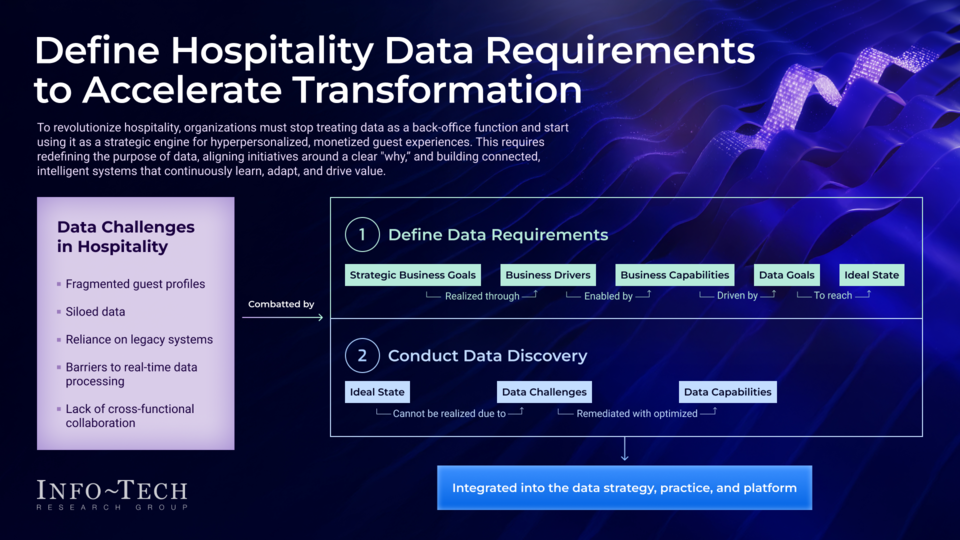
- Hospitality organizations often struggle with fragmented guest profiles and siloed data. This fragmentation prevents the creation of complete customer profiles and duplicate reservations across intermediaries.
- The reliance on legacy systems poses a significant challenge for real-time data processing. These outdated systems make it difficult to achieve data monetization and hyperpersonalization.
- There is often a lack of cross-functional collaboration, which hampers the alignment of data initiatives with business objectives, making it challenging to address data-related obstacles effectively.
Our Advice
Critical Insight
To revolutionize hospitality, organizations must stop treating data as a back-office function and start using it as a strategic engine for hyperpersonalized, monetized guest experiences. This requires redefining the purpose of data, aligning initiatives around a clear "why," and building connected, intelligent systems that continuously learn, adapt, and drive value.
Impact and Result
- Understand and validate your strategic goals, classify and map them to key business drivers, and identify the business capabilities and processes that support the realization of those goals.
- Highlight data-related outcomes and goals that fulfill the business objectives, then map these data initiatives to the strategic goals and prioritize them.
- Classify business data requirements and highlight existing data challenges. Discuss the next steps for the data strategy to enhance data maturity.
Member Testimonials
After each Info-Tech experience, we ask our members to quantify the real-time savings, monetary impact, and project improvements our research helped them achieve. See our top member experiences for this blueprint and what our clients have to say.
5.0/10
Overall Impact
Client
Experience
Impact
$ Saved
Days Saved
Mohegan Gaming and Entertainment
Guided Implementation
5/10
N/A
N/A
I gave the researchers information on Mohegan's approach to omni-channel, it was not the other way around.
Define Hospitality Data Requirements to Accelerate Transformation
Align data and amplify value to reimagine hospitality.
Analyst perspective
From data chaos to guest clarity
Hospitality organizations worldwide are sitting on a goldmine of guest data but can’t monetize it. Fragmented profiles, siloed systems, and an outdated tech stack make it nearly impossible to deliver the personalized, seamless experiences today’s guests expect. Add in poor system integration and weak cross-functional alignment, and the result is a tangled mess of data that costs more to manage than it delivers in value. To turn this around, hospitality leaders need more than just another data initiative; they need a business-led data strategy. That means mapping data efforts directly to revenue drivers like guest retention, ancillary spend, and personalized upsell and cross-selling. Start with quick wins like unifying guest profiles across platforms, then scale to real-time personalization and predictive insights. With the right approach, data can shift from a cost center to a competitive advantage.

Elizabeth Silva Smulski
Senior Research Analyst, Gaming, Hospitality, Sports & Entertainment Industry
Info-Tech Research Group
Executive summary
|
Your Challenge |
Common Obstacles |
Info-Tech’s Approach |
|---|---|---|
|
Hospitality organizations often struggle with fragmented guest profiles and siloed data. This fragmentation prevents the creation of complete customer profiles and causes duplicate reservations across intermediaries. The reliance on legacy systems poses a significant challenge for real-time data processing. These outdated systems make it difficult to achieve data monetization and hyperpersonalization. There is often a lack of cross-functional collaboration, which hinders alignment between data initiatives and business objectives, making it difficult to address data-related challenges effectively. |
Poor integration between various systems prevents hospitality organizations from realizing the full value of their data investments. This makes it difficult to centralize customer data and improve analytical capabilities. The lack of standardized data formats results in poor When data systems are overly complex or poorly understood, organizations often remove or scale back essential data services because they appear misaligned with business needs. This can result in long, expensive projects that ultimately fail to produce value. |
Understand and validate your strategic goals, classify and map them to key business drivers, and identify the business capabilities and processes that support the realization of those goals. Highlight data-related outcomes and goals that fulfill the business objectives, then map these data initiatives to the strategic goals and prioritize them. Classify business data requirements and highlight existing data challenges. Discuss the next steps for the data strategy to enhance data maturity. |
Info-Tech Insight
To revolutionize hospitality, organizations must stop treating data as a back-office function and start using it as a strategic engine for hyperpersonalized, monetized guest experiences. This requires redefining the purpose of data, aligning initiatives around a clear "why,“ and building connected, intelligent systems that continuously learn, adapt, and drive value.
Your challenge
The enablement of personalization and business alignment is only possible by tackling data silos and legacy systems.
Hospitality organizations often struggle with fragmented guest profiles and siloed loyalty data. This fragmentation prevents the creation of complete customer profiles, which is essential for effective data initiatives.
The reliance on legacy systems poses a significant challenge for real-time data processing. These outdated systems make it difficult to achieve data monetization and hyperpersonalization.
There is often a lack of cross-functional collaboration, which hinders alignment between data initiatives and business objectives, making it difficult to address data-related challenges effectively.
The price of low data maturity
Businesses can generate up to 40% more revenue by deploying personalization strategies.
Source: NetSuite, 2025.
Legacy systems consume up to 75% of a company’s IT budget just for maintenance, leaving only 25% for new initiatives.
Source: Revenue Hub, 2024.
Common obstacles
Overcome integration gaps and data complexity to unlock value from data.
Poor integration between various systems prevents hospitality organizations from realizing the full value of their data investments. This makes it difficult to centralize customer data and improve analytical capabilities.
The lack of standardized data formats results in poor data quality and accuracy. This obstacle impedes the creation of a unified view of customer data across different platforms and systems.
The complexity and lack of understanding of data result in the de-scoping of data services that do not meet business needs, leading to lengthy and costly initiatives that often fail to deliver business value.
Fragmented data, fragmented experience
57% of hospitality organizations in Asia-Pacific suffer from data quality issues, compared to 20% in North America. This leads to operational inefficiencies, billing disputes, and customer dissatisfaction.
Source: Skift, 2025.
Wyndham Hotels redirected 90% of its digital ad spend toward campaigns informed by a single customer view, resulting in double-digit returns on ad spend.
Source: Spark, 2024.
Info-Tech’s approach
Leverage this industry method to enhance your data strategy.
- Begin by understanding and validating your organization’s strategic goals. Classify them and map each one to key business drivers, then identify the supporting business capabilities and processes that enable their realization.
- Use Info-Tech’s tools and methodologies to define and prioritize your top data initiatives. Clearly articulate the data-related outcomes that align with business objectives and link each initiative to its corresponding strategic goal and supporting data capabilities.
- Next, classify your business’ data requirements and identify existing data challenges. Use these insights to inform next steps for evolving your data strategy to improve overall data maturity.
- Finally, confirm the project mandate and formally initiate your data initiative through a data strategy.
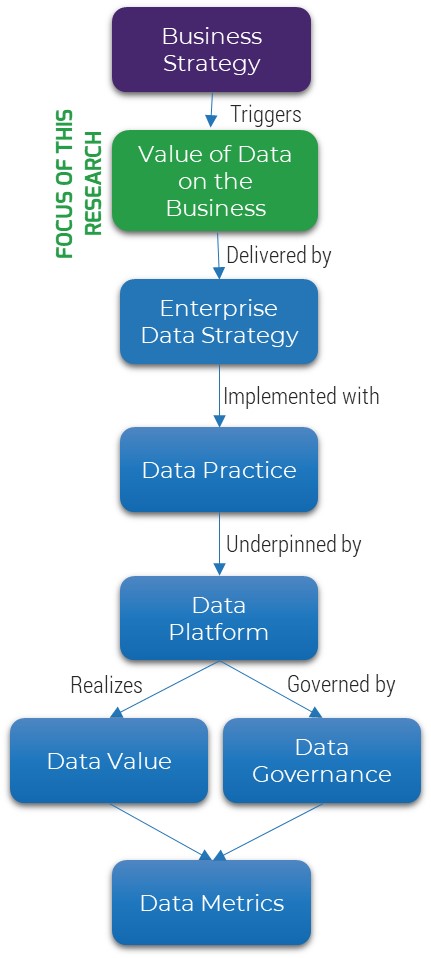
The Info-Tech difference
- Identifying and validating data requirements before implementing a data strategy is key to the success of your data initiatives — it clarifies the why before the how.
- By understanding your specific objectives, your organization can choose the most suitable data strategy, practice, and platform for your hospitality business, rather than simply following industry trends. After all, data solutions are not one-size-fits-all.
Define Hospitality Data Requirements to Accelerate Transformation
To revolutionize hospitality, organizations must stop treating data as a back-office function and start using it as a strategic engine for hyperpersonalized, monetized guest experiences. This requires redefining the purpose of data, aligning initiatives around a clear “why,” and building connected, intelligent systems that continuously learn, adapt, and drive value.
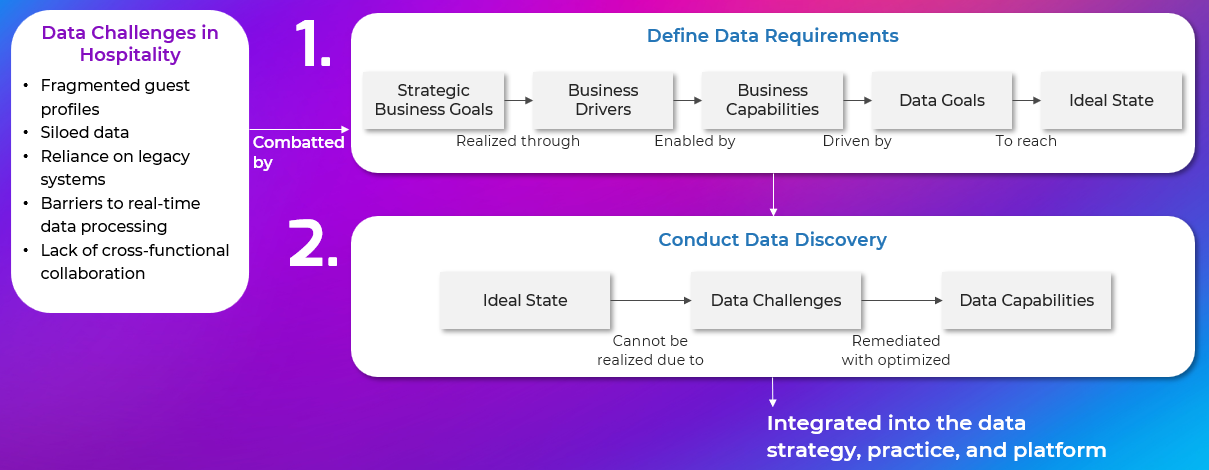
Info-Tech’s methodology to define hospitality data requirements to accelerate transformation
|
1. Define Your Data Requirements |
2. Conduct Your Data Discovery |
|
|---|---|---|
|
Phase Steps |
1.1 Define and prioritize strategic goals 1.2 Map business drivers to goals 1.3 Identify focused business capabilities 1.4 Map data-related goals to fulfill business goals |
2.1 Understand and classify data capability maturity 2.2 Identify challenges through data mapping 2.3 Map data capabilities and challenges to goals 2.4 Discuss data strategy next steps |
|
Phase Outcomes |
|
|
|
Deliverables |
|
|
Insight summary
Data’s new role in hospitality
To revolutionize hospitality, organizations must stop treating data as a back-office function and start using it as a strategic engine for hyperpersonalized, monetized guest experiences. This requires redefining the purpose of data, aligning initiatives around a clear "why,” and building connected, intelligent systems that continuously learn, adapt, and drive value.
Align data with business value
Mapping business and data goals creates clear, actionable targets and ensures data investments are purposeful rather than just technical. Without this alignment, strategies risk becoming reactive and disconnected from real value.
Capability gaps are strategic opportunities
Data challenges are often symptoms of deeper capability gaps. Surfacing and mapping these gaps makes it possible to turn persistent roadblocks into focused improvement opportunities.
Blueprint deliverables
Each step of this blueprint is accompanied by supporting deliverables to help you accomplish your goals.
Capability Alignment Presentation Template
This PowerPoint visually outlines business capabilities and their strategic contribution to the broader data strategy.
Data Mapping Template
This PowerPoint serves as a collaborative working document to visually map your technology ecosystem and the flow of data for the data-mapping exercise.
Key deliverable:
Capability-to-Data Matrix Workbook
This Excel workbook is used to prioritize strategic goals and assess the value of data by mapping current challenges to existing capabilities, evaluating data capability maturity, and identifying what's needed to reach the desired future state.
Blueprint benefits
|
IT Benefits |
Business Benefits |
|---|---|
|
|
Measure the value of this blueprint
These metrics bridge the gap between data efforts and real business impact by quantifying how well data supports critical business functions.
With this approach, you will tie each data initiative to a measurable business capability, and these metrics will help you prioritize investments, demonstrate value, and continuously improve your data strategy in alignment with business goals.
|
Metric |
Measure |
CSF (Critical Success Factor) |
|
Value realization |
% OR $ ROI from data initiatives (e.g. cost savings, revenue increase) |
Increase |
|
Time to insight |
Average time from data availability to decision-making |
Decrease (less time required) |
|
Decision quality index |
% of strategic decisions backed by data |
Increase |
|
Use case completion rate |
% of capability-linked data use cases delivered and adopted |
Increase |
|
Capability enablement score |
% of priority business capabilities supported by data solutions |
Increase |
Improve data capabilities by aligning to business needs
INDUSTRY: Hospitality
SOURCE: PwC, 2020.
Wyndham Hotels & Resorts – Modernizing Data Architecture
- Wyndham recognized the need to strengthen its data capabilities to better understand guest preferences and boost operational efficiency. Despite earlier cloud investments, data processing remained slow — taking up to 2.5 days — leading to inconsistencies and manual error checks.
- To overcome this, Wyndham redesigned its data architecture to align with key business goals like personalized guest experiences and efficient property management.
- The modernization included migrating to a scalable AWS cloud environment, with improvements in data ingestion, visualization, and quality management.
Results
- The modernized data architecture reduced processing time to just 5 minutes, improved data accuracy, and cut maintenance efforts by 40%.
- By aligning its data strategy with core business capabilities, Wyndham enhanced its ability to deliver personalized guest experiences and operate more efficiently, demonstrating the value of integrating data initiatives with business goals to achieve measurable results.
Info-Tech offers various levels of support to best suit your needs
| DIY Toolkit | Guided Implementation | Workshop | Executive & Technical Counseling | Consulting |
|---|---|---|---|---|
| "Our team has already made this critical project a priority, and we have the time and capability, but some guidance along the way would be helpful." | "Our team knows that we need to fix a process, but we need assistance to determine where to focus. Some check-ins along the way would help keep us on track." | "We need to hit the ground running and get this project kicked off immediately. Our team has the ability to take this over once we get a framework and strategy in place." | "Our team and processes are maturing; however, to expedite the journey we'll need a seasoned practitioner to coach and validate approaches, deliverables, and opportunities." | "Our team does not have the time or the knowledge to take this project on. We need assistance through the entirety of this project." |
Diagnostics and consistent frameworks are used throughout all five options.
Guided Implementation
What does a typical GI on this topic look like?
| Phase 1 | Phase 2 |
|---|---|
|
Call #1: Define and prioritize strategic goals. Call #2: Map business drivers to goals. Call #3: Identify focused business capabilities and map them to drivers and goals. Call #4: Create and map data-related goals to fulfill business goals. |
Call #5: Understand and classify data capability maturity. Call #6: Identify challenges through data mapping. Call #7: Map data capabilities and challenges to goals. Call #8: Discuss data strategy next steps. |
A Guided Implementation (GI) is a series of calls with an Info-Tech analyst to help implement our best practices in your organization.
A typical GI is 8 to 12 calls over the course of 4 to 6 months.
Workshop overview
Contact your account representative for more information.
workshops@infotech.com 1-888-670-8889
|
Day 1 |
Day 2 |
Day 3 |
|
|
Activities |
Establish Business Context and Value |
Analyze Data Challenges and Map Capabilities |
Next Steps and |
|
1.1 Define and prioritize strategic goals |
2.1 Understand and classify data capability maturity |
3.1 Complete in-progress deliverables from previous two days |
|
|
Deliverables |
|
|
|
|
Outcomes |
|
|
|
Phase 1
Define Your Data Requirements
| Phase 1 | Phase 2 |
|---|---|
|
1.1 Define and prioritize strategic goals 1.2 Map business drivers to goals 1.3 Identify focused business capabilities 1.4 Map data-related goals to fulfill business goals |
2.1 Understand and classify data capability maturity 2.2 Identify data challenges 2.3 Map data capabilities and challenges to goals 2.4 Discuss data strategy next steps |
This phase will walk you through the following activities:
- Confirm organizational strategic goals, business drivers, capabilities, and processes driving the data strategy effort.
- Identify the data-related outcomes, goals, and ideal environment needed to fulfill the business goals.
This phase involves the following participants:
- CIO
- CDO or Data Lead
- Business Unit Leads/Executives/Senior Managers
- Business Analysts
- Enterprise/Business Architect
Strategically align priorities for data enablement
Why data alignment with priorities matters:
- Business goals often fail to translate into clear data needs.
- Data teams may build solutions that don’t address what matters most.
- Misalignment leads to waste, delays, and low business impact.
The benefits of this approach:
- Identify and clarify this year’s key business priorities.
- Translate them into concise goal statements.
- Assess urgency, impact, and relevance to data.
- Use these goals to anchor your data strategy and roadmap.
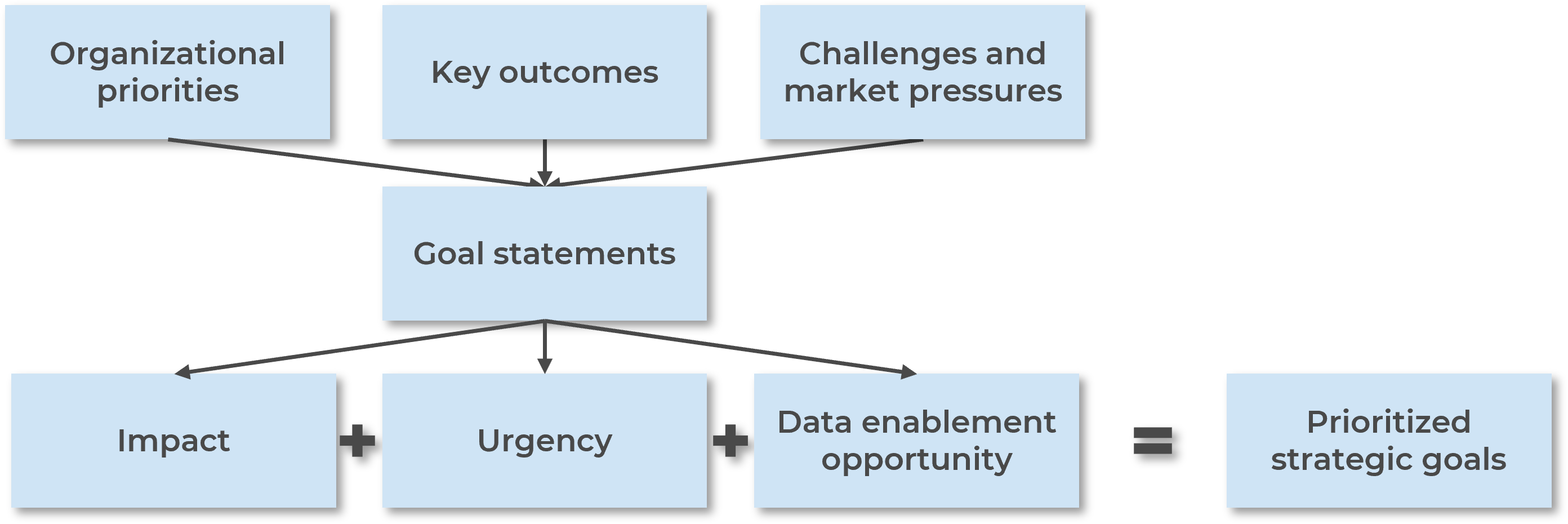
Define and prioritize strategic goals
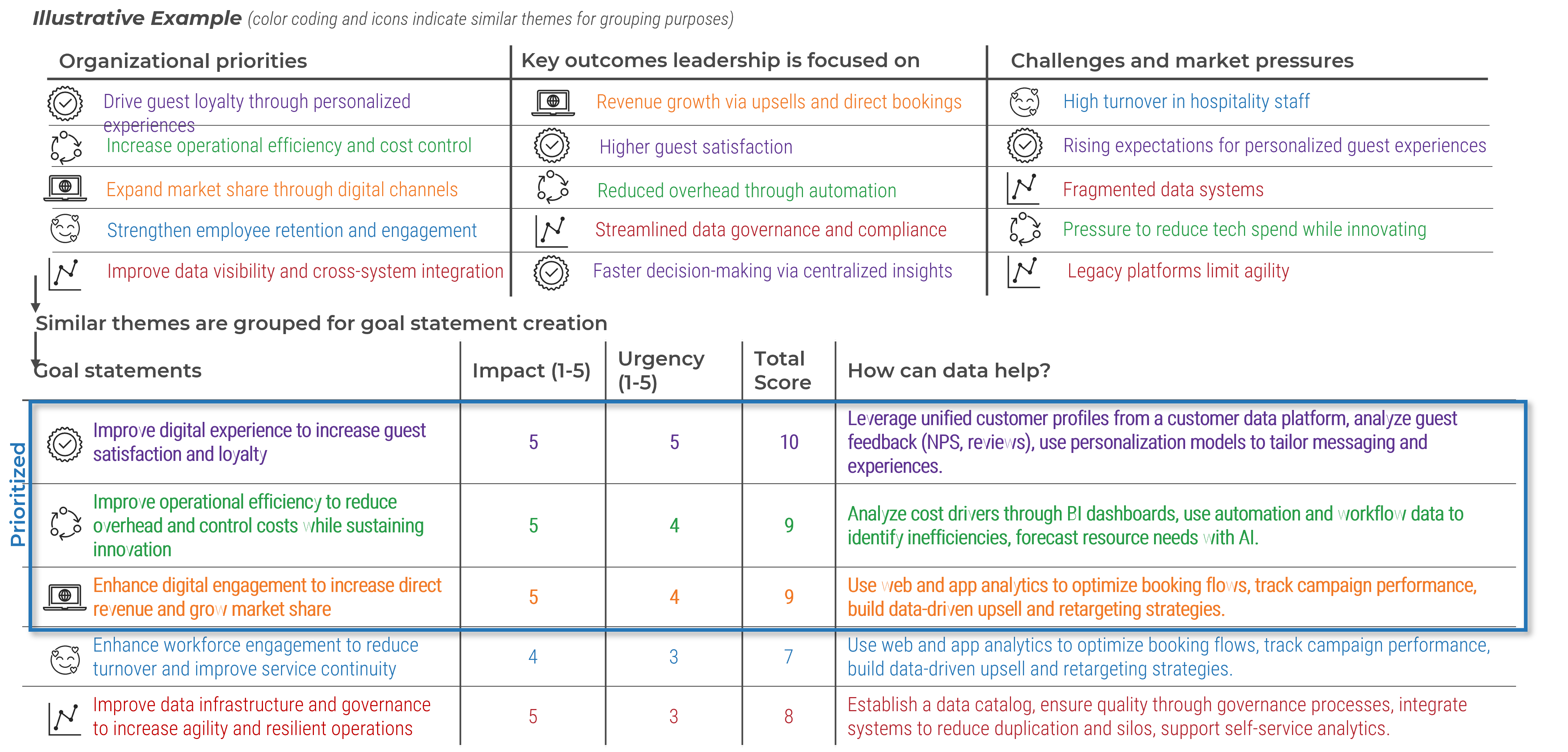
1.1 Define and prioritize strategic goals
2-3 hours
- As a group, discuss the following prompts:
- What are the top three to five organizational priorities this year?
- What key outcomes is leadership focused on? (e.g. growth, efficiency, guest satisfaction, innovation, market expansion)
- What challenges or market pressures are influencing these priorities?
- Record your ideas on a flip chart or whiteboard.
- Next, group similar ideas and themes together. Create clear, concise goal statements using this format:
- Improve [focus area] to achieve [business outcome]. (Example: Improve digital experience to increase guest loyalty.)
- Assess each goal by rating based on two criteria:
- Impact: How critical is this goal to business success?
- Urgency: How quickly does it need to be addressed?
- Use a 1 to 5 scoring matrix for each (1 = low, 5 = high).
- Discuss how each strategic goal could be enabled or accelerated through data and analytics.
- Identify the three to five highest priority goals based on their combined impact, urgency, and relevance to data. These will form the foundation for the rest of your strategic alignment.
|
Input |
Output |
|---|---|
|
|
|
Materials |
Participants |
|
|
About Info-Tech
Info-Tech Research Group is the world’s fastest-growing information technology research and advisory company, proudly serving over 30,000 IT professionals.
We produce unbiased and highly relevant research to help CIOs and IT leaders make strategic, timely, and well-informed decisions. We partner closely with IT teams to provide everything they need, from actionable tools to analyst guidance, ensuring they deliver measurable results for their organizations.
What Is a Blueprint?
A blueprint is designed to be a roadmap, containing a methodology and the tools and templates you need to solve your IT problems.
Each blueprint can be accompanied by a Guided Implementation that provides you access to our world-class analysts to help you get through the project.
Need Extra Help?
Speak With An Analyst
Get the help you need in this 2-phase advisory process. You'll receive multiple touchpoints with our researchers, all included in your membership.
Guided Implementation 1: Define Your Data Requirementss
- Call 1: Define and prioritize strategic goals.
- Call 2: Map business drivers to goals.
- Call 3: Identify focused business capabilities and map them to drivers and goals.
- Call 4: Create and map data-related goals to fulfill business goals.
Guided Implementation 2: Conduct Your Data Discovery
- Call 1: Understand and classify data capability maturity.
- Call 2: Identify challenges through data mapping.
- Call 3: Map data capabilities and challenges to goals.
- Call 4: Discuss data strategy next steps.
Contributors
- Kailash Manohar, VP of Data Architecture and AI, Mohegan Gaming
- Eric Bowers, VP of Data Architecture and Innovation
- Dan Kornick, CIO, Loews Hotels
- Scott Nowakowski, VP, IT Strategic Applications, Loews Hotels
- Ganesh Bala, EVP, Chief Data & Analytics Officer, Wind Creek Hospitality