
Launch Products Faster With Modern Product Lifecycle Management Systems
Accelerate your design to delivery processes by integrating engineering, operations, and IT.
- The absence of a single source of truth for product data results in errors, rework, and inefficiencies. Many manufacturers still operate with disconnected engineering, operations, and IT environments, leading to scattered product data.
- Many manufacturers operate with limited visibility into product costs, quality metrics, and lifecycle performance. This makes it difficult to identify bottlenecks, optimize processes, or respond quickly to customer and regulatory demands.
- Manufacturers are forced to balance innovation velocity with the risk of noncompliance or quality failures. Accelerating product launches without proper controls can lead to costly recalls, regulatory penalties, and reputational damage.
Our Advice
Critical Insight
CIOs must shift their focus from managing product files to enabling a digital thread. This will shorten time-to-market, reduce quality risks, ensure compliance, and create a foundation for advanced practices such as predictive analytics. Transform your use of a PDM-PLM solution from a departmental tool to a strategic capability.
Impact and Result
This research provides:
- A detailed methodology to decide if you need a PDM or a PLM.
- If you need both, the order in which implementation must happen.
- A structured questionnaire to circulate with interested vendors.
- A way to evaluate vendor options and prepare a shortlist.
Launch Products Faster With Modern Product Lifecycle Management Systems
Accelerate your design to delivery processes by integrating engineering, operations, and IT.
Analyst perspective
Accelerate design to delivery processes by integrating engineering, operations, and IT.
Manufacturing leaders today face unrelenting pressure to launch new products faster, at lower cost, and with higher quality. Traditional product development is often fragmented across engineering, operations, and information technology. Modern product data management (PDM) and product lifecycle management (PLM) work together to solve this.
PDM establishes a governed source of truth for product data, drawings, models, and revisions. PLM provides a single digital backbone that connects people, processes, and data across the enterprise. Used as a pair, they accelerate innovation while preserving the rigor required for compliance, quality, and traceability. Without PDM and PLM, work fragments into silos, creating duplicate effort, costly errors, and slow handoffs.
Beyond speed, the combination strengthens resilience. Disruptions in supply, shifting regulations, and sustainability mandates can derail product plans. PDM improves part classification, alternates management, and metadata quality so sourcing and compliance teams can act on clean information. PLM tracks the lifecycle from concept through end-of-life, giving operations real-time visibility into dependencies, risks, and optimization opportunities across change, configuration, quality, and service. That transparency enables faster reconfiguration of supply chains and quicker response to audits or market changes.
Together they form the digital thread. The result is fewer errors, shorter ramp-up, and readiness for capabilities such as digital twins, model-based systems engineering, and predictive analytics. The case for PDM and PLM is about competitiveness. CIOs who invest in a modern PDM foundation and a modern PLM orchestration layer equip their organizations to launch faster, innovate with confidence, adapt with agility, and lead in a marketplace defined by constant change.

Shreyas Shukla
Principal Research Director, Industry
Info-Tech Research Group
Executive summary
Your Challenge
The absence of a single source of truth for product data results in errors, rework, and inefficiencies. Many manufacturers still operate with disconnected engineering, operations, and IT environments leading to scattered product data.
Many manufacturers operate with limited visibility into product costs, quality metrics, and lifecycle performance. This makes it difficult to identify bottlenecks, optimize processes, or respond quickly to customer and regulatory demands.
Manufacturers are forced to balance innovation velocity with the risk of noncompliance or quality failures. Accelerating product launches without proper controls can lead to costly recalls, regulatory penalties, and reputational damage.
Common Obstacles
Most manufacturers run a patchwork of legacy tools that were never designed to work together. Replacing or integrating these systems into a unified PLM backbone is technically complex, costly, and disruptive.
PLM systems require cultural and process change across engineering, operations, supply chain, and even external partners. Employees accustomed to manual processes or departmental tools often resist adoption.
CIOs are being pulled in multiple directions at once; supporting cloud migrations, cybersecurity, analytics, Industry 4.0 projects, and customer-facing digital initiatives. PLM competes with these priorities for investment, and without clear alignment to top-line growth or risk reduction, it often falls lower on the agenda.
Info-Tech's Approach
Identify business-critical areas where the benefits are most tangible. Proving quick wins builds momentum, secures executive sponsorship, and establishes credibility for a broader PLM rollout.
Consolidate design, engineering, and operations data into one central system, whether a PDM or a lightweight PLM solution. A single source of truth eliminates duplication, reduces errors, and accelerates collaboration across the product lifecycle.
Treat PLM as a business transformation exercise. Define governance structures, standardize processes, and invest in training to ensure consistent adoption and address cultural resistance by key leaders early in the process.
CIOs must shift their focus from managing product files to enabling a digital thread. This will shorten time-to-market, reduce quality risks, ensure compliance, and create a foundation for advanced practices such as predictive analytics. Transform your use of a PDM-PLM solution from a departmental tool to a strategic capability.
Your Challenge
Absence of a Single Source of Truth for Product Data
In most manufacturing organizations, product data is scattered across engineering tools, spreadsheets, local drives, ERP systems, and supplier portals. Engineers may work from one version of a design file, while operations and suppliers act on outdated or incomplete information. The result is costly rework, duplicated effort, and delayed product launches. This also increases the likelihood of design errors propagating into production, driving up scrap and warranty claims. For CIOs, this challenge is amplified by the fact that engineering and operations often use systems that were never designed to integrate, making it difficult to establish traceability across the lifecycle without a dedicated PLM backbone.
Limited Visibility into Costs, Quality, and Lifecycle Performance
Without PLM or PDM, cost overruns often go unnoticed until late in the process, when engineering changes are already expensive to implement. Similarly, quality issues may only become visible after products are in the market, resulting in recalls or customer dissatisfaction. Lack of lifecycle visibility also prevents leaders from identifying bottlenecks such as delays in design approval or supplier handoffs that slow down time-to-market. This forces organizations to remain reactive, addressing issues only after they escalate.
Balancing Innovation Velocity With Compliance and Quality Risks
Manufacturers are under constant pressure to accelerate product launches to capture market share and respond to shifting customer needs. However, doing so without the proper governance, traceability, and compliance controls exposes organizations to significant risks. Regulatory penalties, costly recalls, and reputational damage are all possible outcomes when quality and compliance take a back seat to speed. Compliance leaders face the challenge of embedding rigorous controls into the product lifecycle while still enabling agile innovation.
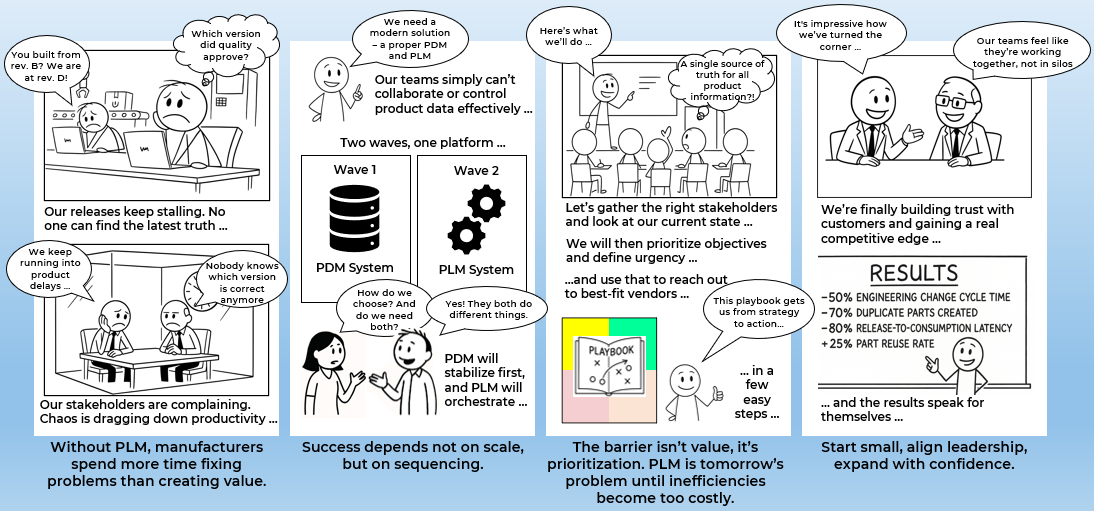
Without a PLM, manufacturers spend more time fixing problems created by fragmented data and reactive processes than they do creating value through innovation.
Common Obstacles
Legacy Systems and Integration Complexity
Most manufacturers operate with a patchwork of legacy tools that were never designed to work together. These systems often contain years of customized workflows and mission-critical data, making them difficult to replace or modernize. CIOs face a dilemma: continue operating with disconnected systems that create inefficiencies, or embark on a disruptive, costly integration program that may span multiple years. For organizations with global supply chains and diverse product portfolios, the complexity multiplies, making this one of the biggest barriers to effective PLM adoption.
Cultural Resistance and Process Change
Implementing a PLM solution fundamentally reshapes how engineering, operations, supply chain, and partners collaborate. It requires standardized processes, formalized workflows, and tighter governance. Employees often resist the move; engineers may see PLM as an administrative overhead, while shop-floor teams may fear disruption to established ways of working. This can slow adoption, erode ROI, and lead to failed rollouts. CIOs must manage PLM as a change management program, ensuring strong executive sponsorship, clear communication of business value, and ongoing training.
Competing Priorities and Limited Executive Bandwidth
CIOs today are balancing an overwhelming portfolio of strategic initiatives. Each initiative competes for budget, executive sponsorship, and IT resources. PLM can often be perceived as an "engineering tool" rather than an enterprise enabler and therefore ranks lower on the priority list compared to more urgent, visible, or revenue-facing projects. Without clear alignment to top-line growth, customer satisfaction, or risk reduction, many organizations delay PLM modernization until inefficiencies, compliance failures, or market pressures force action, by which point the cost and urgency are much higher.
The biggest barrier to PLM adoption is not technology, but prioritization. Manufacturers know the value, but legacy complexity, cultural resistance, and competing initiatives continually push it to "tomorrow's problem" until inefficiencies become too costly to ignore.
Info-Tech's Approach
Start With High-Impact, Business-Critical Areas
Manufacturers should avoid trying to "boil the ocean" with an enterprise-wide PLM initiative from the outset. Instead, they should focus on areas where the benefits are most visible and measurable, such as engineering change management, compliance documentation, or supplier collaboration. Delivering quick wins builds confidence across the organization, secures executive sponsorship, and creates momentum for broader adoption.
Establish a Single Source of Truth for Product Data
CIOs must ensure that design, engineering, and operations data is centralized in a single, reliable system; whether that begins with a PDM solution for smaller organizations or a full-scale PLM deployment for larger manufacturers. By connecting product data across functions and geographies, manufacturers can accelerate collaboration, shorten development cycles, and reduce the risks associated with fragmented information flows.
3. Treat PLM as a Business Transformation, Not an IT Project
Implementing PLM demands changes in culture, process, and governance. CIOs must frame PLM as a business transformation program, with clear governance structures, standardized processes, and a strong emphasis on user adoption. Investing in training, change management, and early engagement with engineering and operations leaders helps overcome cultural resistance and ensures the system is embraced as an enabler, not a burden.
The key to PLM success is not scale, but sequencing. Manufacturers that begin with high-impact use cases, establish a single source of truth, and lead with business transformation principles achieve faster adoption and greater long-term value.
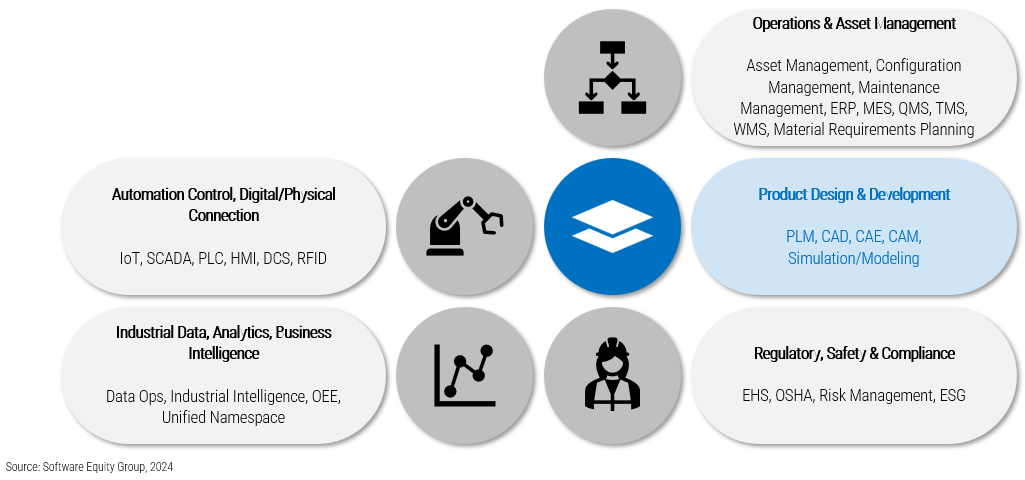
Product design and development is one of the key capability pillars of manufacturing
Product design and development determines how ideas translate into market-ready products that balance performance, cost, and quality. It is the foundation that links creativity with engineering rigor, ensuring that every product meets customer expectations while remaining manufacturable and compliant. By investing in this pillar, manufacturers build the capability to innovate faster, respond to shifting market needs, and create a repeatable framework for long-term competitiveness.
Driven by external pressures and customer needs, manufacturing is undergoing rapid transformation
Besides macro-economic pressures, manufacturers face rising complexity in products, tighter regulatory demands, and increasing expectations for speed and personalization. Companies can no longer rely on siloed systems or manual processes; they must establish a unified digital backbone that governs design data, accelerates collaboration, and ensures compliance.
Modern PLM and PDM capabilities are central to this transformation, enabling manufacturers to balance innovation velocity with control, maintain a single source of truth across functions, and deliver differentiated products at scale.
Investment Priorities |
46% |
41% |
40% |
29% |
Key Objectives |
|
|
|
|
Relevance to Product Design & Development |
Engineering change management, BOM management, Workflow automation |
Digital twin integration, Manufacturing planning, Service lifecycle management |
Quality management, Compliance management, Requirements traceability |
Design reuse, Portfolio management, Supplier collaboration |
Impact on Product Lifecycle |
Reduces manual errors, accelerates design iteration cycles, and ensures smoother handoffs from design to manufacturing. |
Connects product design data with smart factory equipment, enables simulation of production processes and faster ramp-up. |
Delivers real-time visibility into product performance and compliance risks, supports predictive quality and regulatory reporting. |
Uses AI to optimize design reuse, prioritize portfolio investments, and enhance supplier collaboration by learning from lifecycle data patterns. |
Source: Deloitte, 2025
Product lifecycle management cuts across tracking, controlling, and monitoring the lifecycle of the products you make
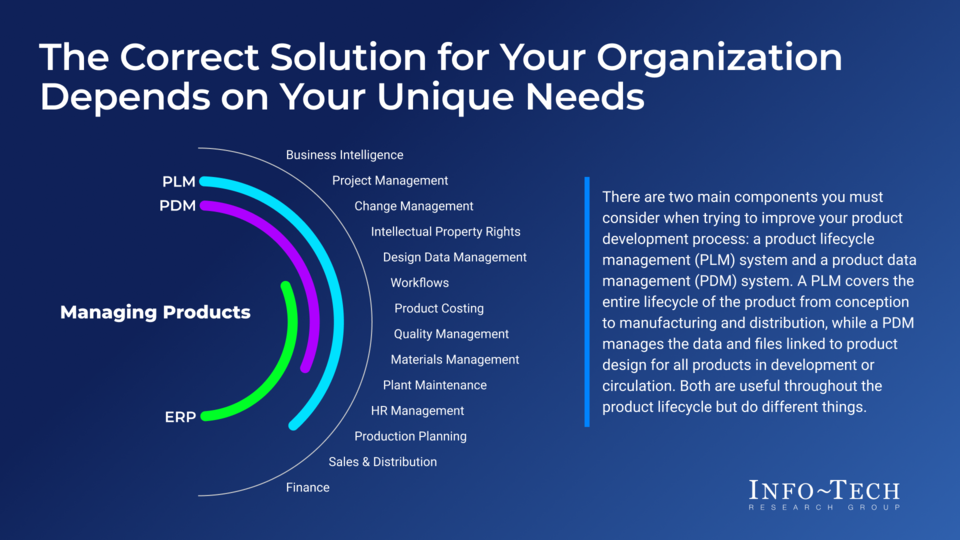
There are two main components you must consider when trying to improve your product development process: a product lifecycle management (PLM) system and a product data management (PDM) system. A PLM covers the entire lifecycle of the product from conception to manufacturing and distribution, while a PDM manages the data and files linked to product design for all products in development or circulation. Both are useful throughout the product lifecycle but do different things.
The correct solution for your organization depends on your unique needs.
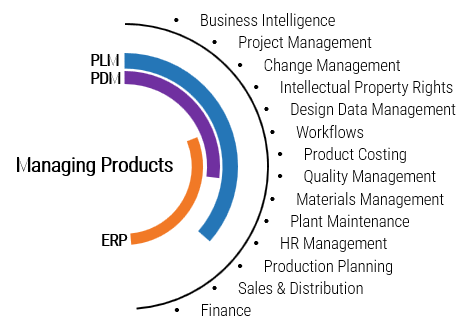 |
A PDM is right when … Your organization primarily needs engineering data management with focused design team collaboration requirements. |
A PLM is right when … Your organization needs enterprise-wide product lifecycle management with complex business processes and compliance requirements. |
|
You need both when … Your organization requires robust engineering data management for technical teams and broad, enterprise-wide collaboration and lifecycle visibility across multiple departments and product stages. |
Info-Tech's methodology for adopting modern product lifecycle management systems
Phase |
Pre-Work |
1. Discover and Diagnose |
2. Define Needs and Objectives |
3. Build the Readiness Framework |
4. Prepare for Selection |
|---|---|---|---|---|---|
Phase Steps |
|
|
|
|
|
Phase Outcomes |
Gain a comprehensive understanding of how work is performed today, and the operational risks of fragmented tools. |
Pinpoint specific issues and acquire an evidence-based tilt toward PDM foundation, PLM orchestration, or both. |
Define a prioritized, executive-approved requirement set with urgency, success metrics, and an initial recommendation on where to start, PDM first, PLM first, or combined. |
Build an executable, phased plan that reflects true urgency and de-risks rollout through data ownership, governance, and clear verification standards. |
Finalize a defensible shortlist with clear next steps, thresholds, and risks, traceable to your objectives, current state, and verification evidence. |
Launch Products Faster With Modern Product Lifecycle Management Systems
Accelerate your design to delivery processes by integrating engineering, operations, and IT.
Some images have been generated using OpenAI's GPT-5 language model.
Blueprint deliverables
Each step of this blueprint is accompanied by supporting deliverables to help you accomplish your goals.
Using the PDM-PLM Decision Tool |
|
|---|---|
Understand your objectives and their urgency. |
Prioritize a PDM or a PLM, or both, based on your urgency |
Issue a prequalification questionnaire to vendors you are interested in. |
Score chosen vendors on fitment and fundamentals. |
Key deliverables:
PDM-PLM Decision Tool
This tool is designed to help you determine whether to implement product data management (PDM) or product lifecycle management (PLM) system, based on business objectives and current state assessment.
This tool combines the urgency of your objectives with current state maturity to generate evidence-based recommendations.
You get a vendor shortlist, prequalification questionnaire, fitment scores, and decision matrix with clear next steps.
Overview of critical elements
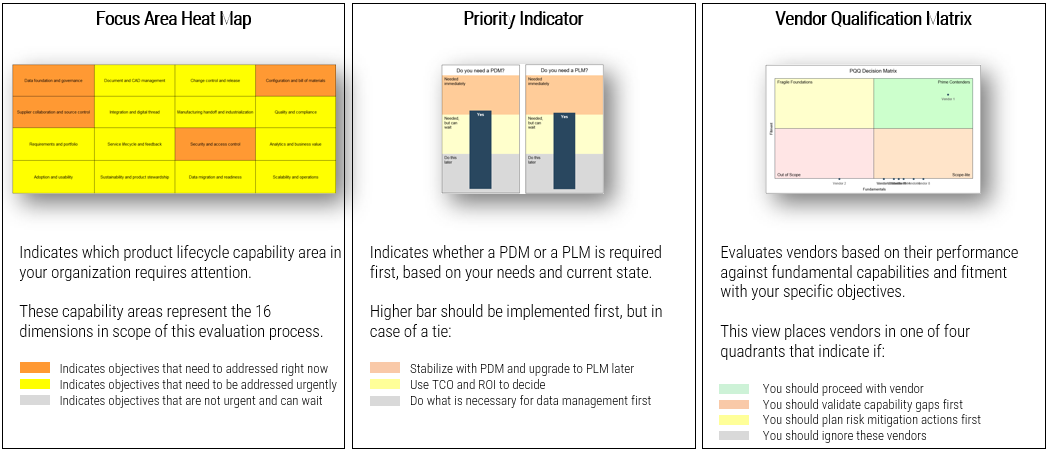
The tool presents you with four different, sequential elements to support your decision-making process.
Your interaction with the tool and your inputs automatically generate these visual elements to accelerate discussions with critical stakeholders.
Blueprint benefits
IT Benefits |
Business Benefits |
|---|---|
|
|
Insight summary
CIOs must shift their focus from managing product files to enabling a digital thread.
This will shorten time-to-market, reduce quality risks, ensure compliance, and create a foundation for advanced practices such as predictive analytics.
Transform your use of a PDM-PLM solution from a departmental tool to a strategic capability.
0 |
1 |
2 |
3 |
4 |
|---|---|---|---|---|
Pre-Work |
Discover and Diagnose |
Define Needs and Objectives |
Build the Readiness Framework |
Prepare for Selection |
Accept that challenges exist. |
Measure time, not tools. |
Treat every "must-have" as a testable claim. |
Let current state determine sequence. |
Score vendors on two independent dimensions. |
| CIOs must identify the "what" and "how" of the current state. | CIOs must quantify delays in search, release, and change to reveal where PDM and PLM will remove the most waste first. | CIOs must validate "must-have" requirements with evidence, so priorities are defensible and vendor-proof. | Sometimes, a PDM-first wave de-risks the PLM program and prevents expensive rework. | Evaluate both, vendor ability to deliver and "fitment" with your specific requirements. |
Measure the value of this blueprint
How can you measure the value of following Info-Tech's approach?
The "average IT consulting rate in the United States is $100 to $250 per hour."
The cost and effort involved in undertaking a product lifecycle transformation exercise varies depending on the size and scope of the project. The average cost of a well-designed and executed product lifecycle transformation exercise ranges from US$42,000 to US$56,000 at the lower end (assuming a two-member team charging the hourly average of US$100).
With Info-Tech Resources |
Without Info-Tech Resources |
|||
Project Steps |
Time |
Average Cost (USD) |
Time |
|
Discover and Diagnose |
1-1.5 days |
$6,000 - $8,000 |
1 week |
|
Define Needs and Objectives |
1-1.5 days |
$6,000 - $8,000 |
1 week |
|
Build the Readiness Framework |
1-2 days |
$6,000 - $8,000 |
1 week |
|
Prepare for Selection |
1 day |
$6,000 - $8,000 |
1 week |
|
Effort |
< than 2 business weeks |
$42,000 - $56,000 |
1.5-2 months |
|
Source: MOR Software, 2025
This blueprint will accelerate your own product lifecycle transformation exercise.
We include all the guidance, tools, and templates you need to successfully implement this program.
Reach out to advisory services for assistance as you work through the blueprint or request a workshop engagement and let us do the heavy lifting.
Info-Tech offers various levels of support to best suit your needs
DIY Toolkit
"Our team has already made this critical project a priority, and we have the time and capability, but some guidance along the way would be helpful."
Guided Implementation
"Our team knows that we need to fix a process, but we need assistance to determine where to focus. Some check-ins along the way would help keep us on track."
Workshop
"We need to hit the ground running and get this project kicked off immediately. Our team has the ability to take this over once we get a framework and strategy in place."
Executive & Technical Counseling
"Our team and processes are maturing; however, to expedite the journey we'll need a seasoned practitioner to coach and validate approaches, deliverables, and opportunities."
Consulting
"Our team does not have the time or the knowledge to take this project on. We need assistance through the entirety of this project."
Diagnostics and consistent frameworks are used throughout all five options.
Guided Implementation
Take the right actions to advance the smart factory agenda.
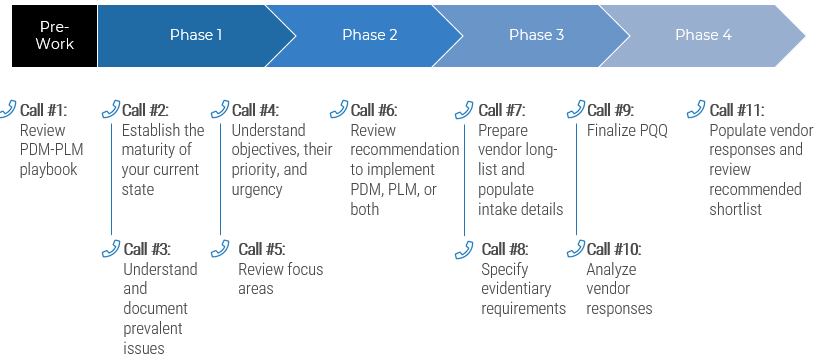
A Guided Implementation (GI) is a series of calls with an Info-Tech analyst to help implement our best practices in your organization.
A typical GI is 6 to 10 calls over the course of 4 to 6 months.
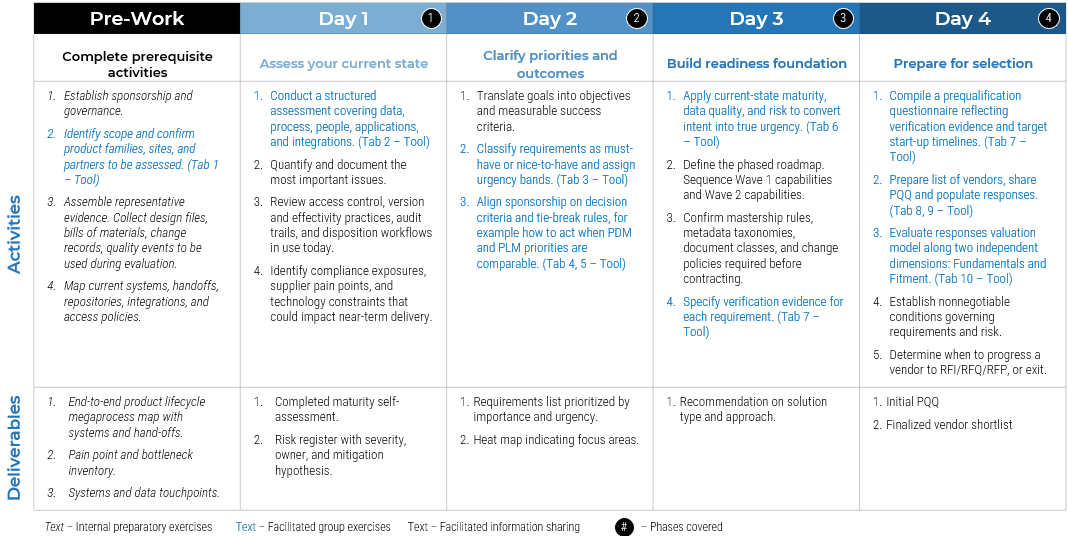
Workshop Overview
Contact your account representative for more information.
workshops@infotech.com 1-888-670-8889
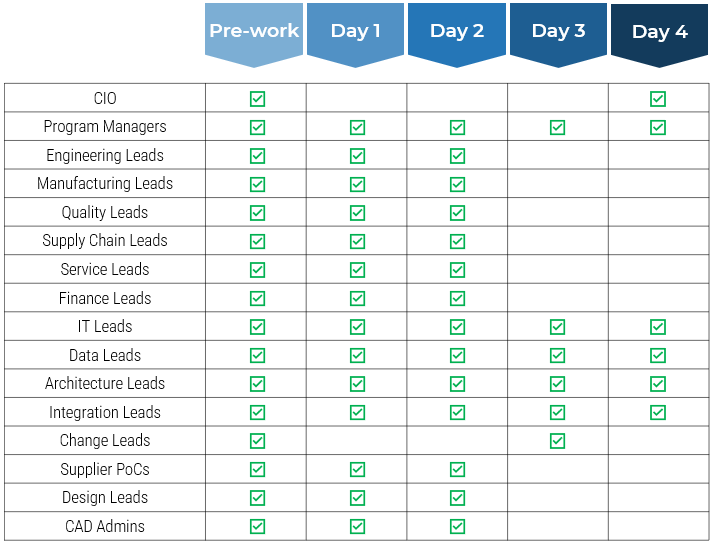
Recommended workshop participants
About Info-Tech
Info-Tech Research Group is the world’s fastest-growing information technology research and advisory company, proudly serving over 30,000 IT professionals.
We produce unbiased and highly relevant research to help CIOs and IT leaders make strategic, timely, and well-informed decisions. We partner closely with IT teams to provide everything they need, from actionable tools to analyst guidance, ensuring they deliver measurable results for their organizations.
What Is a Blueprint?
A blueprint is designed to be a roadmap, containing a methodology and the tools and templates you need to solve your IT problems.
Each blueprint can be accompanied by a Guided Implementation that provides you access to our world-class analysts to help you get through the project.
Need Extra Help?
Speak With An Analyst
Get the help you need in this 4-phase advisory process. You'll receive multiple touchpoints with our researchers, all included in your membership.
Guided Implementation 1: Discover and Diagnose
- Call 1: Establish the maturity of your current state.
- Call 2: Understand and document prevalent issues.
- Call 3: Understand objectives, their priority, and urgency.
- Call 4: Review focus areas.
Guided Implementation 2: Define Needs and Objectives
- Call 1: Review recommendation to implement PDM, PLM, or both.
Guided Implementation 3: Build the Readiness Framework
- Call 1: Prepare vendor long-list and populate intake details.
- Call 2: Specify evidentiary requirements.
- Call 3: Finalize PQQ.
- Call 4: Analyze vendor responses.
Guided Implementation 4: Prepare for Selection
- Call 1: Populate vendor responses and review recommended shortlist.
Contributors
- Eswara P, Solutions Architect, Global Systems Implementation Firm
- Hari Ganesan, Consulting Manager, Global Consulting Firm
- Christiana Tse, Independent Expert, Market Research Firm
- Ram N, Chief Digital Officer, Canadian Manufacturing Solutions Company
- Daniel Harwood, PMO Lead, Global Food Manufacturer
- Three anonymous contributors
