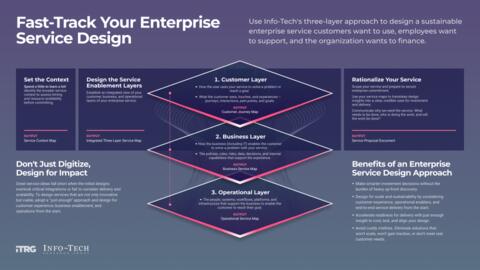
When the idea of Service-Oriented Architecture (SOA) was first introduced, much hype was generated about this supposed panacea for all IT-related business problems. CIOs were trying to make sense of all the vendor buzz and determine whether implementing this concept would yield positive returns for their organizations. Since then, several large enterprises have started to adopt SOA, but small and mid-sized enterprises (SMEs) are still trying to make sense of the hype.
What Is SOA?
SOA is not a technology, but rather a method of developing and structuring services within an IT system. A service is a packet of code that performs a specific function within a more complex business function. For example, a business function such as billing customers is composed of several services such as the retrieval of customer information and the calculation of the bill. When organizations adopt a SOA framework, it implies the use of independent services to develop business processes. This allows for increased flexibility, scalability, and speed to market since code is not constantly rewritten for every modification or new business process. Essentially, SOA represents a huge organizational change since the business and IT now require complete alignment when planning future enterprise services.