
Implement Information Lifecycle Management
Position information lifecycle management as a regulatory insurance policy and ensure the most critical business processes have adequate coverage.
- With the growth of unstructured information, the mounting regulatory pressures, and the rise of shadow IT organizations can no longer afford to put Information Lifecycle Management (ILM) on the back burner.
- The number one reason that ILM initiatives fail to deliver value is because organizations over-scope the project and aim for perfection. Trying to tackle every type of information in the organization at once will over-complicate the project, prevent progress, and ultimately hurt the momentum for ILM.
- Without ILM, organizations experience long wait times for information, information leakages, uninformed decision making, and hefty fines for noncompliance.
Our Advice
Critical Insight
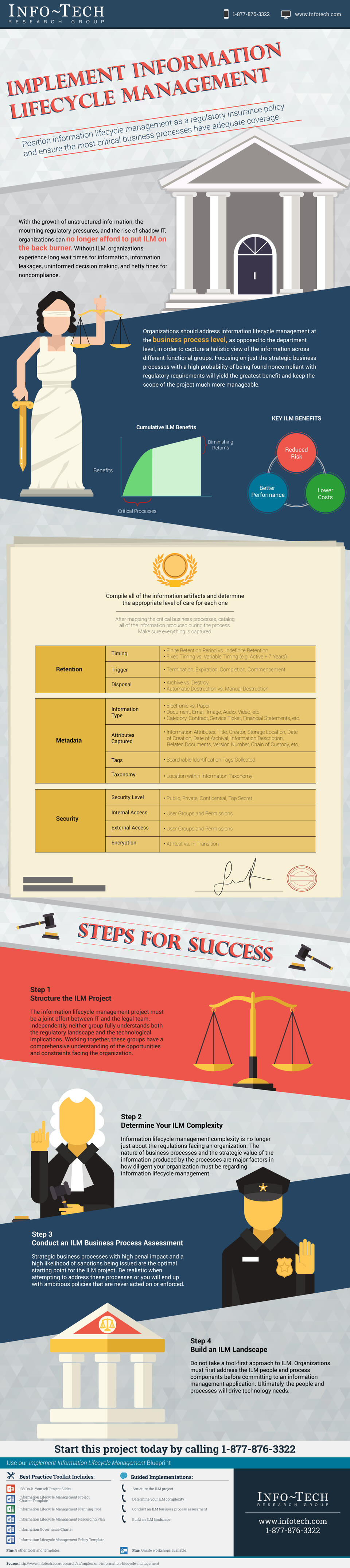
- Organizations should address information lifecycle management at the business process level, as opposed to the department level, in order to capture a holistic view of the information across different functional groups.
- Focusing on just the strategic business processes with a high probability of being found noncompliant with regulatory requirements will yield the greatest benefit and also keep the scope of the project much more manageable.
Impact and Result
- Do not take a tool first approach to ILM. Organizations must first address the ILM people and process components before committing to an information management application. Ultimately, the people and processes will drive technology needs.
- Analyze ILM at the business process level by creating business process diagrams and identifying all of the information created as a result. Then for each information artifact determine the level of care to be provided by stipulating the retention, metadata, and security requirements.
- Organizations implementing ILM can expect to experience: a 15-30% lower total cost of ownership for future storage, 2.65x less money wasted on noncompliance, and a 30% increase in professional staff productivity.
About Info-Tech
Info-Tech Research Group is the world’s fastest-growing information technology research and advisory company, proudly serving over 30,000 IT professionals.
We produce unbiased and highly relevant research to help CIOs and IT leaders make strategic, timely, and well-informed decisions. We partner closely with IT teams to provide everything they need, from actionable tools to analyst guidance, ensuring they deliver measurable results for their organizations.
What Is a Blueprint?
A blueprint is designed to be a roadmap, containing a methodology and the tools and templates you need to solve your IT problems.
Each blueprint can be accompanied by a Guided Implementation that provides you access to our world-class analysts to help you get through the project.
Contributors
- Duff & Phelps
- Collabware
- Index Engines
- CommVault Systems
- Central Otago District
- Datacom
 Move Away from File Shares and Organize Enterprise Information
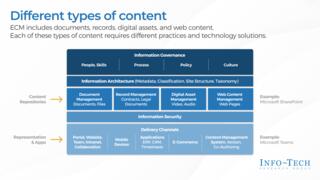 Develop an Enterprise Content Management Strategy and Roadmap
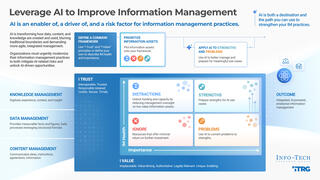 Leverage AI for Information Management
